 0
0
 0
0
February 8, 2026
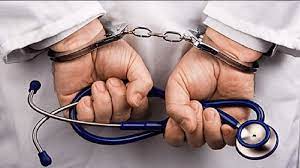
JAIPUR, RAJASTHAN — A deepening investigation into a sophisticated medical credentialing scam has sent shockwaves through India’s healthcare regulatory system. The Rajasthan Police Special Operations Group (SOG) recently arrested two foreign-trained medical graduates for allegedly using forged Foreign Medical Graduates Examination (FMGE) certificates to secure clinical internships. The probe has since expanded to include 73 additional practitioners suspected of bypassing national safety benchmarks, raising critical questions about the vulnerability of patient safety when the “gatekeepers” of medical entry are circumvented.
The Anatomy of the Alleged Fraud
The investigation gained momentum following the detention of a primary suspect at New Delhi airport on February 2. The individual, an MBBS graduate from Kazakhstan, is alleged to have acted as a mastermind, facilitating forged FMGE clearance documents for himself and others who had failed the mandatory qualifying exam.
According to SOG officials, the network allowed individuals to flee or travel through Thailand, Sri Lanka, Dubai, and Nepal to evade capture. A second suspect, also trained in Kazakhstan, allegedly utilized a forged certificate from Mali to complete an internship at Rajiv Gandhi Medical College in Alwar before securing provisional registration with the Rajasthan Medical Council (RMC).
“We have uncovered an extensive network,” stated Additional Director General (SOG) Vishal Bansal. “The investigation suggests that this was not an isolated incident of individual misconduct but a structured operation involving document fabrication and potential loopholes in verification protocols at the institutional level.”
Why the FMGE is a Non-Negotiable Safety Net
The FMGE, conducted by the National Board of Examinations in Medical Sciences (NBEMS), is the primary screening tool for Indian citizens who earn medical degrees abroad. It is designed to ensure that foreign-trained doctors possess a level of clinical knowledge equivalent to those trained in Indian MBBS programs.
For the general public, the FMGE acts as a “quality control” seal. When this process is bypassed, the implications for patient care are direct and dangerous. Unqualified individuals may be placed in positions of clinical responsibility, leading to:
-
Diagnostic Errors: Misinterpreting symptoms due to a lack of foundational clinical training.
-
Unsafe Prescribing: Inaccurate dosing or dangerous drug interactions.
-
Erosion of Trust: A systemic failure that makes patients question the credentials of every doctor they encounter.
“Credentialing is the bedrock of patient safety,” says Dr. Ananya Rao, a public health physician and medical educator. “An internship is a period of intense, supervised learning. If an intern has not demonstrated the theoretical knowledge required to pass the FMGE, they are essentially practicing on patients without a verified safety net. It places an unfair burden on supervising doctors who assume their trainees have met national standards.”
Structural Pressures and the “Shortcut” Culture
The scam highlights a growing tension in Indian medical education. With fierce competition for domestic seats, thousands of students seek MBBS degrees in countries like Russia, China, and Kazakhstan. However, FMGE pass rates have historically been low—often hovering between 10% and 25%—reflecting the challenge of aligning diverse international curricula with Indian standards.
This bottleneck creates immense pressure. For some, the fear of career stagnation leads to the pursuit of illegal shortcuts. However, ethicists argue that the “victim” in this scenario is always the patient.
“Medical professionalism is grounded in honesty and competence,” explains a leading bioethicist. “Entering the profession through fraud violates the social contract. A doctor is granted autonomy by society specifically because society trusts they have met the rigorous standards required to hold a life in their hands.”
Closing the Gaps: The Path Toward Digital Integrity
The Rajasthan case has prompted calls for a radical overhaul of how state medical councils verify credentials. Currently, many processes still rely on physical documentation or manual verification, which can be vulnerable to sophisticated forgery.
Proposed Regulatory Reforms:
-
Real-Time Digital Cross-Checks: Mandatory API integration between State Medical Councils and the NBEMS database to verify exam results instantly.
-
Tamper-Proof Certificates: The implementation of blockchain-based or encrypted QR-coded certificates that cannot be replicated.
-
Inter-State Interoperability: A centralized national registry that tracks a candidate’s status across all states to prevent “forum shopping” for registration.
-
Whistle-blower Channels: Secure pathways for hospital staff to report suspicious lack of clinical competency without fear of retribution.
What This Means for Patients
While the news of 73 suspected “fake” doctors is alarming, health authorities urge the public not to panic or generalize. The majority of foreign-medical graduates are highly skilled professionals who have cleared the FMGE legitimately and serve as the backbone of healthcare in many underserved regions.
How to Verify Your Doctor’s Credentials:
-
Search the National Register: Visit the National Medical Commission (NMC) website or your specific State Medical Council portal.
-
Check Registration Numbers: Every licensed doctor in India is assigned a unique registration number. This should be displayed on their prescriptions and clinic signage.
-
Seek Accredited Facilities: Larger hospitals often have more rigorous internal HR and credentialing audits than smaller, unorganized clinics.
The Road Ahead
As the SOG continues to verify the 73 suspicious certificates, more arrests are expected. For the medical community, the incident serves as a grim reminder that the integrity of the profession is only as strong as its weakest verification link.
“This is a wake-up call for every state council in India,” says Dr. Rao. “We must move toward a ‘zero-trust’ verification model where every document is digitally authenticated at the source. Patient lives depend on it.”
Medical Disclaimer
Medical Disclaimer: This article is for informational purposes only and should not be considered medical advice. Always consult with qualified healthcare professionals before making any health-related decisions or changes to your treatment plan. The information presented here is based on current research and expert opinions, which may evolve as new evidence emerges.
References
-
Medical Dialogues Staff. (2026). 2 arrested in Fake FMGE certificate scam for medical council internships, 73 more under scanner. Medical Dialogues, Rajasthan State News.