 0
0
 0
0
April 24, 2026
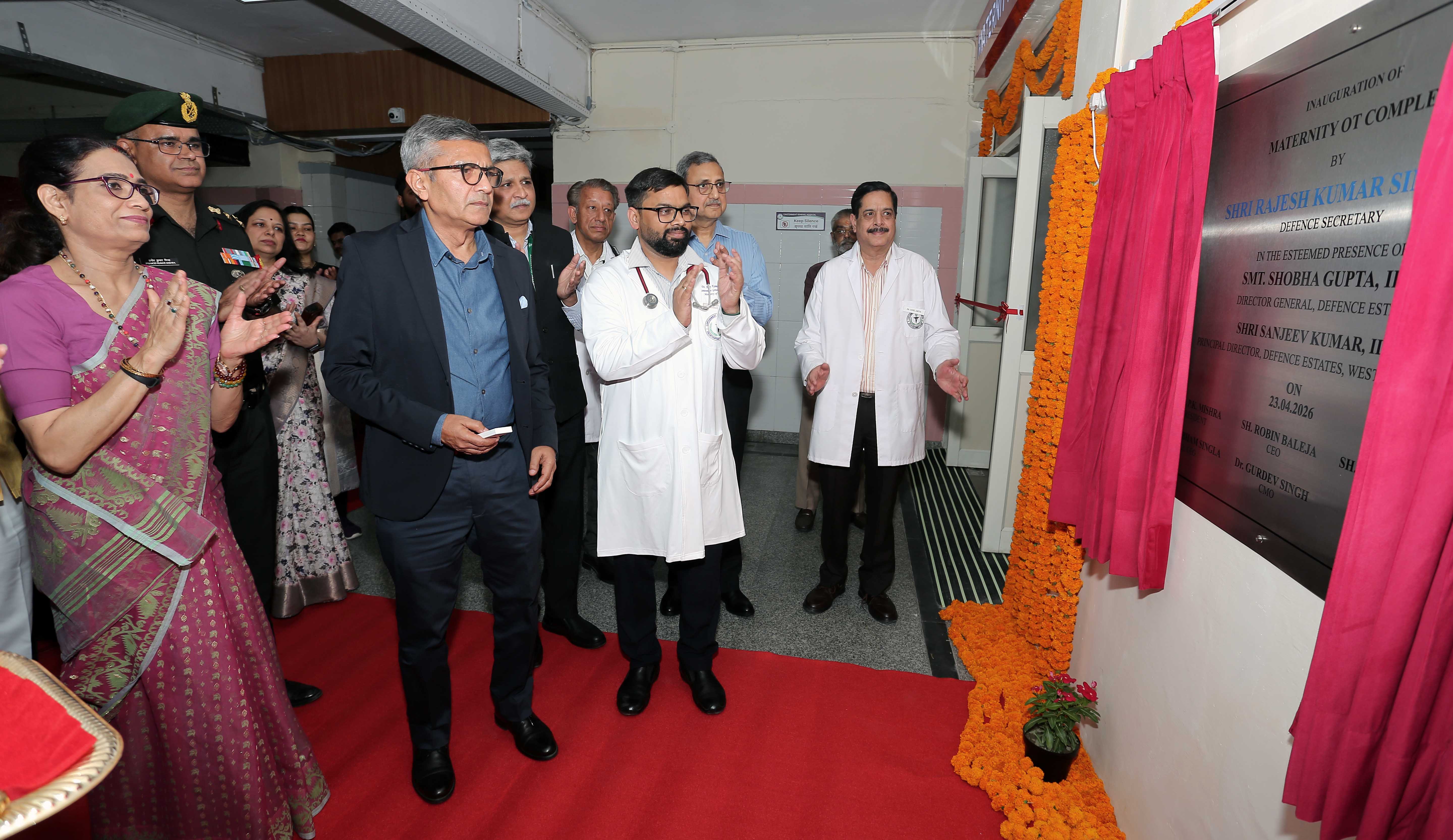
NEW DELHI — In a significant leap for public healthcare infrastructure, Defence Secretary Shri Rajesh Kumar Singh officially inaugurated a state-of-the-art Robotic Orthopaedic System and a dedicated Maternity Operation Theatre at the Cantonment General Hospital (CGH) in Delhi Cantonment on April 23, 2026. The ceremony, attended by Director General of Defence Estates Smt. Shobha Gupta, marks the beginning of a phased modernization project aimed at bringing tertiary-level surgical precision and specialized maternal care to the residents of the Cantonment and surrounding municipal areas.
A New Era of Surgical Precision
The centerpiece of the inauguration is the Robotic Orthopaedic System, a technological milestone for a facility that serves a diverse population of military families and local civilians. Unlike traditional surgery, where a surgeon relies solely on manual tools and eyesight, robotic-assisted surgery utilizes computer-integrated systems to enhance the accuracy of joint replacements and complex bone reconstructions.
How Robotic Surgery Works
In orthopaedics, “robotics” does not mean a machine performs the surgery independently. Instead, it acts as a high-precision guide. The system uses 3D modeling—often based on preoperative CT scans—to create a digital map of the patient’s unique anatomy.
“The introduction of robotics in orthopaedics is a game-changer for patient recovery,” says Dr. Ananya Sharma, a Senior Orthopaedic Consultant (not affiliated with CGH). “By allowing for sub-millimeter precision in bone cutting and implant positioning, we see significantly less trauma to the surrounding soft tissues. For the patient, this typically translates to less postoperative pain, a shorter hospital stay, and a faster return to daily activities.”
Key Benefits of the New System:
-
Enhanced Accuracy: Minimizes the risk of human error in implant alignment.
-
Tissue Preservation: Smaller incisions and less disruption to muscles and ligaments.
-
Longevity: Better-aligned implants often have a lower rate of “wear and tear,” potentially reducing the need for revision surgeries in the future.
Prioritizing Maternal Health
Alongside the high-tech orthopaedic wing, the hospital opened a new Maternity Operation Theatre (OT). This dedicated facility is designed to streamline emergency obstetric care, such as Cesarean sections and other urgent maternal interventions, separate from the general surgical wards.
The inauguration comes at a time when the Indian government is doubling down on “Surakshit Matritva” (Safe Motherhood) initiatives. By providing a specialized, sterile environment specifically for expectant mothers, CGH aims to reduce the risk of hospital-acquired infections and provide a more focused environment for neonatal support.
Strategic Infrastructure for the Community
During the ceremony, Defence Secretary Shri Rajesh Kumar Singh emphasized that the modernization of Cantonment hospitals is a pillar of the government’s commitment to community welfare. “Modernizing healthcare infrastructure in Cantonments is not just about equipment; it is about ensuring that high-quality medical services are accessible to every resident,” Singh stated.
Director General Defence Estates, Smt. Shobha Gupta, echoed these sentiments, noting that these developments strengthen the broader healthcare delivery system within the Delhi region, easing the burden on other overstretched central government hospitals.
Looking Ahead: A Three-Month and One-Year Roadmap
The inauguration is only the first phase of an ambitious expansion. A briefing held during the event outlined a rapid development schedule for CGH:
The 90-Day Plan (Short-Term Upgrades)
The hospital is set to operationalize a Dialysis Centre, a Central Sterile Services Department (CSSD), and upgrades to existing Intensive Care Units (ICU) within the next three months. The expansion of laboratory services is also prioritized to ensure faster diagnostic turnaround times.
The 2027 Vision (Long-Term Expansion)
Over the next year, the facility will transform into a multi-specialty hub with the addition of:
-
Advanced Imaging: On-site CT Scan and MRI suites.
-
Specialized Care: Neonatal ICU (NICU) and Paediatric ICU (PICU) for critical child care.
-
Oncology: A Cancer Screening Unit to aid in early detection.
-
Critical Care: Dedicated Surgical ICUs and High Dependency Units (HDU).
Balanced Perspective: Challenges in High-Tech Adoption
While the integration of robotics is a major achievement, medical experts note that technology is only as effective as the system supporting it.
“The challenge for public sector hospitals is often the steep learning curve and the maintenance of expensive robotic components,” observes Dr. Vikram Mehta, a health systems analyst. “Success will depend on continuous training for the surgical staff and ensuring that the cost-benefit remains favorable for the general public who rely on these subsidized services.”
Furthermore, while robotic surgery offers many advantages, it is not always necessary for every patient. Traditional “manual” surgery remains the gold standard for many routine cases, and patients are encouraged to discuss which approach is best suited for their specific medical history.
Public Health Implications
For the residents of Delhi Cantonment, these upgrades mean that specialized care—which previously required travel to private hospitals or major hubs like AIIMS—is now available closer to home. The expansion of NICU and ICU facilities, in particular, addresses a critical gap in emergency care beds in the National Capital Region (NCR).
By investing in both high-tech orthopaedics and fundamental maternal health, Cantonment General Hospital is positioning itself as a model for how localized government facilities can evolve to meet 21st-century medical standards.
Reference Section
Primary Source:
-
Press Information Bureau (PIB) Delhi. “Defence Secretary Inaugurates the Robotic Orthopaedic System and Maternity Operation Theatre at Cantonment General Hospital, Delhi.” Published April 23, 2026.
Medical Disclaimer: This article is for informational purposes only and should not be considered medical advice. Always consult with qualified healthcare professionals before making any health-related decisions or changes to your treatment plan. The information presented here is based on current research and expert opinions, which may evolve as new evidence emerges.