 0
0
 0
0
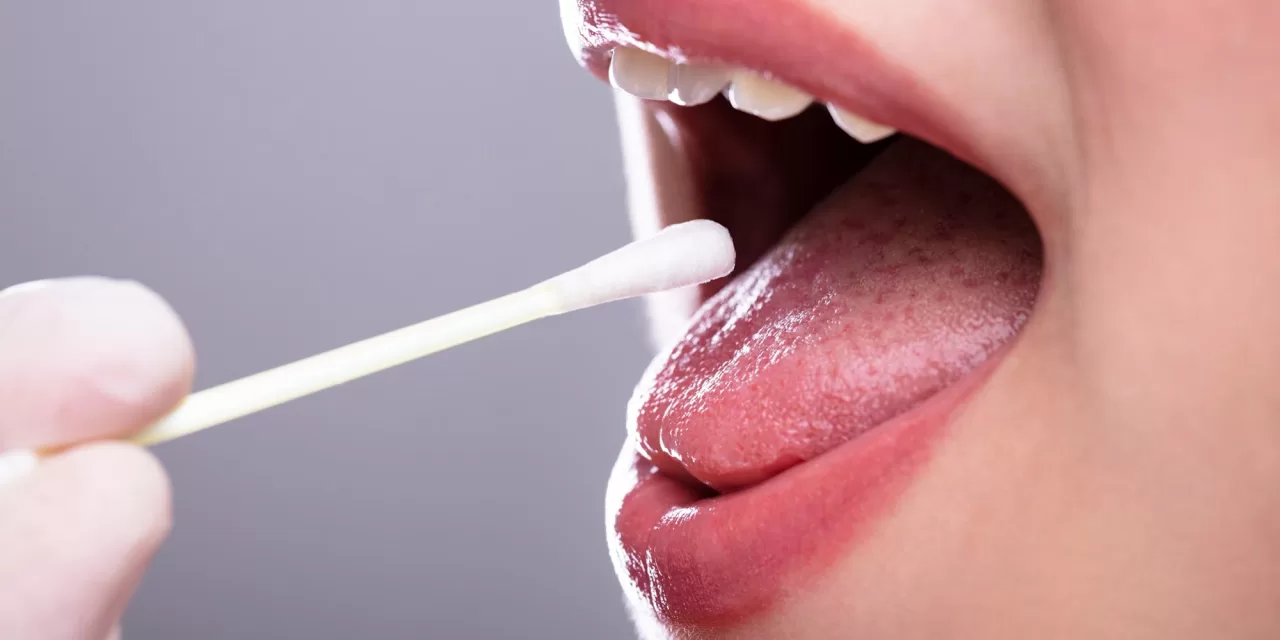
VELLORE, INDIA — A breakthrough, battery‑operated molecular test that detects pulmonary tuberculosis (TB) from a simple tongue swab has demonstrated high diagnostic accuracy in India and six other high‑burden nations. According to a landmark clinical trial published in the New England Journal of Medicine, the portable MiniDock MTB platform delivers definitive results within 12 to 25 minutes. By achieving a sensitivity of 79.6% on non‑invasive tongue swabs and 85.7% on sputum samples, the technology successfully meets the World Health Organization (WHO) targets for rapid, near‑point‑of‑care TB diagnostics. This development could fundamentally alter how the world’s deadliest infectious disease is diagnosed in remote and low‑resource communities.
Key Findings: How the Test Performed in the Field
The international, multi-center diagnostic-accuracy study evaluated the MiniDock MTB platform in 1,380 participants aged 12 years and older who presented with signs and symptoms of presumptive pulmonary TB. Conducted across seven countries, India served as a pivotal testing ground, with the Christian Medical College (CMC) in Vellore operating as a primary clinical site.
To benchmark the technology, each participant provided both a traditional sputum swab and a non-invasive tongue swab. These samples were processed on the rapid molecular device and compared against the current reference standards: traditional sputum culture, smear microscopy, and the automated Xpert MTB/RIF Ultra assay.
The large-scale trial revealed robust diagnostic performance metrics:
-
Sputum Swabs: Detected tuberculosis with 85.7% sensitivity (the ability to correctly identify true positive cases) and approximately 97.6% specificity (the ability to correctly identify true negative cases).
-
Tongue Swabs: Achieved a 79.6% sensitivity and an exceptional 99.5% specificity.
These findings hold profound regulatory weight. The WHO’s official “Target Product Profiles” for near-point-of-care tuberculosis diagnostics mandate a minimum threshold of 85% sensitivity for sputum-based testing and 75% sensitivity for non-sputum biological samples, alongside a minimum specificity baseline of 98%. The MiniDock MTB system successfully cleared these benchmarks for both sample types. Notably, in head-to-head field comparisons, the tongue-swab method surpassed traditional sputum smear microscopy in sensitivity and closely approached the performance of advanced lab-bound nucleic acid amplification tests (NAATs).
Why This Matters for Global TB Diagnosis
For more than a century, frontline tuberculosis defense has relied on sputum smear microscopy—a method requiring a patient to forcefully deep-cough up thick mucus from the lower respiratory tract. While newer molecular options like Xpert MTB/RIF Ultra offer higher accuracy, they remain heavily reliant on high-quality sputum collection and stable laboratory infrastructure.
“At present, healthcare systems often use microscopy first and reserve advanced tests like GeneXpert for selected patients. This strategy misses many positive cases,” explained Dr. D. J. Christopher, head of the Department of Pulmonary Medicine at CMC Vellore and a co-author of the global study.
The requirement for sputum presents a pervasive clinical bottleneck. Children, frail elderly individuals, patients living with advanced HIV, and individuals suffering from a dry, non-productive cough frequently struggle or find it impossible to produce an adequate sputum sample.
The MiniDock MTB platform circumvents this barrier entirely. Operating as a simplified nucleic acid amplification test on a small, lightweight, battery-powered console, the device removes the need for consistent electrical grids and complex laboratory environments. Because it seamlessly processes both sputum and gentle tongue scrapings, local clinicians can adapt their sampling method to the physical condition of the patient and the immediate resource environment. Dr. Christopher emphasized that tongue-swab testing could prove “affordable and easy to use in peripheral healthcare settings,” bridging critical diagnostic gaps in rural clinics.
Implications for Public Health in India and Beyond
The introduction of an agile diagnostic tool arrives at a critical juncture for global health. India bears the highest tuberculosis burden on earth, accounting for roughly 27% of global incident cases according to recent WHO epidemiologic estimates.
“When we are chasing national elimination of TB, we need to identify as many cases as possible at the earliest,” noted Dr. Yatin Dholakia, a prominent Mumbai-based chest specialist who was not involved in the clinical trial. “Tongue swabs could act as a tool to widely check for the disease.”
Epidemiologists emphasize that shifting testing from centralized laboratories to decentralized, point-of-care environments significantly shortens the time from the onset of a persistent cough to formal diagnosis and treatment initiation. Accelerating this timeline is critical to achieving two public health goals: cutting off community transmission chains and preventing severe clinical complications, such as permanent lung scarring or the mutation of drug-resistant strains. Furthermore, because a tongue scraping is completely non-invasive and painless, it reduces patient anxiety, enhances screening acceptance rates, and lowers the high patient drop-out rates often caused by requiring repeat visits or long-distance hospital referrals.
Recognizing this paradigm shift, the WHO recently updated its consolidated guidelines on tuberculosis diagnostics to include tongue-swab-based molecular platforms. The global health body noted their utility for adult and pediatric cohorts where induced sputum collection or invasive bronchoscopies are unfeasible. The MiniDock MTB evaluation stands as one of the first robust, large-scale validation trials proving that oral-swab molecular testing can meet stringent international accuracy metrics while remaining structurally simple and cost-efficient.
Practical Implications for Patients and Clinicians
For everyday consumers and frontline healthcare workers, this research signals a shift toward patient-friendly diagnostics. A painless, 10-second swab of the tongue may soon serve as the primary frontline screening tool for TB across community clinics.
                          MINIDOCK MTB CLINICAL PATHWAY

  [ Patient Presenting with ] ---> [ 10-Second Tongue Swab ] ---> [ MiniDock MTB Unit ]
  [ Presumptive Pulmonary TB]                                     [  (12-25 Min Run)  ]
                                                                            |
                                            +-------------------------------+-------------------------------+
                                            |                                                               |
                                            v                                                               v
                                    [ POSITIVE RESULT ]                                            [ NEGATIVE RESULT ]
                                            |                                                               |
                     +----------------------+----------------------+                                        v
                     |                                             |                             [ If TB suspicion persists: ]
                     v                                             v                             [ Contextual evaluation     ]
         [ Initiate Standard Treatment ]              [ Reflex Drug-Susceptibility ]             [ & secondary diagnostics   ]
                                                      [  Testing for Rifampicin   ]
Clinicians will find this particularly advantageous for:
-
Pediatric and Geriatric Care: Children and elderly patients who lack the muscular coordination or strength to expectorate sputum.
-
Immunocompromised Cohorts: Individuals living with HIV or severe systemic debilitation who consistently present with a dry cough.
-
Field Operations: Mobile health vans, localized tribal outreach programs, and active home-based case-finding campaigns where diagnostic turnaround must happen on-site.
However, medical authorities urge a measured clinical approach. If a tongue-swab test returns a positive result, patients must still undergo comprehensive clinical evaluation and reflex molecular testing to screen for rifampicin or multidrug resistance (MDR-TB), as the MiniDock MTB basic assay does not map drug-resistance profiles.
Conversely, a negative tongue-swab result cannot entirely rule out active tuberculosis. In patients with an exceptionally low bacterial load or atypical, non-cavitary presentations, the lower bacterial concentration on the tongue may yield a false negative. Clinicians are advised to view negative results within the broader clinical context and pursue secondary testing if a high index of suspicion remains.
Limitations and Balanced Perspective
Despite the optimism surrounding oral-swab technology, independent public health researchers urge caution regarding wholesale replacement of older methods. The trial data clearly establishes that tongue-swab molecular testing possesses a slightly lower sensitivity than sputum-based testing (79.6% vs. 85.7%). Consequently, a small, mathematically predictable percentage of active tuberculosis cases will be missed if a healthcare system relies solely on tongue swabs.
Additionally, the trial design specifically enrolled outpatients displaying clear symptoms of presumptive pulmonary tuberculosis. Because of this, how the platform performs when detecting extrapulmonary tuberculosis (TB infecting lymph nodes, bones, or the central nervous system), early-stage asymptomatic disease, or paucibacillary infections in severely immunocompromised individuals remains undetermined.
Economic and logistics experts also note that while the individual test cartridges are designed to be low-cost, the true financial expenditure of a national scale-up involves complex variables. Governments must fund robust supply chains to protect temperature-sensitive reagents, establish operator training programs to prevent field contamination, and maintain integrated referral pathways for the necessary, secondary drug-resistance testing. Finally, while no adverse events were recorded during the 1,380-patient trial, any large-scale deployment will require continuous quality control monitoring to minimize human operator error in rural settings.
Indian Context and Local Innovation
India’s prominent contribution to this international trial highlights its growing leadership in validating and adapting next-generation medical technology for developing economies. The MiniDock MTB system belongs to an expanding family of point-of-care molecular devices developed by Pluslife and its global clinical partners.
Concurrently, India has pioneered its own domestic innovations in this sector. Molbio Diagnostics’ homegrown Truenat platform—a battery-operated micro-PCR system already deployed across thousands of primary health centers in India—has similarly expanded its validation protocols to evaluate alternative sample types, including oral and tongue swabs.
Public health administrators project that integrating portable, tongue-swab-compatible molecular devices into the National TB Elimination Program (NTEP) could close the gap between estimated epidemiological cases and actual notified cases. By removing the logistical bottlenecks of sputum collection and sample transport to distant district laboratories, this shift brings advanced diagnostic capabilities directly to the patient’s doorstep.
References
- https://health.economictimes.indiatimes.com/news/industry/easy-to-use-tongue-swab-tb-test-shows-accuracy-in-india/131303120?utm_source=top_story&utm_medium=homepage
Medical Disclaimer: This article is for informational purposes only and should not be considered medical advice. Always consult with qualified healthcare professionals before making any health‑related decisions or changes to your treatment plan. The information presented here is based on current research and expert opinions, which may evolve as new evidence emerges.