 0
0
 0
0
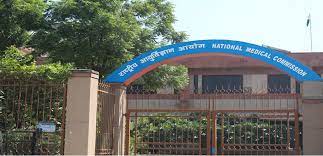
New Delhi, May 15, 2026 — In a sweeping move to bolster the quality of medical training in India, the National Medical Commission (NMC) has issued a mandate requiring all existing medical colleges to submit a comprehensive Annual Disclosure Report (ADR) by May 30, 2026. This directive, issued by the Under-Graduate Medical Education Board (UGMEB), serves as the primary gatekeeper for the renewal of MBBS seats for the 2026–27 academic session. Under a stricter, data-driven regulatory framework, the NMC warns that any institution failing to meet this deadline risks losing its permission to admit new students this year.
A Shift from “One-Time Approval” to Continuous Accountability
The new directive reinforces the Maintenance of Standards of Medical Education Regulations, 2023 (MSMER-2023). This regulatory shift effectively eliminates the old system, where colleges sought separate “recognition” for their MBBS degrees. Now, the annual renewal of seats is legally equivalent to formal recognition.
For students and parents, this means that the “recognition” of a medical degree is no longer a static milestone achieved years ago; it is a live status that must be earned every twelve months.
“These regulations push institutions away from one-time approvals toward continuous accountability,” explains Dr. Ananya Mehta, a health-systems researcher at the National Institute of Public Health, who is not involved in the NMC process. “The ADR is a tool to ensure that the quality of education does not slip after the initial inspection. It forces colleges to prove they are maintaining the standards they promised.”
The Requirements: Digital Proof and Fees
To comply with the mandate, colleges must navigate a rigorous online submission process. The NMC has made it clear that “paper trails” are a thing of the past. Key procedural requirements include:
-
Digital Submission: Reports must be filed exclusively through the designated NMC portal.
-
AEBAS Integration: Institutions must have their Academic, Examination, and Result-based Admission System (AEBAS) registered with the commission to even access the filing system.
-
Processing Fees: A non-refundable fee of ₹3,54,000 (inclusive of 18% GST) must be paid online.
-
Strict Deadline: The May 30 deadline is firm; the NMC has explicitly stated that no extensions will be granted.
What is Under the Microscope?
The ADR is not a mere administrative formality. It is a deep dive into the operational health of a medical institution. According to published summaries of the ADR template, colleges must provide granular data on:
-
Infrastructure: Verification of laboratories, libraries, radiology suites, and lecture halls.
-
Faculty Strength: Current teaching staff levels and their specific workloads to ensure students aren’t being taught by “ghost faculty.”
-
Clinical Material: Perhaps most critically, colleges must prove they have an adequate patient load to provide students with real-world clinical experience.
-
Student Feedback: Institutions must demonstrate they have active mechanisms to listen to and address student concerns.
Failure to meet these standards carries heavy stakes. The UGMEB has the authority to withhold seat renewals or impose staggering monetary penalties—up to ₹1 crore per violation for the institution and ₹5 lakh for individual faculty members found providing false declarations.
Why This Matters for Public Health
The link between medical education and patient safety is direct. If a medical student graduates from a college with broken X-ray machines, empty hospital beds, or absent professors, those deficits eventually manifest in the clinics and hospitals where they practice.
“If interns and residents are trained in environments with inadequate faculty or insufficient clinical exposure, that deficit eventually shows up in service delivery,” says Dr. Ravi Khanna, a public-health physician and medical-education consultant. “Annual disclosure is one way to catch such gaps early, ensuring that the next generation of doctors is actually prepared for the complexities of modern medicine.”
Potential Hurdles and Criticisms
While the medical community generally welcomes the push for transparency, some experts voice concerns regarding the “resource burden” on smaller institutions.
-
Financial Strain: The ₹3.54-lakh fee, while manageable for large private universities, may stretch the budgets of smaller government-run or rural colleges.
-
Data Integrity: The system still relies heavily on self-disclosure. Critics argue that without frequent, unannounced physical inspections, some institutions might still find ways to “window-dress” their data.
-
Public Transparency: Currently, much of this data remains behind the NMC portal. “The true test is whether the NMC publishes clear, comparable information so the public can see which colleges are repeatedly non-compliant,” notes Prof. Arvind Sharma, a retired medical-education administrator.
Advice for Aspiring Doctors and Families
For students currently appearing for entrance exams or considering admissions, the NMC’s tightening of the reins provides a layer of protection, but it also requires due diligence.
Experts suggest that prospective students should:
-
Verify Status: Check the NMC website to ensure a college has successfully renewed its seats for the 2026–27 session before committing to admission.
-
Look Beyond the Building: Ask current students about clinical exposure and whether faculty members are consistently present, as these are the primary metrics the NMC is now tracking.
For medical colleges, the era of the “one-and-done” inspection is over. Compliance is now an annual rhythm, requiring constant investment in faculty, facilities, and honest reporting.
Medical Disclaimer: This article is for informational purposes only and should not be considered medical advice. Always consult with qualified healthcare professionals before making any health-related decisions or changes to your treatment plan. The information presented here is based on current research and expert opinions, which may evolve as new evidence emerges.
References
-
NMC Public Notice: No. U-14021/01/2024-UGMEB regarding MBBS seat recognition and annual renewal (2026). [nmc.org]