 0
0
 0
0
New Delhi | February 28, 2026
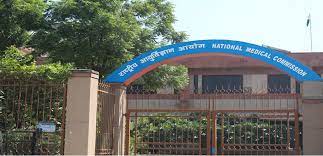
The National Medical Commission (NMC) has moved to significantly tighten the gateway for medical education in India, proposing a “zero tolerance” policy for incomplete applications from medical institutions. In a draft amendment notified via a gazette on February 17, 2026, the regulatory body signaled that it will no longer allow colleges to rectify missing documentation after submission, opting instead for automatic rejection.
The proposed changes to the Establishment of New Medical Institutions, Starting of New Medical Courses, Increase of Seats for Existing Courses & Assessment and Rating Regulations, 2023, aim to streamline the approval process while weeding out institutions that fail to meet rigorous administrative and infrastructural standards. By targeting Clause 9 and Clause 31 of the regulations, the NMC is effectively removing the “safety net” that previously allowed institutions to fix clerical or documented gaps during the review process.
The “One-Strike” Rule: Key Changes in Documentation
Under the current framework, entities wishing to start a medical college or expand seats must submit a comprehensive dossier. This includes an Essentiality Certificate (EC) from the state government, a Consent of Affiliation (CoA) from a recognized university, and proof of hospital capacity.
The draft amendment introduces a high-stakes “validity” test. Under the revised Explanation 3 of Clause 9, an application that misses even a single mandated document will not be considered a “valid scheme” under the NMC Act, 2019. Consequently, the Medical Assessment and Rating Board (MARB) will be mandated to reject the proposal immediately without offering the applicant an opportunity to rectify the error.
Administrative Easing for Postgraduates
Despite the stricter filing rules, the NMC has offered some procedural relief:
-
PG Expansion: Established colleges seeking to start new postgraduate (PG) courses will no longer require an Essentiality Certificate from the State/UT government.
-
Flexible Affiliation: The Consent of Affiliation (CoA) can now be issued in the name of the college or the parent entity, rather than strictly the applicant, reducing technical friction for multi-unit trusts or companies.
Cracking Down on “Back-Channel” Influence
Perhaps the most pointed change is the expansion of Clause 31, which addresses non-compliance and “undue influence.” The NMC has explicitly stated that any attempt to pressurize the MARB or NMC through third-party individuals or agencies will result in an immediate halt or rejection of the application.
“This is clearly a move toward a more transparent, rule-based system,” says Dr. Anil Kumar, a health-policy researcher at a Delhi-based think tank. “By removing discretion around ‘incomplete’ applications and tightening language on pressure tactics, the NMC is signaling that it will not tolerate procedural shortcuts or back-channel lobbying.”
Why the High Bar Matters for Public Health
The quality of a doctor is inextricably linked to the quality of the institution that trains them. India currently faces a paradox: a desperate need for more doctors in rural areas, yet a history of “paper colleges” that lack the actual clinical infrastructure to provide adequate training.
Dr. Meera Deshpande, a senior faculty member at a state-run medical college, believes the move protects future patients. “When every document is checked upfront, there is less scope for institutions to promise a lab-on-paper but actually cut corners in reality,” she notes.
Potential Benefits for Students and Patients:
-
Verified Infrastructure: Ensures that land, beds, and equipment meet clinical norms before students arrive.
-
Controlled Growth: Prevents the sudden “seat hikes” that can lead to overcrowded classrooms and diluted clinical exposure.
-
Accountability: Shifts the burden of proof entirely onto the institution, ensuring only serious players enter the medical education space.
The Counterargument: Rigor vs. Fairness
While the intent is to improve quality, some veteran educators worry the “no-rectification” policy may be too punitive for honest administrative errors.
“There is a balance to strike between rigor and fairness,” warns Dr. Rajiv Mehta, a former medical college principal. “The concept of rejecting incomplete applications is sound, but the NMC must ensure that criteria are clearly communicated. A strict ‘no-opportunity’ stance could penalize bona-fide applicants who miss a technical requirement in a resource-constrained state.”
Critics also point out that while the application process is becoming more digital and streamlined, the human element—specifically the accuracy of the portal and the clarity of the guidelines—must be infallible if “automatic rejection” is the standard.
What This Means for Stakeholders
| Stakeholder | Practical Impact |
| Medical Colleges | Must treat the checklist as non-negotiable; internal audits are now essential before filing. |
| State Govts | Reduced burden for PG course approvals, allowing for faster specialty expansion. |
| Students/Parents | Greater assurance that a “permitted” college has met all technical and financial benchmarks. |
| Universities | Need to update the wording of Affiliation letters to match the new flexible name requirements. |
Looking Ahead
As of late February 2026, these amendments remain in the “draft” stage, open for public comment. Stakeholders are watching closely to see if the NMC will provide a “pre-submission” portal or a digital validation tool to help colleges avoid the “automatic rejection” trap.
Ultimately, the proposal marks a shift from a reactive regulatory model to a proactive one, where the responsibility for quality and compliance is placed squarely on the shoulders of the medical institutions themselves.
References
Medical Disclaimer: This article is for informational purposes only and should not be considered medical advice. Always consult with qualified healthcare professionals before making any health-related decisions or changes to your treatment plan. The information presented here is based on current research and expert opinions, which may evolve as new evidence emerges.