 0
0
 0
0
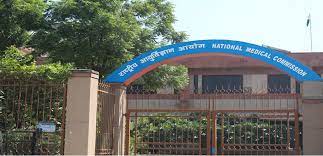
NEW DELHI — In a major regulatory move aimed at safeguarding the quality of medical education and patient care, the National Medical Commission (NMC) has published draft amendments that would bar approval for new medical colleges, new courses, or increases in student intake unless all prescribed infrastructure and statutory clearances are fully in place.
The rule change, released for public comment via an official Gazette notification published in July 2026, signals a decisive shift toward stricter accountability. Under the proposed framework, incomplete or document-deficient applications will be treated as summarily invalid. The draft also introduces stringent financial and governance safeguards for institutions seeking to start or expand medical education programmes across the country.
Zero Tolerance for “Work-in-Progress” Education
The draft amendments introduce a strict “readiness-first” mandate. Applicants must submit definitive evidence that hospital buildings, college academic blocks, and all required operational facilities are entirely completed before any statutory permission is granted. This effectively rules out the historical practice of issuing conditional approvals based on temporary arrangements, rented properties, or work-in-progress construction sites.
Furthermore, the Medical Assessment and Rating Board (MARB) aims to streamline its evaluation process by eliminating prolonged administrative back-and-forth. Applications missing mandatory documents will be rejected immediately, without the traditional opportunity to rectify deficiencies later.
To ensure financial transparency, applicants must provide a fresh solvency certificate issued within 90 days of filing. The proposal also mandates the creation of a dedicated corpus fund for medical colleges—with the exact amount to be fixed by the MARB—to ensure long-term operational viability. While the draft expands the scope of eligible applicant entities to include private companies, it simultaneously tightens anti-influence provisions. Any attempt to sway MARB or NMC decisions will result in immediate suspension or rejection of the application.
Experts Value Quality Over Unregulated Growth
Medical education specialists have cautiously welcomed the development, noting that the tightening of physical verifications addresses a systemic vulnerability in health workforce training.
“Tighter infrastructure checks could significantly reduce the number of ‘paper colleges’—institutions that exist largely on document sets but lack the fully operational teaching hospitals necessary for robust clinical training,” says Dr. S. Reddy, a medical education specialist unaffiliated with the drafting committee. “Without adequate, high-volume clinical exposure, medical students cannot develop the diagnostic instincts required for safe independent practice.”
Representatives from national medical educators’ bodies echo this sentiment. While acknowledging that the stricter documentation rules may slow down the rapid expansion of undergraduate and postgraduate seats in the near term, they argue that enforcing finished infrastructure is non-negotiable. Proponents emphasize that protecting learning standards prevents the exploitation of temporary facilities, which frequently leave students undertrained and unprepared for real-world clinical environments.
Balancing Past Flexibilities with Core Infrastructure
The present draft arrives on the heels of a shifting regulatory landscape. In April 2026, the NMC implemented guidelines that eased certain regional constraints, removing absolute undergraduate seat caps and revising the maximum allowable distance between medical colleges and teaching hospitals to provide regional flexibility.
However, the July 2026 draft targets a separate, persistent problem: institutions running full-time academic and clinical programmes before their primary infrastructure is functional. Over the years, external peer reviewers and student advocacy groups have frequently argued that operating in half-built spaces compromises both undergraduate training quality and the safety of the patients seeking subsidized care at these teaching hospitals.
+------------------------------------------+------------------------------------------+
| Previous Framework (Evolving 2023-2026)  | Proposed July 2026 Amendments            |
+------------------------------------------+------------------------------------------+
| Conditional approvals allowed based on   | Structural elements must be 100% complete|
| construction timelines and promises.     | before application review.               |
+------------------------------------------+------------------------------------------+
| Opportunities provided to rectify missing| Deficient or incomplete applications are |
| documentation during evaluation.         | summarily rejected without cure periods. |
+------------------------------------------+------------------------------------------+
| Varied financial monitoring structures   | Mandatory corpus fund and fresh 90-day   |
| across private and public sectors.       | solvency certificates required.          |
+------------------------------------------+------------------------------------------+
Public Health Implications: The Cost of Clinical Competence
If adopted, the public health and macroeconomic impacts will be felt in waves:
-
The Near-Term Outlook: The pace of new seat approvals is expected to decelerate as college trusts and state governments pause to align physical realities with their paperwork.
-
The Long-Term Outlook: Future batches of doctors will graduate with highly consistent clinical exposure. Training inside fully equipped, operational hospitals directly correlates with reduced medical errors and enhanced patient safety.
-
Financial Resilience: The mandatory corpus fund aims to cushion institutions against sudden fiscal shortfalls. In the past, institutional audits of private medical colleges have highlighted that sudden funding deficits frequently interrupt academic schedules and degrade essential hospital supplies, creating operational risks for both students and patients.
Constraints and Regional Counterarguments
Despite the clear focus on quality, the draft has drawn criticism from regional development planners. Critics warn that the absolute ban on conditional approvals could unintentionally stifle the growth of medical infrastructure in underserved, rural, or remote regions. In areas where capacity expansion is most desperately needed, state authorities often rely on phased funding, where a college begins operations while the tertiary wings of the hospital are completed in stages.
The refusal to allow rectification of simple procedural flaws has also been flagged as excessively rigid. Stakeholders worry that high-quality, vital projects might be delayed by an entire calendar year due to minor clerical errors. Recognizing these complexities, the NMC has opened a 30-day public consultation window, inviting medical professionals, institutional heads, and the public to submit objections and constructive suggestions before the rules are finalized.
What This Means for Students and Policymakers
For prospective medical students and their families, the draft provides a layer of consumer and educational protection. Enrolment under these tightened rules guarantees that an institution possesses functional teaching labs, operational wards, and active patient lines from day one, minimizing the risk of entering a sub-par training environment.
For policymakers, university boards, and state health authorities, the regulatory shift underscores the necessity of early, coordinated planning. Entities must secure land, finalize hospital construction, obtain university affiliation, and verify financial liquidity long before initiating the NMC application workflow. The era of building a medical college concurrently with its first incoming class appears to be drawing to a close.
References and Sources
-
Study & Regulatory Citations: National Medical Commission (NMC) Gazette Notification, Draft Amendments to the Establishment of Medical Colleges Regulations, Published July 2026; Undergraduate Minimum Standard Requirements (UG-MSR) Guidelines.
-
Industry & Press Sources:
-
“NMC draft amendment bars approval for new medical colleges, courses, seat hike without complete infrastructure,” Medical Dialogues, Published July 14, 2026
-
Medical Disclaimer: This article is for informational purposes only and should not be considered medical advice. Always consult with qualified healthcare professionals before making any health-related decisions or changes to your treatment plan. The information presented here is based on current research and expert opinions, which may evolve as new evidence emerges.