 0
0
 0
0
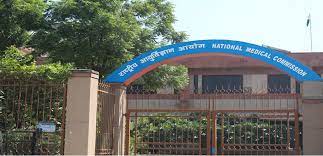
NEW DELHI — In a decisive move to purge corruption and “backdoor” lobbying from India’s medical education system, the National Medical Commission (NMC) has proposed stringent new amendments that empower it to summarily reject applications from medical institutions attempting to exert external pressure on regulatory bodies.
The draft regulations, issued via a gazette notification on February 17, 2026, signal a zero-tolerance shift following years of high-profile scandals involving substandard colleges and bribed officials. By raising the stakes from a mere “pause” in processing to an outright “rejection,” the NMC aims to ensure that the next generation of Indian doctors is trained in institutions built on merit rather than influence.
A Shift from Halting to Hard Rejection
The heart of this regulatory crackdown lies in the amendment to Clause 31(h) of the Establishment of Medical Institutions, Assessment and Rating Regulations. Under the previous 2023 framework, if an institution attempted to influence the Medical Assessment and Rating Board (MARB) through third-party agencies or individuals, the NMC would simply halt the application process.
The 2026 amendment escalates this penalty significantly:
“Any attempt to pressurise MARB or NMC through individuals or agency will lead to immediate halt of the processing or rejection of the application(s)/request(s) by the medical Institution.”
This “rejection” clause applies to the entire lifecycle of a medical college’s regulatory needs, including:
-
Applications for establishing new medical colleges.
-
Requests to increase MBBS or postgraduate seat capacity.
-
Approvals for starting new specialized courses.
-
Renewal of existing recognition.
Financial Accountability and Transparency
Beyond the crackdown on lobbying, the draft introduces several structural changes designed to streamline operations and ensure financial stability:
-
Broadened Eligibility: Companies registered under the Companies Act, 2013, and state-registered trusts are now explicitly eligible to establish medical institutions.
-
Mandatory Corpus Fund: To prevent colleges from folding mid-session due to financial instability, institutions must now maintain a corpus fund. The specific amounts will be determined by MARB and reviewed periodically.
-
Stricter Documentation: Applications must now include solvency certificates reflecting the most recent completed financial year. Incomplete applications will face immediate withholding or rejection under a revised Clause 31(c).
Context: The Shadow of the 2025 Scandals
The NMC’s aggressive stance is a direct response to a tumultuous period in medical regulation. In 2025, a CBI probe unearthed a staggering ₹1,000 crore scam involving officials within the NMC and the Health Ministry. Investigations revealed that bribes were exchanged to grant approvals to “ghost colleges”—institutions that lacked the necessary infrastructure, faculty, and patient loads to provide adequate training.
This corruption led to a temporary freeze on all new college approvals for the 2025-26 academic year. Furthermore, the Rajasthan High Court and other judicial bodies have recently rebuked MARB for inconsistent enforcement and “retrospective” cancellations, highlighting a desperate need for a clear, legally defensible framework.
With India adding over 10,600 new MBBS seats and 41 new colleges in the last year alone, the stakes for public health have never been higher.
Expert Perspectives: Merit vs. Overreach
Medical educators and public health experts are cautiously optimistic about the draft, though some warn of potential pitfalls.
Dr. Sanjay Pai, former dean of a premier medical college in Mumbai, views the move as a necessary evolution. “This amendment fortifies the NMC’s autonomy,” Dr. Pai noted in an interview. “It deters the ‘backdoor’ influences that unfortunately became a hallmark of the old Medical Council of India (MCI) regime. Rejecting applications outright sends a clear message: merit must come before manipulation.”
However, Dr. Meera Reddy, a public health expert at AIIMS Delhi, emphasizes the need for precise definitions. “While the intent is noble, we must ensure ‘pressure’ is clearly defined,” she says. “We don’t want this used to stifle legitimate advocacy. For instance, several southern states have legally challenged seat caps based on their regional healthcare needs. That is a democratic right, not ‘undue pressure.'”
Public Health: Why This Matters to Patients
For the general public, the quality of medical education is a matter of life and death. India currently struggles with a doctor-to-population ratio that often exceeds the WHO-recommended 1:1,000. While increasing the number of doctors is a national priority, doing so through substandard colleges creates a “quantity over quality” crisis.
Key Public Health Implications:
-
Patient Safety: Graduates from “ghost colleges” may lack the clinical competency to handle complex medical emergencies, leading to higher rates of medical errors.
-
Equitable Access: By curbing corruption, the NMC ensures that seats are distributed to institutions that actually have the facilities to serve their local communities.
-
Trust in Healthcare: Transparent regulations help rebuild public trust in the medical profession, which has been shaken by repeated admission scandals.
Potential Limitations and Counterarguments
Despite the positive reception, the “regulatory gamble” carries risks. Smaller, rural-based trusts have expressed concern that the new corpus fund requirements might favor large corporate players, potentially leading to a “corporatization” of medical education where profit motives overshadow community service.
Additionally, critics point to the NMC’s history of administrative “flip-flops” regarding the National Exit Test (NExT) and NEET implementations. There is a lingering concern that if the “pressure” clause is applied inconsistently, it could lead to another round of prolonged litigation in the High Courts.
The Path Forward
The NMC has invited stakeholders—including medical professionals, college administrators, and the public—to submit objections or suggestions regarding the draft within 30 days. Once reviewed, the final rules will be published in the Official Gazette as the Establishment of New Medical Institutions, Assessment & Rating (Amendment) Regulations, 2026.
For aspiring medical students, these changes suggest a future where their degree carries the weight of a rigorous, untainted accreditation process. For the Indian patient, it is a step toward ensuring that the person holding the stethoscope earned their place through excellence, not influence.
Would you like me to summarize the specific financial requirements for the new corpus funds as they are released in the final gazette?
Medical Disclaimer
This article is for informational purposes only and should not be considered medical advice. Always consult with qualified healthcare professionals before making any health-related decisions or changes to your treatment plan. The information presented here is based on current research and expert opinions, which may evolve as new evidence emerges.
References
-
Medical Dialogues. (2026, February 25). Any attempt to pressurise NMC, MARB will lead to immediate halt or rejection of medical college applications: NMC. https://medicaldialogues.in/health-news/nmc/any-attempt-to-pressurise-nmc-marb-will-lead-to-immediate-halt-or-rejection-of-medical-college-applications-nmc-165455