 0
0
 0
0
ATLANTA — Federal public health agencies have expanded their investigation into a fast-moving foodborne illness outbreak after laboratory confirmed cases of Cyclospora infection spiked to nearly 2,000 across nine U.S. states.
According to updated surveillance data released on July 24, 2026, by the U.S. Centers for Disease Control and Prevention (CDC), at least 1,947 people have fallen ill with cyclosporiasis after consuming contaminated iceberg lettuce. The outbreak has resulted in 98 hospitalizations to date, though no fatalities have been reported. Epidemiologic tracking and traceback evidence point directly to iceberg lettuce harvested and processed by Taylor Farms de Mexico as the primary vector of infection.
Originally flagged in early July 2026 across five states (Indiana, Kentucky, Michigan, Ohio, and West Virginia), the CDC confirmed that four additional states—Illinois, Kansas, Oklahoma, and Pennsylvania—have now documented laboratory-confirmed cases tied to the contaminated supply chain.
Traceback and the Challenge of Parasitic Outbreaks
Foodborne outbreaks involving parasites present unique investigative hurdles compared to bacterial pathogens like E. coli or Salmonella.
Epidemiologists from the U.S. Food and Drug Administration (FDA) and local health departments traced the current cluster through restaurant supply chain invoices, distributor records, and patient meal histories. Because raw iceberg lettuce is frequently shredded, mixed, and distributed in bulk across commercial foodservice networks, a single contaminated agricultural source can rapidly impact consumers across vast geographical boundaries before health officials detect a pattern.
Public health officials emphasize that the official tally of 1,947 cases represents solely the individuals whose stool samples were formally tested, identified, and reported through official public health surveillance networks. Because many gastrointestinal illnesses go undiagnosed or un-reported, the actual number of individuals affected across these nine states is likely significantly higher.
Anatomy of a Microscopic Threat: Understanding Cyclospora
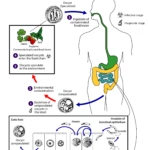
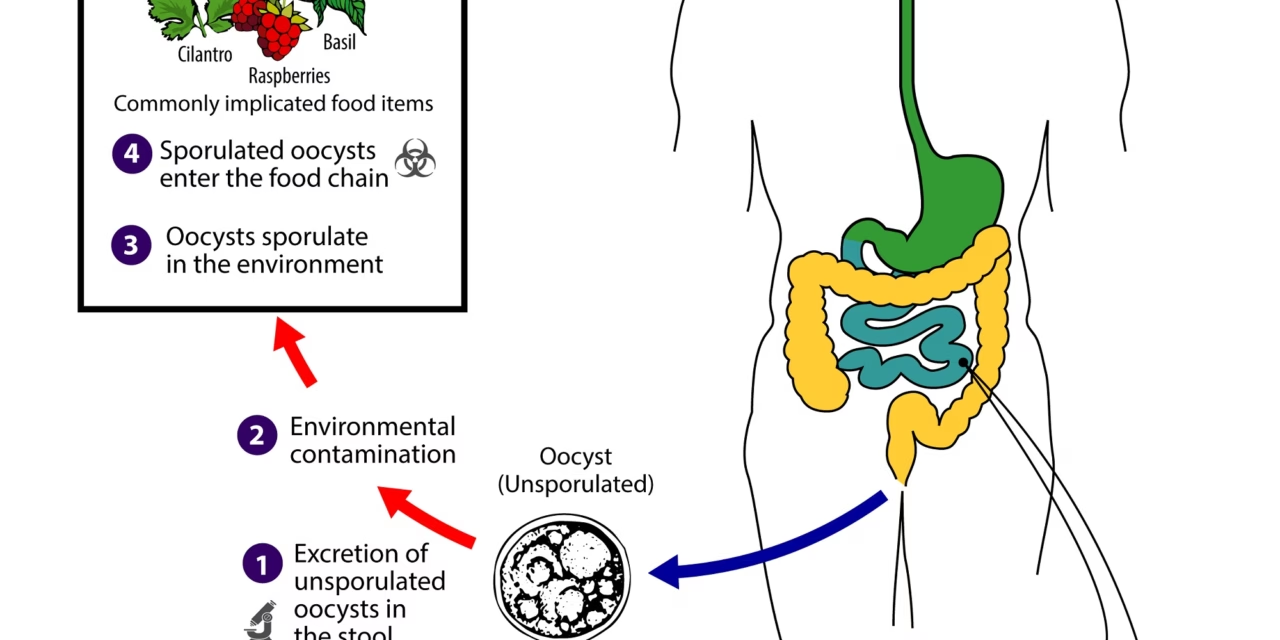
The pathogen responsible for this outbreak, Cyclospora cayetanensis, is a microscopic single-celled parasite (protozoan) that infects the small intestine. Humans acquire the parasite by ingesting food or water contaminated with microscopic fecal material containing the organism’s oocysts (egg-like structures).
Clinical Presentation and Progression
Unlike typical bacterial food poisoning, which often strikes within hours, cyclosporiasis has a delayed onset. According to CDC clinical guidelines, symptoms usually manifest about one week after consuming contaminated food, though the incubation period can range anywhere from 2 days to over 2 weeks.
-
Primary Symptom: Profuse, watery diarrhea is the defining hallmark of infection.
-
Secondary Symptoms: Patients frequently experience severe fatigue, abdominal cramping, bloating, nausea, loss of appetite, involuntary weight loss, body aches, and low-grade fever.
-
Duration: Left untreated, the infection can follow a relapsing course lasting from several days to a month or longer, with symptoms waxing and waning repeatedly.
Key Takeaway: Cyclospora parasites cannot be washed off produce with standard tap water alone. Unlike bacteria, routine chemical washing or cold storage does not reliably destroy the parasite’s protective outer shell. Prevention relies entirely on preventing agricultural contamination at the source.
Clinical Implications for Diagnostic Testing
A major factor complicating the public health response is diagnostic oversight. Standard stool cultures routinely ordered for gastrointestinal distress do not detect Cyclospora.
To diagnose cyclosporiasis, healthcare providers must explicitly order specialized stool tests, such as anova Ova and Parasite (O&P) examination with modified acid-fast staining, or a targeted gastrointestinal multiplex Polymerase Chain Reaction (PCR) panel.
On July 14, 2026, the CDC issued a formal Health Alert Network (HAN) advisory instructing clinicians and laboratorians across the United States to consider Cyclospora testing for any patient presenting with persistent diarrhea lasting longer than a few days, particularly if the patient reports consuming raw produce or dining out recently.
       [ Contaminated Water/Soil Exposure at Farm ]
                           │
                           ▼
          [ Distribution to Commercial Kitchens ]
                           │
                           ▼
     [ Incubation Period: ~7 Days (Range 2-14 Days) ]
                           │
                           ▼
 [ Symptoms: Watery Diarrhea, Relapsing Cramps & Fatigue ]
                           │
                           ▼
 [ Specialized Testing Required: Acid-Fast Stain or PCR ]
Standard antibacterial agents (such as ciprofloxacin) or over-the-counter anti-diarrheal medications are generally ineffective at clearing Cyclospora. The standard first-line treatment recommended by infectious disease guidelines is a specific combination antibiotic regimen of trimethoprim-sulfamethoxazole (TMP-SMX), sold commercially under brand names like Bactrim or Septra.
Public Health Context and Limitations
Public health authorities caution against drawing premature conclusions regarding broader produce safety. While the multi-state outbreak is directly linked to specific commercial lots of iceberg lettuce processed by Taylor Farms de Mexico, the CDC is simultaneously tracking background seasonal surges in cyclosporiasis that occur independently each summer across the U.S.
Epidemiologists note two critical context points:
-
Multiple Active Vectors: Not all current national Cyclospora cases belong to this specific iceberg lettuce cluster; concurrent independent investigations are underway for other produce commodities.
-
Targeted Risk: The current risk is tied to specific supply-chain breakdowns at identified processing locations, not to iceberg lettuce as a whole food category. Consumer advisories apply strictly to recalled lots and affected regional distribution networks.
Actionable Guidance for Consumers and Foodservice Operators
The CDC and FDA advise consumers, restaurant operators, and institutional kitchens in the affected states (IL, IN, KS, KY, MI, OH, OK, PA, WV) to take immediate preventive measures:
-
Check Recalls: Identify and discard any recalled iceberg lettuce products sourced from Taylor Farms de Mexico. Do not eat, serve, or sell recalled produce.
-
Sanitize Storage: Thoroughly wash and sanitize any refrigerator shelves, countertops, or utensils that came into direct contact with recalled produce to prevent cross-contamination.
-
Monitor Health: Individuals who consumed raw iceberg lettuce and experience persistent watery diarrhea, fever, or severe abdominal pain should seek medical care and inform their clinician of possible Cyclospora exposure.
-
Prioritize Hydration: Because prolonged diarrhea can lead to fluid loss and electrolyte imbalances, affected individuals should maintain oral rehydration until evaluated by a professional.
References
- https://www.bbc.com/news/articles/cwyqgnp8wv8o
Medical Disclaimer: This article is for informational purposes only and should not be considered medical advice. Always consult with qualified healthcare professionals before making any health-related decisions or changes to your treatment plan. The information presented here is based on current research and expert opinions, which may evolve as new evidence emerges.