 0
0
 0
0
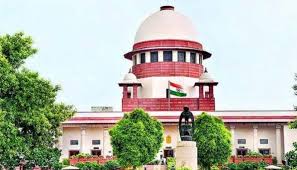
NEW DELHI — On April 28, 2026, the Supreme Court of India is scheduled to hear a pivotal batch of petitions that could redefine the landscape of specialist medical education in the country. The bench will examine the legal and ethical validity of a controversial decision to drastically lower the qualifying percentile for the NEET-PG 2025-26 academic session—a move that, in some categories, reduced the eligibility threshold to zero or even negative marks. As the nation faces a chronic shortage of specialist doctors, the court must now weigh the desperate need to fill vacant medical seats against the fundamental necessity of maintaining rigorous academic standards for those entrusted with advanced patient care.
The Core of the Controversy: A Deep Dive into the Numbers
The legal battle stems from a notice issued by the National Board of Examinations in Medical Sciences (NBEMS) on January 13, 2026. Seeking to address thousands of vacant seats following initial rounds of counseling, the board authorized a sharp reduction in qualifying scores for the third round of the NEET-PG process.
The scale of the reduction has startled the medical community:
-
General/EWS Category: The cut-off plummeted from the 50th percentile (score of 276/800) to the 7th percentile (score of 103/800).
-
General PwBD: The threshold fell from the 45th percentile (score of 255) to the 5th percentile (score of 90).
-
Reserved Categories (SC/ST/OBC): Most controversially, the cut-off was slashed from the 40th percentile to the 0th percentile, effectively lowering the qualifying score to minus 40.
While the NBEMS clarified that individual candidate ranks would remain unchanged, the eligibility net was cast wide enough to include almost every candidate who sat for the exam, regardless of their performance.
The “Waste of Seats” Argument
The government’s rationale for this “zero-threshold” approach is rooted in logistics and public health infrastructure. India has aggressively expanded its medical education capacity, increasing postgraduate seats to 58,331 for the 2025-26 session—an addition of over 8,400 seats from the previous year.
Despite this expansion, the Ministry of Health and Family Welfare informed Parliament that 1,140 seats remained vacant after the “stray vacancy” round of counseling. To the government, a vacant seat represents a wasted opportunity to train a specialist who could eventually serve in a rural or underserved area.
Authorities argue that NEET-PG is not a “licensing” exam, but a “ranking” tool. Since every candidate already holds an MBBS degree and has passed the requisite university exams to become a doctor, the government contends that they possess a baseline of competence. They further emphasize that postgraduate training is a three-year supervised residency where candidates must pass rigorous internal and external assessments before being granted an MD or MS degree.
The Case for Merit: Is Patient Safety at Risk?
Petitioners challenging the move argue that such a drastic reduction is “arbitrary” and “irrational.” They suggest that if a candidate cannot secure a positive score in a competitive entrance exam, their aptitude for high-stakes specialties—such as neurosurgery or critical care—must be questioned.
Senior Advocate Gopal Sankarnarayanan, representing the petitioners, argued during preliminary hearings that the “vacant seat” crisis is not due to a lack of eligible candidates, but rather the prohibitive cost of education in private medical colleges. By lowering the bar to zero, critics argue, the government is essentially helping private institutions fill high-fee seats with low-merit candidates, rather than addressing the underlying issue of affordability.
“The concern is not just about a test score,” says Dr. Aranya Sen, a medical education consultant not involved in the litigation. “It is about the signal it sends. If the entry barrier is non-existent, does the quality of the specialist pool suffer? While they are supervised during residency, these are the doctors who will be performing surgeries and managing complex cases independently in three years’ time.”
Balancing Public Health and Professional Excellence
The Supreme Court bench has acknowledged the complexity of the issue, noting that it must find a balance between preventing seat wastage and ensuring that the quality of medical education is not diluted.
From a public health perspective, the stakes are high. India’s doctor-to-population ratio has improved, but the shortage of specialists—pediatricians, radiologists, and gynecologists—remains acute in community health centers.
“We are at a crossroads,” explains a public health policy expert. “We cannot afford to leave 1,000 specialist training slots empty every year. However, we also cannot afford a system where the entrance exam becomes a mere formality. The court’s decision will likely hinge on whether the government can prove that the three-year residency ‘exit’ standards are robust enough to catch any deficiencies allowed at ‘entry’.”
Practical Implications for Students and Patients
For current medical graduates, the April 28 hearing will provide much-needed clarity on the validity of their admissions. If the court upholds the reduction, the current counseling cycle will proceed, potentially filling most of the 58,000+ seats. If the court finds the reduction unconstitutional or unreasonable, it could trigger a massive recalibration of the admission process.
For the general public, the debate highlights the importance of the Exit Exam (NExT), which the government proposes as a uniform standard for all medical graduates. This would shift the focus of quality control from the “input” (entrance exams) to the “output” (licensing exams).
Looking Ahead
As the legal proceedings unfold, the medical community remains divided. Supporters of the move point to the fact that postgraduate students are effectively “doctors-in-training” who contribute significantly to hospital manpower. Opponents maintain that medicine is a profession where “merit” should never be a secondary consideration.
The Supreme Court’s ruling on April 28 will not only decide the fate of the 2025-26 batch but will set a precedent for how India balances the quantity of its healthcare workforce with the quality of its medical specialists.
References
- https://www.socialnews.xyz/2026/04/07/sc-to-hear-pil-challenging-reduction-in-qualifying-percentiles-for-neet-pg-on-april-28/
Medical Disclaimer: This article is for informational purposes only and should not be considered medical advice. Always consult with qualified healthcare professionals before making any health-related decisions or changes to your treatment plan. The information presented here is based on current research and expert opinions, which may evolve as new evidence emerges.