 1
1
 0
0
The future of nearly 23 lakh medical-aspirant students across India has been plunged into deep uncertainty following the National Testing Agency’s (NTA) unprecedented decision to cancel the National Eligibility cum Entrance Test (Undergraduate) (NEET-UG) 2026. The sweeping cancellation follows verified allegations of a multi-state paper leak and a highly organized exam-fraud racket.
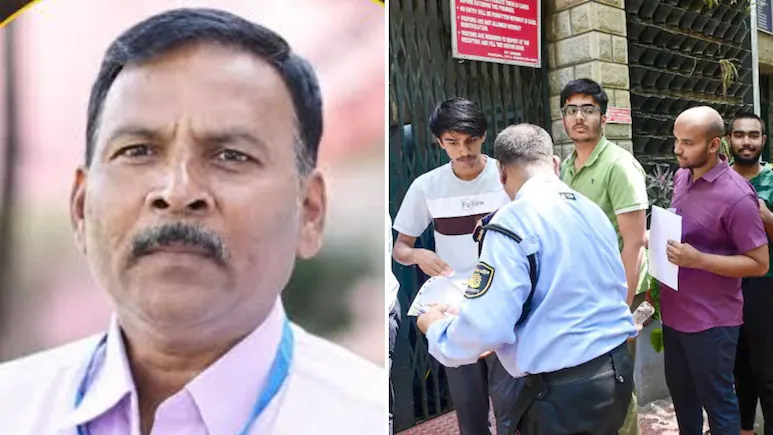
At the center of the widening Central Bureau of Investigation (CBI) probe is P V Kulkarni, a prominent chemistry professor from Pune, Maharashtra. Arrested from his residence on May 15, 2026, Kulkarni is alleged by federal investigators to be the “kingpin” and primary source of the compromised exam material. His long-standing role as a domain-expert member of the NTA’s question-paper-setting panels reportedly granted him high-level access to the confidential test repository, exposing structural vulnerabilities at the very top of India’s medical education gateway.
The Anatomy of the Leak
The NEET-UG 2026 examination was conducted nationwide on May 3, 2026. However, within days, digital forensics and local intelligence revealed that identical test questions were circulating on social media and encrypted messaging platforms prior to the exam.
According to official CBI filings, investigators intercepted a digital PDF containing approximately 410 questions. Within this document, roughly 140 questions directly matched the live test material—with an overwhelming 120 of those questions originating from the chemistry section.
NEET-UG 2026 Intercepted PDF Leak Breakdown:
┌────────────────────────────────────────────────────────┐
│ Total Questions in Intercepted PDF: 410                 │
├────────────────────────────────────────────────────────┤
│ Total Suspected "Live Match" Questions: 140             │
│   ├── Chemistry Questions: 120 (85.7%)                 │
│   └── Other Sections: 20 (14.3%)                       │
└────────────────────────────────────────────────────────┘
The leak has been traced along a highly sophisticated supply chain. Investigators allege the material originated from a secure printing agency in Jaipur, Rajasthan, before being distributed through an underground commercial coaching network spanning five states:
-
Rajasthan
-
Maharashtra
-
Haryana
-
Bihar
-
Kerala
While the NTA initially clarified that the entire three-hour paper had not been compromised in its entirety, the agency ultimately acknowledged that the presence of even a single matching question invalidated the fairness of the competitive selection process, leaving them no choice but to scrap the exam.
From Educator to “Kingpin”
On May 12, 2026, the CBI registered a formal First Information Report (FIR) based on a complaint from the Department of Higher Education (NTA Division). The agency invoked stringent provisions under the Bharatiya Nyaya Sanhita (BNS) for criminal conspiracy, cheating, and criminal breach of trust, alongside charges under the Prevention of Corruption Act and the newly enacted Public Examinations (Prevention of Unfair Means) Act, 2024.
The initial wave of enforcement resulted in the arrest of five individuals: three in Jaipur, one in Gurugram, and one in Nashik. However, the arrest of Kulkarni in Pune marked a critical breakthrough.
Federal officials allege that in the final week of April 2026, Kulkarni exploited his insider access to conduct covert, high-priced coaching sessions at his private residence. During these sessions, he allegedly dictated exact questions, multiple-choice options, and corresponding answer keys to a select group of students. Discovered handwritten notes seized during the Pune raids allegedly match the final NEET-UG 2026 chemistry section word-for-word. Manisha Waghmare, a Pune-based associate also taken into custody, is alleged to have acted as the primary coordinator, mobilizing affluent families and collecting substantial financial payouts to secure student attendance at these illicit sessions.
The Public Health Implications: Equity and Workforce Quality
While the NEET-UG scandal is fundamentally a failure of education governance, its downstream effects represent a brewing public health crisis for India. NEET-UG stands as the sole, mandatory gateway for admission to undergraduate medical (MBBS) and dental (BDS) seats across all government and private institutions in the country.
Public health educators warn that compromising the integrity of this exam fundamentally risks the quality of India’s future healthcare workforce. When a high-stakes gatekeeper is bypassed through financial or criminal collusion, individuals who may not possess the requisite academic competency can displace highly qualified candidates.
“When an entrance exam of this magnitude is perceived as compromised, you don’t just lose trust in a test; you systematically erode public trust in the entire pipeline of future physicians,” says Dr. Ananya Mehta, a Delhi-based public health educator and medical policy analyst. “If the structural safeguards selecting our doctors are weak, it eventually compromises patient safety and erodes community confidence in the healthcare system itself.”
Furthermore, the crisis carries severe socio-economic health implications. High-stakes exam fraud disproportionately disenfranchises students from low-income or rural backgrounds. These candidates often study without the aid of expensive private coaching or the financial safety net required to sustain repeated gap years while waiting for rescheduled examinations.
Systemic Weaknesses in Centralized Testing
This crisis marks the first time in the history of the NTA (which assumed control of the medical entrance exam in 2019) that an entire NEET-UG exam has been cancelled nationwide. Security analysts point out that hyper-centralized, high-stakes testing frameworks create single points of failure.
Because the future of 23 lakh candidates relies on a singular set of documents, the entire system depends heavily on the unassailable integrity of a very small group of human actors:
-
Panel members and question setters
-
Printing house technicians
-
Logistics and transport personnel
-
On-site invigilators
“You can deploy the most advanced, encrypted digital platforms available, but if the human chain is not completely insulated through strict role compartmentalization, continuous monitoring, and mandatory rotation, you are building a national system on sand,” observes Professor Rajiv Khanna, an education-policy researcher at a New Delhi-based think tank.
Context, Limitations, and Legal Counterarguments
Despite the gravity of the CBI’s public statements, legal observers urge caution regarding the media narrative surrounding the case. As of mid-May 2026, the CBI has not yet filed a formal, comprehensive charge sheet or a finalized digital forensic report in a court of law. The details regarding the exact transmission routes and the precise depth of Kulkarni’s involvement remain allegations until proven beyond a reasonable doubt in a court of law. Legal experts note that premature labeling of individuals as “kingpins” risks prejudicing public perception and complicating due process.
Additionally, a growing faction of educators and parents argues that a blanket, nationwide cancellation represents an overly punitive measure. They contend that canceling the exam for all 23 lakh candidates unfairly penalizes the vast majority of honest students to catch a localized network of offenders.
Alternative crisis-management protocols have been proposed, including:
-
Targeted cancel-and-retest orders restricted strictly to affected regional centers or specific digital footprints.
-
The pre-emptive deployment of distinct, regional multi-set question papers.
-
The implementation of advanced data analytics to identify statistical anomalies in specific centers without disrupting the national student body.
The Psychological Toll on Families
For the millions of young aspirants, the immediate reality is a state of severe psychological distress. The cancellation has triggered widespread reports of acute anxiety, sleep disturbances, and depression among students who have spent years in rigorous, isolating preparation cycles. Many families have invested their life savings into specialized coaching fees, lodging, and materials.
The Cyclical Stress Toll on Medical Aspirants:
[Academic Exhaustion] ➔ [Exam Cancellation] ➔ [Financial Strain] ➔ [Prolonged Uncertainty]
Mental health professionals advising academic institutions emphasize that families must actively address this crisis as a psychological vulnerability.
“Students are not mere data points in an administrative cleanup; they are adolescent individuals under immense societal and parental pressure,” notes Dr. Mehta. “We are urging parents to monitor for signs of clinical withdrawal, enforce strict routines decoupled from 24/7 news consumption, and treat this period as a acute mental health challenge requiring active emotional support.”
Pathways Toward Systematic Reform
As the CBI continues its cross-country raids, policymakers are facing immense pressure to implement structural reforms to restore the integrity of the medical entrance system. Prominent recommendations from education governance reports include:
-
Strict Compartmentalization: Complete decoupling of communication between paper-setting panels, security printing presses, and logistics management to ensure no single individual understands the full chain of custody.
-
Mandatory Expert Rotation: Implementing short-term, unannounced rotations of domain experts on question panels to prevent long-term entrenchment and collusion with private coaching centers.
-
Immutable Digital Audits: Utilizing blockchain or advanced encrypted logging for all steps of document creation and transfer, creating an unalterable trail of access.
-
Coaching Industry Regulation: Establishing rigid oversight over commercial coaching entities to penalize the cultivation of “inside-information” marketing tactics.
The strict enforcement of the Public Examinations (Prevention of Unfair Means) Act, 2024—which carries severe financial penalties and long-term imprisonment—is widely viewed as a necessary deterrent. However, structural survival of the system will ultimately depend on whether India can transition its testing architecture away from vulnerable human nodes toward an insulated, fail-safe infrastructure.
References
-
The New Indian Express. (May 15, 2026). “CBI arrests Pune chemistry lecturer alleged to be ‘kingpin’ in NEET-UG paper leak.”
Medical Disclaimer: This article is for informational purposes only and should not be considered medical advice. Always consult with qualified healthcare professionals before making any health-related decisions or changes to your treatment plan. The information presented here is based on current research and expert opinions, which may evolve as new evidence emerges.