 0
0
 0
0
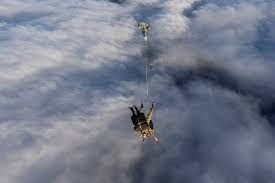
EDINBURGH — In an unprecedented display of humanitarian logistics, British military forces executed a high-stakes parachute operation onto Tristan da Cunha on May 10, 2026. The mission aimed to deliver life-saving medical oxygen and specialist personnel to the world’s most isolated inhabited community following a suspected case of the rare and deadly Andes hantavirus. The operation, involving a 10,000-kilometer journey from the United Kingdom, marks the first time paratroopers have been deployed to the South Atlantic territory for a medical emergency, highlighting the extreme vulnerabilities of remote populations in the face of modern infectious disease outbreaks.
A Race Against Isolation
Tristan da Cunha, located roughly 2,400 kilometers (1,500 miles) from the nearest mainland in South Africa, defines the word “remote.” With no airstrip and a population of approximately 250 residents, the island relies entirely on sea travel. When a local resident began exhibiting respiratory distress compatible with hantavirus on April 28, the island’s modest Camogli Hospital faced a critical shortage of medical oxygen.
The suspected infection is linked to a significant outbreak aboard the MV Hondius, an expedition cruise ship that docked at the island in mid-April. By early May, the World Health Organization (WHO) had confirmed six cases of the Andes virus strain among the ship’s passengers, resulting in three fatalities.
The UK Ministry of Defence (MoD) launched the mission from RAF Brize Norton, utilizing an A400M Atlas aircraft supported by mid-air refueling. Six paratroopers and two specialist clinicians from the 16 Air Assault Brigade jumped into the island’s “golf course”—one of the few flat, albeit rocky, landing zones—to deliver 3.3 tonnes of medical freight.
“The arrival of paratroopers, medical personnel, and supplies from the sky has hopefully reassured the people of Tristan da Cunha,” said Brigadier Ed Cartwright, commander of the 16 Air Assault Brigade. “This was a complex operation necessitated by the absolute tyranny of distance.”
Understanding the Andes Virus Threat
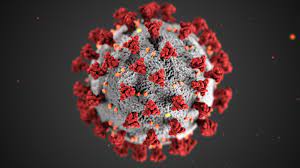
The primary concern for health officials is the specific strain involved: the Andes virus. While most hantaviruses are transmitted solely from rodents to humans, the Andes strain, native to South America, is unique for its documented ability to spread through human-to-human contact.
Hantavirus Pulmonary Syndrome (HPS) is a severe respiratory disease. According to data from the Centers for Disease Control and Prevention (CDC) and the Mayo Clinic, the condition carries a high mortality rate—up to 38%.
Symptoms and Progression
-
Early Phase: Fever, chills, muscle aches (myalgia), and fatigue.
-
Late Phase: Four to ten days after the initial symptoms, patients may develop a persistent cough and severe shortness of breath as lungs fill with fluid.
-
Critical State: Low blood pressure and cardiac failure can occur rapidly, necessitating intensive care intervention.
“There is no specific antiviral treatment or vaccine for hantavirus,” explains Dr. Angela Rasmussen, a virologist at the University of Saskatchewan Vaccine and Infectious Disease Organization, who has monitored the MV Hondius outbreak. “Supportive care—specifically early oxygen therapy and, in severe cases, mechanical ventilation or ECMO—is the only way to improve survival outcomes. In a location like Tristan da Cunha, the lack of bulk oxygen is a literal death sentence for a patient in the pulmonary phase.”
The Cruise Ship Connection
The MV Hondius outbreak has become a case study for maritime health authorities. The ship departed Argentina on April 1, and while no rodents were found on board, the WHO suggests passengers likely contracted the virus in South America before embarking.
The island resident currently under monitoring had disembarked from the ship during its April 13–15 visit. Because hantavirus has an incubation period of one to eight weeks, health authorities are currently tracing dozens of passengers across 15 countries. While the WHO reported no new symptomatic cases on the ship as of May 9, the situation on Tristan da Cunha remains the most precarious due to the total lack of advanced intensive care facilities.
Public Health and Global Implications
This mission underscores a growing concern in global health: the “amplification” of exotic pathogens within the confined environments of cruise ships. While the risk to the general public remains exceptionally low—as the virus does not spread casually like the flu or COVID-19—the incident reveals the fragility of “blue-zone” communities that have limited immunity and resources.
For the residents of Tristan da Cunha, the focus has shifted to heightened vigilance. Although the island has no native rodents, introduced rat populations could potentially act as a reservoir if the virus were to jump species, though experts deem this unlikely.
Advice for Travelers
Health authorities recommend that travelers to endemic regions in South America:
-
Avoid contact with rodent droppings or nesting materials.
-
Seal food in rodent-proof containers.
-
Seek immediate medical attention if flu-like symptoms develop within eight weeks of travel to high-risk areas.
Limitations and the Path Forward
Despite the success of the airdrop, the situation is not without its critics. Some public health advocates argue that the reliance on a multi-million-dollar military intervention highlights a failure in long-term health infrastructure for British Overseas Territories.
Furthermore, the diagnosis on the island remains “suspected.” Confirming an Andes virus infection requires specialized laboratory testing not available on Tristan da Cunha. Samples must be transported by sea for several days before reaching a facility capable of molecular diagnostics.
“We are managing a clinical suspicion with the highest level of caution,” a spokesperson for the Tristan da Cunha Government stated. “The patient is currently stable in home isolation, and the arrival of the UK medical team allows us to provide hospital-grade support without the immediate need for a dangerous sea evacuation.”
As the 16 Air Assault Brigade team integrates with local staff at Camogli Hospital, the global health community is watching closely. The mission serves as a reminder that in an interconnected world, no location is too remote for a pathogen to reach—and no community is too isolated to be forgotten.
Medical Disclaimer: This article is for informational purposes only and should not be considered medical advice. Always consult with qualified healthcare professionals before making any health-related decisions or changes to your treatment plan. The information presented here is based on current research and expert opinions, which may evolve as new evidence emerges.
References
-
BBC News. (2026, May 10). Army parachutes onto Tristan da Cunha to help Briton with suspected hantavirus.