 0
0
 0
0
BISHKEK, Kyrgyzstan — In a major diplomatic and public health initiative aimed at strengthening oncology infrastructure in Central Asia, the Government of India has officially gifted a fresh cobalt-60 radioactive source to Kyrgyzstan’s National Centre of Oncology and Haematology in Bishkek.
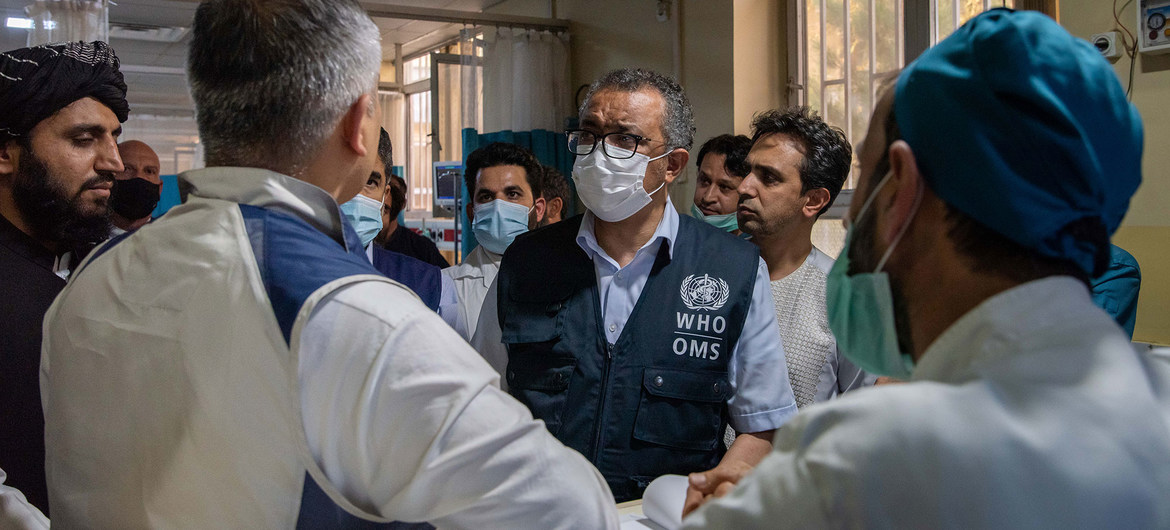
On July 27, 2026, Kyrgyz Minister of Health Damirbek Osmonov and Indian Ambassador to Kyrgyzstan Birender Singh Yadav visited the national cancer facility to inspect the newly upgraded system. The replacement source has been successfully loaded into the facility’s Bhabhatron-II teletherapy unit—an external beam radiation machine originally donated by India—restoring the unit to full operational capacity and expanding treatment access for hundreds of cancer patients across the country.
Restoring Capacity to the Frontlines of Cancer Treatment
The delivery of the new radioactive source addresses a critical bottleneck in Kyrgyzstan’s public health system. Cobalt-60 decays naturally over time, gradually reducing the intensity of the radiation beam and extending the duration required for each patient’s treatment session. As a result, aging sources severely throttle daily patient throughput and lengthen waiting lists for life-saving care.
According to statements from the Indian Embassy in Bishkek, the installation of the fresh cobalt-60 source allows the Bhabhatron-II unit to treat up to 10 times more patients per day compared to its depleted state.
“This radioactive source replacement is a gift from the Government and people of India to the Kyrgyz Republic, ensuring continuous, uninterrupted treatment for patients requiring radiation therapy,” noted Ambassador Birender Singh Yadav during the facility tour.
During the delegation’s visit, Dr. Nurbek Bukuev, Director of the National Centre of Oncology and Haematology, confirmed that all primary radiation equipment at the center is currently functional. With the upgraded Bhabhatron-II machine back online, the facility plans to conduct roughly 120 treatment procedures daily on the unit, complementing the 160 daily procedures currently handled by the center’s two linear accelerators.
| Radiotherapy Unit | Estimated Daily Capacity | Primary Clinical Role |
| Bhabhatron-II (Cobalt-60) | ~120 patients/day | Robust external beam therapy for solid tumors |
| Linear Accelerators (x2) | ~160 patients/day | High-precision, high-energy conformal radiation |
| Terad Unit | ~25 patients/day | Specialized radiation procedures |
| Flexitron Units (Brachytherapy) | ~40 patients/day | Internal localized radiation for inpatient care |
How Cobalt-60 Teletherapy Works
External beam radiotherapy is a cornerstone of modern cancer treatment, utilized in approximately half of all cancer cases worldwide. The technique employs high-energy ionizing radiation to destroy the DNA of malignant cells, preventing them from dividing and growing.
In a cobalt-60 teletherapy unit like the Indian-manufactured Bhabhatron-II:
-
Radioactive Isotope: Cobalt-60 ($^{60}\text{Co}$) acts as the “engine” of the device, continuously emitting high-energy gamma rays through natural radioactive decay.
-
Beam Delivery: The machine directs these focused gamma rays precisely at localized solid tumors—such as cervical, breast, head and neck, and esophageal cancers.
-
Decay and Maintenance: Cobalt-60 has a physical half-life of approximately 5.27 years. As the source decays, exposure times must be lengthened to deliver the prescribed dose. Replacing the capsule every 5 to 7 years is vital to maintain swift treatment times and clinical efficacy.
Addressing Central Asia’s Cancer Care Gap
The donation arrives at a pivotal moment for Central Asian health infrastructure. A 2025 assessment published in Lancet Oncology evaluating radiotherapy resources across Central Asia revealed that Kyrgyzstan operated with only 0.1 to 0.2 megavoltage machines per million people as of 2022—far below the International Atomic Energy Agency (IAEA) benchmark of 4 to 8 machines per million for upper-middle-income regions.
Radiotherapy Density Benchmark (Machines per 1 Million People)
------------------------------------------------------------------
IAEA Recommended Target:  [████████████████████] 4.0 - 8.0
Kyrgyzstan Level (2022):  [█] 0.1 - 0.2
------------------------------------------------------------------
This shortage of equipment has historically created severe backlogs, forcing patients to endure long wait times or undertake arduous, costly travel abroad to secure timely care. For localized solid tumors, a delay of even a few weeks in initiating radiation therapy can significantly increase the risk of disease progression and lower overall survival rates.
Technology Choice: Cobalt-60 vs. Linear Accelerators
In high-income nations, cobalt-60 units have largely been superseded by complex Linear Accelerators (LINACs), which generate high-energy X-rays electronically without using radioactive materials. However, global health experts emphasize that technology selection must match local operational realities.
The IAEA highlights that while LINACs offer advanced precision, they demand stable electrical grids, specialized climate-controlled rooms, expensive replacement parts, and dedicated physics support. In contrast, cobalt-60 machines are renowned for their mechanical reliability, lower operating costs, and resilience during power fluctuations.
“Choosing between cobalt-60 and linear accelerators is not about which technology is inherently superior, but about which system is sustainable in a given clinical environment,” explains Dr. Elena Rostova, an independent radiation oncologist and global health policy consultant not involved in the Kyrgyz program. “In low- and middle-income regions, a robust cobalt unit that runs continuously without technical downtime saves far more lives than a high-tech LINAC that sits broken for months awaiting imported spare parts.”
Systemic Infrastructure & Policy Limitations
While equipment donations provide immediate relief, public health experts caution against viewing hardware transfers as a standalone solution to complex oncological challenges.
-
Maintenance & Repair Funding: To prevent future service disruptions, the Kyrgyz government allocated 35 million soms (~$400,000 USD) for spare parts and linear accelerator repairs in 2026, with an annual maintenance budget of 18 million soms scheduled starting in 2027.
-
Safety Protocols: Cobalt-60 units involve sealed radioactive sources, requiring strict radiation safety protocols, heavy room shielding, dosimetry verification, and secure physical handling during transport and installation.
-
Workforce Development: Equipment must be paired with trained radiation oncologists, medical physicists, and radiotherapy technologists to ensure safe, accurate treatment planning.
Long-Term Outlook
India’s support for Kyrgyzstan’s cancer care infrastructure extends beyond a single isotope transfer. Earlier in 2026, Indian diplomatic officials announced plans to provide Kyrgyzstan with a Siddharth-II Linear Accelerator, signaling a phased approach to upgrading the country’s technological capabilities.
By pairing robust, low-maintenance technology like the Bhabhatron-II with modern linear accelerators, Kyrgyzstan is building a hybrid radiotherapy model tailored to its immediate capacity needs and long-term healthcare goals. For patients across the Kyrgyz Republic, this bilateral partnership represents more than diplomatic goodwill—it delivers timely, accessible, and life-saving care closer to home.
References
-
Indian Embassy in Kyrgyzstan. Statement on official visit to the National Centre of Oncology and Haematology, Bishkek. Released July 27, 2026.
Medical Disclaimer: This article is for informational purposes only and should not be considered medical advice. Always consult with qualified healthcare professionals before making any health-related decisions or changes to your treatment plan. The information presented here is based on current research and expert opinions, which may evolve as new evidence emerges.