 0
0
 0
0
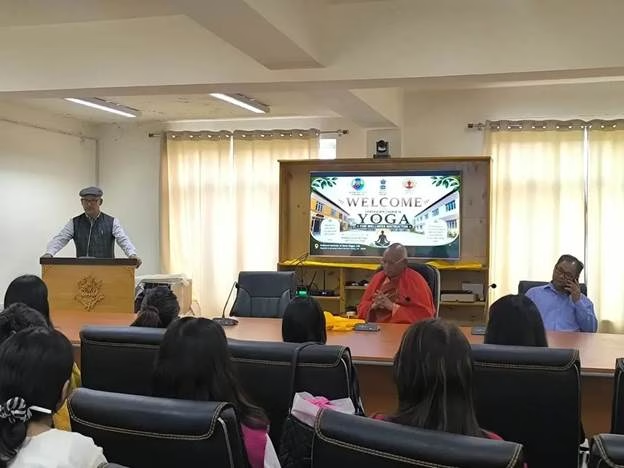
LEH, LADAKH — In a landmark initiative aimed at expanding integrative healthcare across the Himalayan region, the National Institute of Sowa-Rigpa (NISR) in Leh, in collaboration with New Delhi’s prestigious Morarji Desai National Institute of Yoga (MDNIY), has officially launched Ladakh’s first-ever formal Yoga Wellness Instructor Certificate Course.
The three-month, 400-hour intensive program represents a pivotal shift toward combining traditional wellness disciplines to treat mind and body—a approach increasingly backed by global medical research. The inaugural session, held on July 27, brought together leading voices in integrative medicine, regional health administrators, and spiritual leaders to mark what experts are calling a historic step for public health in high-altitude communities.
A Synergy of Traditional Healing Systems
The newly inaugurated course is structured under the rigorous educational framework established by MDNIY, an autonomous organization under the Ministry of Ayush, Government of India. Hosted at the National Institute of Sowa-Rigpa—the premier center for the study of traditional Himalayan medicine—the program aims to train a new cohort of certified yoga instructors capable of delivering standardized, evidence-based wellness instruction.
The launch event was formally inaugurated by Venerable Bhikkhu Sanghasena, Prime Minister Yoga Awardee and Founder President of the Mahabodhi International Meditation Centre (MIMC). Dr. Tashi Thinlas, Director of the Department of Ayush, Health & Medical Education for the Union Territory of Ladakh, attended as the Guest of Honour, with Dr. Padma Gurmet, Director of NISR, presiding over the ceremony.
Addressing the inaugural cohort, Dr. Gurmet emphasized the broader social mission behind bringing standardized yoga education to the region.
“This program is more than just professional training; it is a dedicated commitment to promoting traditional health systems and holistic wellness practices for the benefit of society,” said Dr. Gurmet. He urged the enrolled students to fully immerse themselves in both the theoretical foundations and practical applications of the 400-hour curriculum.
The Medical Case for Integrative Healthcare
The initiative arrives at a time when health authorities worldwide are paying closer attention to non-pharmacological interventions for chronic disease management and mental well-being. Modern clinical research increasingly validates what traditional systems have advocated for centuries: mind-body practices can yield measurable biological benefits.
According to a landmark meta-analysis published in Frontiers in Human Neuroscience, regular practice of yoga and meditation significantly downregulates inflammatory markers such as interleukin-6 (IL-6) and tumor necrosis factor-alpha (TNF-α), while modulating the body’s stress-response system—the hypothalamic-pituitary-adrenal (HPA) axis.
Furthermore, clinical trials evaluated by the National Center for Complementary and Integrative Health (NCCIH) indicate that structured yoga programs can lower resting blood pressure, improve heart rate variability (HRV), reduce chronic low back pain, and alleviate symptoms of mild-to-moderate anxiety and depression.
In high-altitude environments like Ladakh—where physiological stressors like hypobaric hypoxia (low oxygen pressure) and harsh seasonal weather can compound metabolic and mental health stresses—integrative health approaches offer valuable preventive care tools.
+-----------------------------------------------------------------------+
|                 PHYSIOLOGICAL IMPACT OF YOGA PRACTICE                 |
+-----------------------------------------------------------------------+
|  • Inflammatory Response : Downregulates IL-6 & TNF-α markers         |
|  • Autonomic System      : Elevates parasympathetic tone (lowers HRV) |
|  • Stress Pathways       : Regulates HPA axis & cortisol secretion    |
|  • Cardiovascular Health : Reduces systemic vascular resistance       |
+-----------------------------------------------------------------------+
Expanding Local Healthcare Infrastructure
For the Union Territory of Ladakh, the introduction of certified yoga instruction is not merely cultural—it is a strategic addition to public health infrastructure.
Dr. Tashi Thinlas highlighted the pressing need to blend modern medical science with traditional wellness modalities to build a resilient healthcare model for the territory. He outlined plans to formally integrate certified yoga therapists into regional health services, community health centers, and wellness facilities across Ladakh.
“Modern medicine excels at acute care and emergency interventions, but managing lifestyle disorders and long-term well-being requires a broader lens,” explained Dr. Thinlas during his address. “Integrating modern clinical practices with traditional Sowa-Rigpa medicine and standardized yoga therapy creates a comprehensive care model that addresses the root causes of chronic ill-health.”
Echoing these remarks, Ven. Bhikkhu Sanghasena framed yoga as an essential preventive health practice.
“Yoga is a holistic way of life that nurtures physical health, mental peace, and spiritual well-being,” Sanghasena stated, inviting participants to complement their physical practice with meditation at the Mahabodhi Meditation Centre. “When we cultivate inner balance, we contribute directly to a healthier, more compassionate society.”
Clinical Perspective & Balanced Considerations
While public health officials and integrative medicine advocates have met the course launch with enthusiasm, medical experts emphasize the importance of maintaining scientific rigor and practical safety standards.
Independent clinical experts stress that while yoga is a highly effective complementary therapy, it should enhance—not replace—evidence-based conventional medical treatments.
“Standardized training programs like the one launched by NISR and MDNIY are crucial because safety in yoga instruction depends entirely on proper biomechanics and individualization,” notes Dr. Ananya Sharma, MD, a consultant in preventive cardiology and integrative health not involved in the program.
“In high-altitude regions or among patients with pre-existing cardiovascular conditions, joint disorders, or respiratory illness, yoga postures (asanas) and breathing techniques (pranayama) must be adapted carefully. Having certified instructors trained under a recognized 400-hour standard ensures that practices are delivered safely and effectively.”
Medical researchers also note certain methodological limitations in existing yoga research. While trial results are promising, many studies rely on self-reported outcomes or small sample sizes. Continued large-scale, randomized controlled trials (RCTs) are needed to establish precise “dosages” of yoga practice for specific clinical conditions.
Looking Ahead
The three-month program will be overseen by Shri Gopal Sharma, Course Coordinator, who outlined a rigorous schedule combining human anatomy, physiology, traditional yoga philosophy, and supervised clinical practice. The inaugural event concluded with a vote of thanks delivered by Ms. Dolma Tsering, marking the official start of classes for the pioneering cohort.
As the first group of students begins their training in Leh, health administrators hope this program serves as a blueprint for other high-altitude and remote regions across India—demonstrating how traditional heritage and modern health science can join forces to serve community health.
References
-
National Institute of Sowa-Rigpa & MDNIY Press Release. (2026, July 27). Launch of Yoga Wellness Instructor Certificate Course in Leh. Press Information Bureau (PIB), Ministry of Ayush, Government of India.
Medical Disclaimer: This article is for informational purposes only and should not be considered medical advice. Always consult with qualified healthcare professionals before making any health-related decisions or changes to your treatment plan. The information presented here is based on current research and expert opinions, which may evolve as new evidence emerges.