 0
0
 0
0
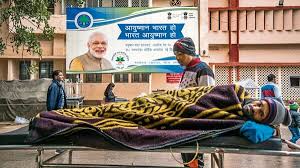
New Delhi, June 5, 2026 — In a major milestone for global public health, Prime Minister Narendra Modi announced today in Daman that India’s flagship health insurance scheme, Ayushman Bharat, has saved Indian families an estimated ₹2.25 lakh crore ($27 billion USD) in out-of-pocket medical expenditures. The announcement marks a transformative moment for the Ayushman Bharat Pradhan Mantri Jan Arogya Yojana (AB PM-JAY). Seven years after its inception, the world’s largest publicly funded health assurance program has fundamentally altered the economics of healthcare delivery for nearly 63 crore beneficiaries—roughly 40% of the nation’s population.
Direct Savings and Structural Impact
The newly released figures represent an aggressive trajectory in healthcare savings, up from the ₹1.25 lakh crore reported in the Economic Survey 2024–25. According to official data, the scheme has authorized free secondary and tertiary treatments worth ₹1.3 lakh crore for more than 9 crore patients—a patient volume exceeding twice the entire population of Canada.
The Economic Survey highlights a crucial multiplier effect: without the negotiated rate packages of AB PM-JAY, the equivalent treatments in the open market would have cost vulnerable families 1.5 to 2 times more.
Key Performance Indicators (As of June 2026)
| Metric | Metric Realization |
| Total Cumulative Savings | ₹2.25 lakh crore |
| Total Patients Treated | 9 crore+ |
| Annual Financial Cushion | ₹5 lakh per family |
| Total Beneficiary Base | 12.37 crore families (~63 crore individuals) |
| Ayushman Cards Distributed | 36.9 crore+ |
| Empanelled Hospitals | 33,000+ (Public and Private) |
Historically, healthcare costs have been a leading driver of poverty in India. However, macro-level financing metrics indicate a structural shift. Between Fiscal Year 2015 and Fiscal Year 2022, Government Health Expenditure (GHE) rose from 29.0% to 48.0% of Total Health Expenditure. Concurrently, Out-of-Pocket Expenditure (OOPE)—the cash families must pay at the point of service—dropped sharply from 62.6% to 39.4%. Government-supported safety nets like AB PM-JAY contribute 2.63% to total health financing, providing a critical buffer against medical bankruptcy.
Expert Perspectives on Financial Protection
Public health experts not directly involved in the administration of the program acknowledge its systemic impact, though they emphasize that insurance is only one part of the solution.
“The fundamental achievement of the Ayushman Bharat infrastructure over the last seven years is the creation of a reliable safety net,” notes Dr. Sangeeta Kumar Singh Deo, a public health policy analyst. “By expanding access and offering robust financial protection, the program has successfully mitigated the risk of catastrophic health expenditures among India’s most economically vulnerable populations.”
This dual approach relies on a bifurcated infrastructure:
-
Ayushman Arogya Mandirs: 1.76 lakh repurposed Sub-Health and Primary Health Centres designed to handle 80% to 90% of routine community care, focusing on preventive health and maternal care.
-
AB PM-JAY: A tertiary safety net providing ₹5 lakh per year in cashless hospitalization benefits to the lowest 40% of the socio-economic demographic.
[Primary Care: Ayushman Arogya Mandirs] ──> Handles 80-90% of routine/preventive needs
                    │
                    ▼ (Escalation)
[Tertiary Care: AB PM-JAY Safety Net]   ──> Provides ₹5 Lakh/year cashless insurance
The program’s scope has widened via consecutive expansions. In 2024, coverage was extended to 37 lakh Accredited Social Health Activists (ASHAs) and Anganwadi workers. More recently, the “Vay Vandana Card” initiative extended universal, income-blind coverage to approximately 6 crore senior citizens aged 70 and above, across 4.5 crore households.
Implementation Challenges and Coverage Gaps
Despite unprecedented fiscal achievements, independent health policy evaluations point to persistent structural hurdles. A 2026 study published in Frontiers in Public Health evaluated consumer experiences under the insurance framework, revealing that 56.3% of surveyed respondents encountered difficulties or delays when attempting to access immediate financial support at point-of-care terminals.
Independent researchers point to three primary systemic vulnerabilities:
-
The “Missing Middle” Phenomenon: While the bottom 40% of the population receives subsidization and high-income brackets utilize private insurance, roughly 39.88% of non-covered households remain exposed to catastrophic medical costs. These families fall just above the eligibility line but lack the resources for private coverage.
-
Supply-Chain and Infrastructure Deficits: Parliamentary committee audits show that rural primary care facilities face chronic shortages of skilled human resources, irregular diagnostic supply chains, and inadequate facilities—many operate out of rented, substandard structures.
-
Geographic Variations: The scheme remains non-operational in Delhi, West Bengal, and Odisha due to localized political and administrative gridlocks, depriving millions of residents of centralized health benefits.
What This Means for Everyday Healthcare Decisions
For the eligible consumer, the expansion of the Ayushman Bharat framework simplifies healthcare navigation. Families can optimize their benefits by taking several practical steps:
-
Verify Household Status: Citizens should check their eligibility against the Socio-Economic and Caste Census (SECC) database at localized common service centers or via the official web portal.
-
Secure the Ayushman Card: Unenrolled members of eligible families should proactively secure their individual biometric cards to avoid delays during acute medical emergencies.
-
Leverage Senior Citizen Benefits: Individuals aged 70 or older are eligible for the newly launched Vay Vandana Card, which guarantees up to ₹5 lakh in distinct individual coverage regardless of total household income.
-
Utilize the Digital Health Stack: Registrants are encouraged to set up their Ayushman Bharat Health Account (ABHA). This system integrates digital health histories across 33,000 empanelled hospitals, minimizing the need to manage physical paperwork across different providers.
As India moves closer to universal health coverage, the ₹2.25 lakh crore saved represents more than a fiscal milestone—it highlights the vital role public safety nets play in protecting both the health and economic stability of millions.
References
-
The Hawk / IANS. Ayushman Bharat helped families save Rs 2.25 lakh crore in medical costs: PM Modi, reporting from Daman, June 5, 2026.
Medical Disclaimer: This article is for informational purposes only and should not be considered medical advice. Always consult with qualified healthcare professionals before making any health-related decisions or changes to your treatment plan. The information presented here is based on current research and expert opinions, which may evolve as new evidence emerges.