 0
0
 0
0
KOCHI, Kerala — In a major development that exposes vulnerabilities in child protection and forensic oversight, the Kerala High Court has stripped state authorities of an ongoing investigation, ordering the Central Bureau of Investigation (CBI) to take over the case of 23 children who died under suspicious circumstances in Palakkad district over a 13-year period.
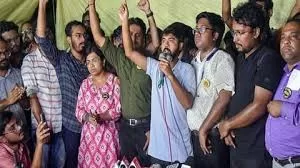
A Division Bench comprising Chief Justice Soumen Sen and Justice Syam Kumar V.M. issued the directive following a review of a state Crime Branch status report. The court cited “various irregularities” in local investigations spanning from 2010 to 2023. The 23 cases, clustered primarily around the border locality of Kollengode, all involve children who were officially reported to have died by hanging. However, a public interest litigation (PIL) filed by social workers and activists argues that severe forensic deficiencies and unexamined signs of abuse indicate far more sinister realities, including potential homicides made to look like suicides.
The high court’s intervention shifts the case from a local criminal investigation into a national case study on the systemic limitations of regional forensic medicine, child safety networks, and judicial accountability in India.
The Forensic Blind Spot: Why Autopsies Alone Are Not Enough
The core of the legal and medical dispute rests on the pathological post-mortem examination reports. The petitioners, including Fr. Augustine Vattoly and advocate P.V. Jeevesh, claim that multiple autopsies revealed ante-mortem (before death) physical and sexual trauma. They argue these critical clues were ignored by local police, allowing potential homicides to be closed as self-harm.
This case highlights a long-standing structural deficit within Indian medico-legal practices: the disconnect between the autopsy table and the actual scene of death. In much of India, forensic pathologists rarely visit crime scenes due to infrastructural deficits and poor coordination with law enforcement. Instead, they rely on police photographs and subjective descriptions.
The consequences of this gap are stark. Data published in the Research Journal of Pharmaceutical, Biological and Chemical Sciences (RJPBCS) reveals a staggering disparity in investigative precision:
-
85% accuracy in determining the true manner of death when a forensic medical expert conducts a formal physical scene examination.
-
15% accuracy when the determination is forced to rely solely on traditional autopsy findings without local context.
The study documented multiple instances where preliminary autopsy findings were entirely reversed after a scene analysis, shifting the classified manner of death from suicide to homicide, or from undetermined to accidental.
Differentiating Suicide from Staged Homicide
To understand how 23 hanging cases could evade definitive conclusions for over a decade, it is necessary to examine the complex nature of hanging investigations.
“Differentiating true suicide from a staged homicide in hanging cases requires meticulous, multi-point protocols,” explains Dr. Rajesh Kumar, a professor of forensic medicine based in Bangalore, who is not involved in the Palakkad case. “We cannot look at the neck markings in isolation. We must examine the point of suspension, the structural characteristics of the ligature material, the presence of defensive wounds on the victim, and whether there are signs of a struggle in the room. Traditional autopsy alone often fails to distinguish suicide from homicide in equivocal, or ambiguous, cases.”
According to forensic literature, while the vast majority of hanging cases globally are suicidal, homicidal hangings—where a victim is killed first and suspended later to simulate suicide—are exceedingly rare but highly sophisticated crimes.
To systematically uncover foul play, forensic pathologists look for distinct red flags that separate simulated hangings from actual suicides:
| Forensic Indicator | True Suicidal Hanging | Staged Homicidal Hanging |
| Ligature Mark | Typically inverted ‘V’ shape, incomplete around the neck, sitting high near the jawline. | Often completely horizontal, continuous, and located lower on the larynx (suggesting prior strangulation). |
| Defensive Injuries | Generally absent, unless the individual collided with furniture during the act. | Frequent abrasions, bruised knuckles, torn fingernails, or deep tissue bruising on limbs. |
| Clothing Condition | Intact, neat, undisturbed. | Torn, displaced, or showing signs of a physical struggle or drag marks. |
| Internal Neck Trauma | Fractures to the hyoid bone are rare in young children due to cartilage elasticity. | Deep, asymmetrical hemorrhages in the neck muscles, often indicating manual grip marks. |
Dr. Kumar notes that these physical findings must be paired with a “psychological autopsy”—a behavioral science tool that maps the child’s mental state, search history, and social interactions prior to death. Integrating this practice remains rare in Indian forensic medicine, creating a gap in judicial outcomes.
Intersection with Public Health: A Paradox of Care
The Palakkad crisis occurs against a conflicting background of child welfare in India. Over the last three decades, India has made progress in reducing natural child mortality. According to the United Nations Inter-agency Group for Child Mortality Estimation (UNIGME) 2025 report, the nation has substantially lowered its child mortality metrics:
India Child Mortality Reductions (1990 vs. 2024)

Neonatal Mortality Rate (per 1,000 live births)
1990: [██████████████████████████████ 57]
2024: [█████████ 17] -> 70% Reduction

Under-5 Mortality Rate (per 1,000 live births)
1990: [██████████████████████████████████████████████████████████████ 127]
2024: [█████████████ 27] -> 79% Reduction
Yet, while public health interventions have successfully mitigated deaths from preventable diseases like pneumonia, diarrhea, and preterm birth complications, unnatural child deaths—driven by trauma, abuse, and violence—remain a neglected domain of public health surveillance.
The 23 deaths in Palakkad expose a critical vulnerability: public health frameworks are highly optimized to track and treat biological illnesses, but they often fail to capture interpersonal violence and systemic protection failures until a crisis point is reached.
Strengthening the Safety Net
In response to the unfolding investigation, the Kerala State Legal Services Authority (KeLSA) submitted a comprehensive protection framework to the High Court. Recognizing that forensic science only operates after a tragedy has occurred, KeLSA’s proactive measures focus heavily on community-level prevention:
-
Mandatory Legal Literacy: Implementing structured child rights awareness programs across vulnerable rural pockets.
-
Inter-Agency Synergy: Establishing formal communication channels between local child welfare committees, forensic departments, and law enforcement.
-
Paralegal Mobilization: Deploying trained para-legal volunteers to act as neutral intermediaries in vulnerable communities.
-
Helpline Reinforcement: Broadening the active footprint of the CHILDLINE 1098 emergency outreach service, which currently operates 31 distinct units across Kerala.
The High Court has ordered all District Legal Services Authorities to implement these safety protocols immediately, requiring mandatory monthly compliance reports.
Investigation Complexities and Unknowns
As the CBI assumes control of the case files from the local Crime Branch, several deep uncertainties remain. The available legal documents do not publicize individual pathological causes of death for each of the 23 children. Furthermore, a geographic anomaly persists: the extreme concentration of these occurrences within the single border block of Kollengode, raising unresolved questions about regional socio-economic vulnerabilities or localized criminal networks.
Adding to the complexity, a separate but related investigation directed by the High Court previously ordered the state child rights commission to review the suspicious deaths of 28 children across the broader Palakkad border zone within the same timeframe. The discrepancy in figures (23 vs. 28) suggests that as federal investigators reopen sealed autopsy files and re-examine old evidence, the true scope of this case may continue to evolve.
The CBI has been granted permission to seek administrative support from the State Police Administration and the District Police Chief of Palakkad, Ajit Kumar, IPS. The agency’s formal status report is due before the High Court Bench on August 6, 2026.
Medical Disclaimer
This article is for informational purposes only and should not be considered medical advice. Always consult with qualified healthcare professionals before making any health-related decisions or changes to your treatment plan. The information presented here is based on current research and expert opinions, which may evolve as new evidence emerges.
References
- https://www.livelaw.in/high-court/kerala-high-court/kerala-high-court-cbi-investigation-23-child-death-cases-palakkad-district-537626