 0
0
 0
0
NEW DELHI — In a major bid to reinforce India’s healthcare backbone and address a rising burden of chronic, lifestyle-related diseases, the Union Ministry of Health and Family Welfare has announced a sweeping expansion of the nation’s medical education system.
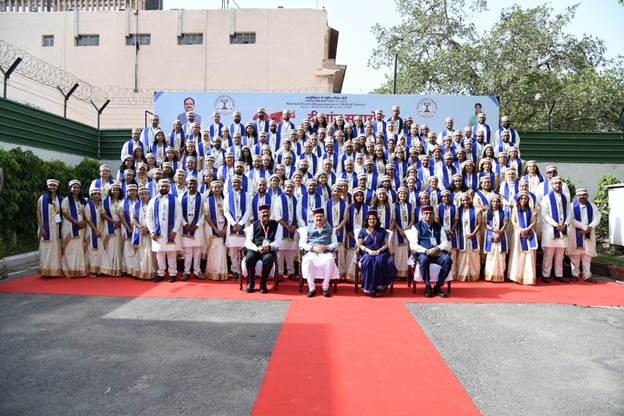
Speaking on May 23, 2026, at the 23rd Convocation Ceremony of the National Board of Examinations in Medical Sciences (NBEMS) in New Delhi, Union Health Minister Shri Jagat Prakash Nadda detailed a national strategy to add 75,000 undergraduate (UG) and postgraduate (PG) medical seats by 2029. The initiative is backed by a newly sanctioned ₹15,000 crore investment earmarked for government medical college infrastructure over the next three years.
The announcement comes at a critical juncture. Public health experts note that India’s healthcare system is facing a dual challenge: a persistent shortage of specialized doctors, particularly in rural areas, and a sharp epidemiological shift toward non-communicable diseases (NCDs) like diabetes, hypertension, and cardiovascular disorders.
The Scale of Expansion: Building the Healthcare “Software”
During his address to graduating specialists, Health Minister Nadda emphasized that structural growth must match clinical quality.
“As policymakers, we can facilitate infrastructure and systems, but while buildings constitute the hardware, doctors are the true software of healthcare,” Nadda stated.
According to data released by the Health Ministry, India’s medical education infrastructure has scaled rapidly over the last decade:
-
Medical Colleges: Increased from 387 to 818.
-
Undergraduate Seats (MBBS): Reached approximately 1.28 lakh.
-
Postgraduate Seats: Expanded from roughly 31,000 to nearly 85,000.
-
The 2029 Target: Of the promised 75,000 additional seats, 23,000 have already been established over the last two years.
Additionally, the number of All India Institutes of Medical Sciences (AIIMS)—the country’s premier referral hospitals—has grown to 23 across the nation. The Ministry’s current focus is upgrading these regional hubs to match the training and patient-care standards of AIIMS New Delhi, creating a decentralized network of medical expertise.
Addressing the Specialist Deficit: 26,000 New Graduates
The convocation saw 26,396 doctors receive advanced qualifications, including Diplomate of National Board (DNB), Doctorate of National Board (DrNB), and Fellowship of National Board (FNB). These qualifications are vital because they represent specialized and sub-specialized medical workforce—the cardiologists, neurologists, and intensive care experts the country heavily relies upon.
To further diversify specialized care, the Ministry launched 11 new academic courses targeting emerging medical fields. Alongside these courses, the government introduced the One Nation One Subscription (ONOS) initiative for NBEMS institutions. ONOS is designed to grant medical students and faculty equitable, country-wide access to high-impact international medical journals and peer-reviewed research, bridging the resource gap between urban elite institutions and regional colleges.
Shift to Preventive Care Amid the NCD Crisis
A central theme of the health ministry’s directive is shifting the medical fraternity’s focus from purely curative care to preventive and promotive healthcare.
The World Health Organization (WHO) reports that non-communicable diseases are responsible for over 60% of all deaths in India. Conditions like ischemic heart disease, chronic obstructive pulmonary disease (COPD), and stroke represent the highest burden of disease. Minister Nadda called on the newly minted specialists to act as public health advocates, educating patients on lifestyle-related risk factors such as poor diet, physical inactivity, and tobacco use.
Independent public health experts agree with this emphasis. Commenting on the development, Dr. Arvinder Singh, a public health researcher and former consultant at the National Health Systems Resource Centre (NHSRC) who was not involved in the government presentation, noted:
“Adding seats is an excellent structural step, but the emphasis on preventive medicine is where the long-term battle is won. A specialist’s job shouldn’t just begin at the operating table; it must extend to community literacy, especially as metabolic diseases strike increasingly younger Indian demographics.”
Balancing the Scales: Quality Control and Deployment Challenges
While the financial injection of ₹15,000 crore and seat increases are historic in scale, medical education critics urge cautious optimism. Independent medical bodies have frequently raised concerns regarding the rapid expansion of medical colleges, pointing out potential vulnerabilities:
-
Faculty Shortages: Finding qualified medical professors and senior residents to teach the influx of new students remains a bottleneck.
-
Infrastructure Disparities: Newer medical colleges sometimes struggle with lower patient footfall, which can limit the clinical exposure crucial for training doctors.
-
Geographic Maldistribution: Despite an increase in total numbers, a significant portion of medical specialists remain concentrated in urban corporate hospitals, leaving tier-3 cities and rural community health centers under-staffed.
Public health professionals emphasize that for the “Viksit Bharat 2047” (Developed India) vision to succeed, the expansion must be coupled with strict oversight from the National Medical Commission (NMC) to ensure training standards do not dilute. Furthermore, retention strategies—such as improving rural working conditions and offering clear career progression—are vital to ensure these 75,000 new seats directly translate into better rural health outcomes.
The Health Minister concluded his address by reminding the graduates of the societal contract inherent to their profession, urging them to combine high-tech clinical mastery with compassionate communication. As India scales its medical capacity, the true measure of success will lie in how effectively these new specialists can close the equity gap in patient care.
Reference Section
Institutional and Statistical Sources
-
Event Source: Press Information Bureau (PIB) Delhi, Ministry of Health and Family Welfare, Government of India. Published May 23, 2026.
Medical Disclaimer: This article is for informational purposes only and should not be considered medical advice. Always consult with qualified healthcare professionals before making any health-related decisions or changes to your treatment plan. The information presented here is based on current research and expert opinions, which may evolve as new evidence emerges.