 0
0
 0
0
NEW DELHI — In a significant overhaul of India’s social safety net, the Ministry of Women and Child Development has consolidated its flagship nutrition programs into a single, digitally-driven powerhouse: Mission Saksham Anganwadi and Poshan 2.0. Announced on March 27, 2026, by Minister of State Smt. Savitri Thakur in the Lok Sabha, the mission aims to eradicate malnutrition through high-tech monitoring and modernized rural childcare centers.
By subsuming traditional Anganwadi services, the Poshan Abhiyaan, and the Scheme for Adolescent Girls, the government is betting on “near real-time data” to fix long-standing gaps in the country’s nutritional landscape.
From Registers to Radios: The Rise of Saksham Anganwadis
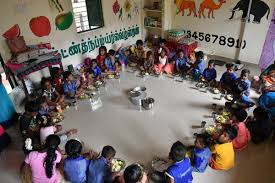
For decades, the Anganwadi—a village-level child care center—was defined by handwritten registers and basic infrastructure. Under Poshan 2.0, these centers are undergoing a radical transformation into “Saksham” (Capable) Anganwadis.
The Ministry has approved the upgradation of 2 lakh (200,000) centers over five years. These upgraded hubs are no longer just feeding centers; they are being equipped with:
-
Smart Infrastructure: Internet/Wi-Fi connectivity and LED screens for interactive learning.
-
Health Essentials: Water purifiers and Reverse Osmosis (RO) machines to ensure clean drinking water—a critical factor in preventing water-borne diseases that cause nutrient malabsorption.
-
Pedagogical Tools: Audio-visual aids and child-friendly artwork designed to improve early childhood education.
“Think of it as a leap from a primary schoolroom to a digital learning lab,” says Dr. Ananya Iyer, a public health consultant not involved in the government rollout. “When you provide a child with a clean environment and stimulating visual aids, you aren’t just feeding their stomach; you are fueling cognitive development during the most critical windows of brain growth.”
The ‘Poshan Tracker’: Eliminating the ‘Ghost’ Beneficiary
At the heart of this mission lies the Poshan Tracker, a mobile application that has replaced paper-based reporting for Anganwadi Workers (AWWs). The app allows for the tracking of every beneficiary—from pregnant women to children under six—on defined health indicators.
To ensure that government-funded nutrition actually reaches those in need, two major technological safeguards have been implemented:
-
Aadhaar-Based Identification: This prevents “leakages” and eliminates “ghost entries” (fictitious names used to siphon funds).
-
Facial Recognition System (FRS): In a bold move for last-mile delivery, FRS is now used during the distribution of Take-Home Rations (THR) to verify that the person receiving the food is the registered beneficiary.
Statistical Context
According to the latest data available on the Poshan Tracker Public Dashboard, millions of children are now monitored monthly. By providing AWWs with smartphones and data recharges, the government has created one of the world’s largest live health databases.
Precision Mapping: Growth Monitoring Devices
One of the most medically significant components of the mission is the universal deployment of Growth Monitoring Devices (GMDs). Every Anganwadi center is now equipped with:
-
Stadiometers (to measure height)
-
Infantometers (for length in babies)
-
Electronic Weighing Scales
These tools allow workers to plot a child’s growth against World Health Organization (WHO) standards. By identifying “stunting” (low height for age) and “wasting” (low weight for height) early, healthcare providers can intervene before the damage becomes irreversible.
“Growth monitoring is the ‘vital sign’ of community health,” explains Dr. Rajesh Kumar, a pediatrician specializing in community medicine. “While the digital tracking is impressive, the real victory is the accuracy of the data. If a child’s growth curve flattens, the system now flags it immediately for course correction.”
Public Health Implications and Challenges
The shift to a digital-first approach marks a transition from “reporting” to “monitoring.” For the general public, this means more accountability. If a village center fails to distribute rations, the data reflects it instantly at the State and Union levels.
However, independent experts highlight potential hurdles. While the use of Facial Recognition and Aadhaar streamlines delivery, “digital literacy” remains a barrier for some frontline workers. Furthermore, while the infrastructure is being upgraded, the quality of the food (the micronutrient content of the rations) remains as vital as the technology used to track it.
Practical Takeaways for Families:
-
Register Locally: Ensure all children under 6 and pregnant/lactating mothers are registered at their local Anganwadi to benefit from the digital tracking.
-
Monitor Growth: Ask your Anganwadi worker to show you your child’s growth progress on the Poshan Tracker.
-
Demand Quality: With the new Saksham upgrades, parents should expect cleaner facilities and better learning aids for their children.
The Road Ahead
Mission Poshan 2.0 is a centrally sponsored scheme, meaning the heavy lifting of daily implementation falls on individual States and Union Territories. As the Ministry continues to roll out FRS and smart hardware, the focus will likely shift toward “nutritional diversity”—ensuring that the food tracked so efficiently is also rich in the essential vitamins and minerals needed to end the cycle of malnutrition in India.
Medical Disclaimer: This article is for informational purposes only and should not be considered medical advice. Always consult with qualified healthcare professionals before making any health-related decisions or changes to your treatment plan. The information presented here is based on current research and expert opinions, which may evolve as new evidence emerges.
References
Official Sources:
-
Ministry of Women and Child Development (MWCD): Mission Saksham Anganwadi and Poshan 2.0 Guidelines (2022-2026).
-