 0
0
 0
0
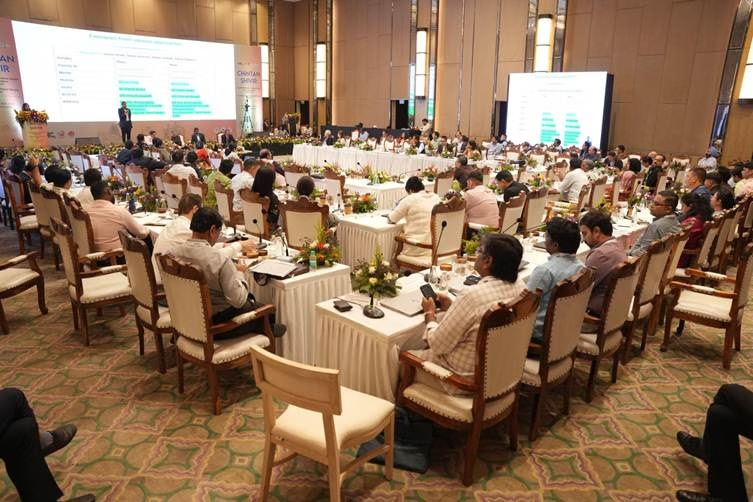
PUNE, INDIA — In a move set to redefine how over a billion citizens access medical services, the National Health Authority (NHA) concluded a landmark two-day “Chintan Shivir” (Reflective Workshop) on April 18, 2026. The summit brought together federal and state leaders to synchronize India’s two most ambitious health pillars: the Ayushman Bharat Pradhan Mantri Jan Arogya Yojana (AB PM-JAY)—the world’s largest publicly funded health insurance scheme—and the Ayushman Bharat Digital Mission (ABDM).
The gathering underscored a critical shift in Indian healthcare: the transition from merely building digital infrastructure to ensuring that technology translates into better clinical outcomes, reduced wait times, and transparent governance.
Strengthening the Backbone of Public Health
The workshop’s second day highlighted successful “best practices” that serve as blueprints for the rest of the country. Karnataka showcased an online referral system that optimizes hospital resources by ensuring patients are directed to the right facility at the right time.
Meanwhile, Gujarat’s implementation of “Clinical Governance” emerged as a highlight. By using digital verification systems, such as an Online Tumor Board Certification, the state has significantly reduced unnecessary medical procedures.
“Clinical governance isn’t just about oversight; it’s about ensuring every surgery or treatment is medically necessary and performed to a high standard,” noted Shri Rajeev Topno, Additional Chief Secretary of Gujarat. This data-driven approach has reportedly led to improved patient safety and significant cost efficiencies for the state exchequer.
The New Mandatory: Digital or Bust
Perhaps the most significant policy update came from the National Medical Commission (NMC). Dr. Raghav Langer, Secretary of the NMC, announced that integrating Hospital Management Information Systems (HMIS) with the ABDM platform is no longer optional—it is now a mandatory requirement.
This means that medical colleges and associated hospitals will be evaluated based on ABHA-linked (Ayushman Bharat Health Account) patient data. This shift aims to create a transparent paper trail of patient care, making it easier for patients to access their records digitally while ensuring hospitals remain accountable for the quality of care provided.
Data-Driven Healing: AI and Analytics
The NHA’s Health Data Analytics and AI Unit presented a forward-looking vision of how “NextGen” platforms can solve old problems. By analyzing trends in Outpatient (OPD) and Inpatient (IPD) departments through ABHA-linked data, health officials can now identify disease outbreaks in real-time or pinpoint regions where specific specialist services are lacking.
The introduction of the ABDM State Adoption Index, developed with the World Bank, will now provide a standardized “report card” for states. This index tracks:
-
ABHA Creation: Individual digital health IDs.
-
Scan & Share: The ability to register at hospitals via QR codes.
-
Record Linkage: Seamlessly connecting lab reports and prescriptions to a patient’s digital profile.
Celebrating Excellence: The Top Performers
The summit concluded with an awards ceremony recognizing states that have gone above and beyond in implementing these digital tools. Notable winners included:
| Category | Top Performing States/UTs |
| Fastest Claims Approval (PM-JAY) | Uttarakhand, Goa, Jammu & Kashmir |
| Highest Bio-Authentication Rates | Gujarat, Mizoram, Ladakh |
| Scan & Share (Digital Registration) | Ladakh, Uttar Pradesh |
| Private Sector Integration | Rajasthan |
AIIMS Bhopal was specifically recognized for its “Scan and Pay” category, illustrating how government facilities are reducing the infamous long queues that have historically plagued Indian public hospitals.
What This Means for the Everyday Patient
For the average citizen, these high-level deliberations translate into three practical benefits:
-
Portability: A patient from Bihar can receive seamless treatment in Maharashtra because their digital records and insurance “travel” with them.
-
Reduced Fraud: Bio-authentication ensures that insurance benefits reach the intended recipient, reducing identity theft and claim leakage.
-
Shorter Wait Times: The “Scan & Share” initiative allows patients to register at a hospital in seconds using their smartphones, eliminating the need to stand in line for manual data entry.
Dr. Sunil Kumar Barnwal, CEO of the NHA, emphasized that while the technology is national, the implementation must be local. “A one-size-fits-all approach is not feasible,” he stated, encouraging states to innovate based on their specific digital maturity.
As India moves toward a unified, citizen-centric healthcare ecosystem, the Pune Chintan Shivir marks a point of no return: the future of Indian medicine is undeniably digital.
Medical Disclaimer: This article is for informational purposes only and should not be considered medical advice. Always consult with qualified healthcare professionals before making any health-related decisions or changes to your treatment plan. The information presented here is based on current research and expert opinions, which may evolve as new evidence emerges.
References and Sources
Official Government Sources:
-
Press Information Bureau (PIB). (2026, April 18). NHA Concludes Two-Day Chintan Shivir on AB PM-JAY and ABDM in Pune. [Release ID: 2026-NHA-PUNE].