 0
0
 0
0
New Delhi — June 15, 2026
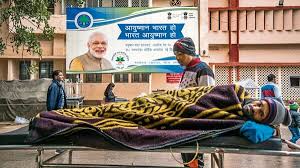
Prime Minister Narendra Modi has reaffirmed India’s position as the operator of the world’s largest government-funded healthcare initiative, celebrating the profound impact of the Ayushman Bharat program. In a recent statement, the Prime Minister emphasized that over the past twelve years, India has fundamentally altered its healthcare landscape, focusing heavily on making premium medical treatments affordable and accessible for its most vulnerable populations. Managed under the Ministry of Health and Family Welfare, the multi-tiered program now targets approximately 55 crore (550 million) citizens, effectively creating a safety net equal to the combined populations of the United States, Canada, and Mexico.
A Safety Net of Unprecedented Scale
At the core of this infrastructure is the Pradhan Mantri Jan Arogya Yojana (AB-PMJAY). Launched in September 2018, the scheme provides a cashless health cover of ₹5 lakh ($6,000 USD) per family per annum. This coverage applies directly to secondary and tertiary care hospitalizations, which include complex surgeries, oncology treatments, and critical cardiac care.
By removing out-of-pocket medical expenditures—historically a primary driver of poverty in India—the initiative allows families from economically deprived sections to seek treatment at both public and empanelled private hospitals without financial dread.
The scope of coverage is comprehensive, encompassing:
-
1,949 distinct health packages across 27 medical specialties.
-
Pre-existing conditions covered from day one of enrollment.
-
15 days of post-treatment care, which includes necessary diagnostic tests, medications, and travel allowances for the patient.
Breaking Barriers: Universal Cover for Seniors
In a significant policy shift toward universal health coverage, the Union Cabinet expanded the program to include all senior citizens aged 70 years and above, regardless of their socioeconomic status.
┌────────────────────────────────────────────────────────┐
│             SENIOR CITIZEN EXPANSION PROFILE           │
├───────────────────────────┬────────────────────────────┤
│ Target Age Group          │ 70 Years and Above         │
├───────────────────────────┼────────────────────────────┤
│ Income Restrictions       │ None (Universal)           │
├───────────────────────────┼────────────────────────────┤
│ Estimated Impact          │ 4.5 Crore (45M) Families   │
├───────────────────────────┼────────────────────────────┤
│ Individual Seniors Covered│ 6 Crore (60M) Citizens     │
└───────────────────────────┴────────────────────────────┘
This universal buffer addresses a critical public health vulnerability. As life expectancy rises, the elderly face a disproportionate burden of chronic illnesses, often without active income streams. The expansion ensures that aging individuals do not become financial burdens to their households when serious medical interventions are required.
Slashing the Costs of Chronic Care
Public health extends beyond hospital walls; daily medication compliance is vital for managing chronic conditions. Alongside hospitalization insurance, the PM Bharatiya Jan Aushadhi Pariyojana (PMBJP) has systematically reduced the costs of everyday therapeutics.
Through a network of over 15,000 specialized Jan Aushadhi Kendras (public medicine centers), the government provides high-quality generic drugs at prices 50% to 80% lower than branded equivalents.
Furthermore, aggressive price caps on critical medical hardware have disrupted predatory pricing models:
-
Coronary Stents: Price ceilings instituted by the National Pharmaceutical Pricing Authority reduced average costs from ₹2 lakh to roughly ₹29,000, saving cardiac patients an estimated ₹11,600 crore annually.
-
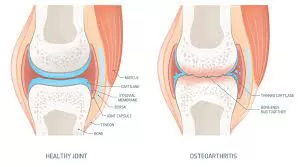
Knee Implants: Caps reduced average costs by 60% to 70%, dropping retail tags from ₹2.5 lakh to around ₹70,000, yielding cumulative consumer savings of ₹1,500 crore per year.
According to data presented to the Lok Sabha by Union Health Minister J.P. Nadda, patients have saved upwards of ₹28,000 crore through these targeted medical device and pharmaceutical interventions.
Rapid Expansion of Medical Education
A robust health framework requires an adequate workforce to sustain it. To correct historical deficits in the doctor-to-patient ratio, India has undergone an unprecedented expansion in medical education infrastructure over the last decade.
| Infrastructure Metric | Past Baseline (2014) | Current Status (2025/2026) | Percentage Increase |
| Medical Colleges | 387 | 816 | 110.8% |
| Annual MBBS Seats | ~50,000 | 115,900 | 131.8% |
| Postgraduate (PG) Seats | 31,185 | 74,306 | 138.2% |
This educational pipeline has successfully driven India’s official doctor-population ratio down to 1:811, comfortably surpassing the World Health Organization’s (WHO) recommended benchmark of 1:1,000. By decentralizing new institutional approvals into tier-2 and tier-3 cities, aspiring medical professionals can train closer to rural communities, where professional care is most desperately needed.
Global Benchmarks in Tuberculosis Elimination
Perhaps the most aggressive vertical under India’s updated health framework is the TB Mukt Bharat Abhiyan (Tuberculosis-Free India Campaign). Historically bearing the world’s highest tuberculosis burden, India’s recent metrics indicate a sharp epidemiological turnaround.
Between 2015 and 2024, annual TB incidence within the country plummeted by 21%—dropping from 237 to 187 cases per lakh (100,000) population. This represents the fastest rate of decline recorded globally.
          SURVIVAL & SUCCESS: CATCHING TB EARLY (2024 DATA)

India Treatment Success Rate      [████████████████████] 90%
Global Average Success Rate       [██████████████████░] 88%

India Drug-Resistant Detection    [████████████████████] 92%
Global Average Detection Rate     [████████████████░░░] 83%
This acceleration is largely credited to the deployment of more than 13.46 lakh Nikshay Shivirs—community-driven health screening camps. These mobile units screened over 12.97 crore individuals, successfully identifying 2.85 lakh asymptomatic cases. By initiating early treatment for these individuals, the program prevented widespread transmission, contributing to a 28% reduction in total TB mortality.
Critical Appraisal: Implementation Gaps and Structural Hurdles
While the statistical achievements of Ayushman Bharat are historic, independent public health experts emphasize that substantial operational friction remains.
The Private Sector Bottleneck
Because health is legally designated as a “State subject” under the Constitution of India, individual state governments retain ultimate statutory discretion over how the program is adopted and executed. This has led to extreme regional variance. Out of all empanelled hospitals, less than half are private institutions. Many premier private healthcare systems exhibit hesitation in joining the program, citing delayed government reimbursement cycles and low fixed package rates that do not cover actual operating overheads in urban centers.
Geographic and Administrative Disparities
Data from NITI Aayog reveals sharp discrepancies in actual claim utilization across state borders:
While Telangana reported a smooth administrative claim payout rate of 25.6%, states like Rajasthan lagged heavily at just 2.5%, highlighting severe imbalances in local state machinery and administrative efficiency.
Furthermore, the Ayushman Bharat Digital Mission (ABDM)—which aims to digitize personal health records via a centralized registry—frequently stumbles in remote rural and border terrains due to erratic internet connectivity and low digital literacy among local healthcare workers.
The Path Forward: A Blueprint for the Global South
Despite administrative hurdles, the co-funding structure of Ayushman Bharat—where the central government contributes 60% and states provide 40%—offers a resilient model for funding public welfare. By balancing centralized fiscal oversight with local state implementation, the program provides a scalable template for universal healthcare in developing economies.
As India continues to aggressively expand its diagnostic networks, boost medical enrollment, and lower pharmaceutical costs, Ayushman Bharat has evolved from a simple insurance scheme into a foundational, future-ready public health ecosystem. If the nation can successfully bridge its remaining rural-urban execution gaps, it will establish an undeniable blueprint for achieving comprehensive health equity across the Global South.
Medical Disclaimer
This article is for informational purposes only and should not be considered medical advice. Always consult with qualified healthcare professionals before making any health-related decisions or changes to your treatment plan. The information presented here is based on current research and expert opinions, which may evolve as new evidence emerges.
References
- https://www.ndtv.com/health/india-known-as-nation-with-worlds-largest-healthcare-programme-pm-modi-11634271