 0
0
 0
0
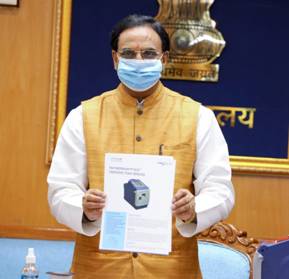
NEW DELHI — In a major structural development for child welfare and public health, the Ministry of Women and Child Development (MWCD) announced on July 22, 2026, the successful integration of key child-tracking platforms into a unified, centralized system known as the Mission Vatsalya Portal.
The new digital infrastructure merges the existing TrackChild portal, the citizen-centric Khoya-Paya platform, and the GO Home and Re-Unite (GHAR) portal into a single interoperable database. Announced by Minister of State for Women and Child Development, Smt. Savitri Thakur, in the Rajya Sabha, this technology-driven consolidation connects law enforcement, child welfare committees, judicial boards, and public citizens across India.
Beyond its technical capabilities, public health experts, pediatricians, and child psychologists view this integration as a critical preventive health initiative. Prolonged separation from family exposes vulnerable minors to severe toxic stress, complex trauma, and long-term neurodevelopmental disruptions. By streamlining real-time data sharing and cross-jurisdictional tracking, the portal aims to shorten the timeframe required to locate and reintegrate Children in Need of Care and Protection (CNCP) and Children in Conflict with Law (CCL).
The Public Health Crisis of Missing Children and Toxic Stress
Every year, thousands of children go missing due to runaway incidents, trafficking, poverty, or accidental separation. From a pediatric public health perspective, every day a child remains away from a safe, protective family environment increases their risk of experiencing severe psychological and physiological adverse health outcomes.
When a child is separated from primary caregivers and exposed to unstable or unsafe environments, the body’s stress response system remains continuously activated. In clinical settings, this state is recognized as toxic stress—a condition characterized by sustained elevations of cortisol and adrenaline.
+-----------------------------------------------------------------------+
|                       THE TOXIC STRESS CASCADE                         |
+-----------------------------------------------------------------------+
|  1. Prolonged Family Separation & Environmental Instability           |
|  2. Hyper-activation of the Hypothalamic-Pituitary-Adrenal (HPA) Axis  |
|  3. Chronic Elevation of Cortisol & Inflammatory Biomarkers           |
|  4. Structural Alterations in Amygdala & Prefrontal Cortex            |
|  5. Heightened Risk of PTSD, Anxiety, & Cognitive Impairments         |
+-----------------------------------------------------------------------+
Neurobiological studies show that chronic cortisol exposure during crucial developmental stages can alter the architecture of the developing brain—particularly the amygdala (responsible for threat perception) and the prefrontal cortex (responsible for executive functioning and emotional regulation). Children exposed to extended periods of displacement demonstrate elevated rates of:
-
Post-Traumatic Stress Disorder (PTSD) and hypervigilance
-
Complex developmental trauma and attachment disorders
-
Growth stunting and impaired immune function
-
Long-term susceptibility to chronic adult illnesses, including hypertension, major depressive disorder, and metabolic syndromes
“Family reunification is not solely a social or legal endeavor; it is a vital mental health intervention,” explains Dr. Ananya Sharma, a consultant child and adolescent psychiatrist not involved with the portal’s launch. “The longer a child remains displaced or institutionalized, the deeper the psychological scarring. Rapid, safe repatriation drastically cuts down the duration of toxic stress exposure, giving the child’s nervous system a chance to regulate and heal.”
System Architecture: Breaking Down Operational Silos
Historically, efforts to track missing children suffered from fragmented databases, administrative delays, and a lack of real-time communication between state borders. The unified Mission Vatsalya Portal addresses these systemic barriers through multi-agency coordination and technological integration.
Key Features of the Integrated Portal
-
CCTNS Interoperability: The portal links directly with the Crime and Criminal Tracking & Network Systems (CCTNS) under the Ministry of Home Affairs. First Information Reports (FIRs) filed for missing children are automatically matched against databases of found or sighted children across various states using algorithmic data matching.
-
Crowdsourced Intelligence via Khoya-Paya: Recognizing that community involvement accelerates recovery, the Khoya-Paya module allows ordinary citizens to upload photos and information about missing or sighted children.
-
Systemic Restoration via GHAR: The GO Home and Re-Unite module digitizes the repatriation process, allowing Child Welfare Committees (CWCs) and Juvenile Justice Boards (JJBs) to track a child’s progress from initial protective custody back to their home district.
-
Designated Accountability: State and district-level nodal officers have been appointed across all States and Union Territories to oversee data entry, ensure compliance with Standard Operating Procedures (SOPs), and eliminate operational bottlenecks.
| Module | Core Functionality | Primary Stakeholders | Health Impact |
| TrackChild | Database matching for missing and found children | Police, CWCs, JJBs, Ministry of Railways | Reduces duration of missing status |
| Khoya-Paya | Citizen-based reporting and sighting uploads | General Public, Community Organizations | Increases early identification rates |
| GHAR Portal | Digitized tracking of restoration and repatriation | Child Welfare Committees, Social Workers | Prevents prolonged institutionalization |
From Recovery to Rehabilitation: The Clinical Imperative
Locating a child is only the first phase of the child protection spectrum. Reintegrating a minor into their family or a suitable alternative care environment requires tailored psycho-social support to address trauma experienced during displacement.
Under the Mission Vatsalya guidelines, once a child is located, local authorities are mandated to conduct comprehensive physical and psychological evaluations. The unified platform enables CWCs and District Child Protection Units (DCPUs) to maintain digitized Individual Care Plans (ICPs). These plans track medical care, trauma-informed counseling, nutritional rehabilitation, and educational continuity.
Clinical Insight: “When a child is restored to a safe environment, their neurobiology begins to shift from a state of survival to one of recovery. However, reunification must be paired with community-level trauma support. Connecting these digital systems ensures that a child’s health history and psychological needs do not get lost in transit.”
— Dr. Rajesh Mukherji, Public Health Specialist and Developmental Pediatric Consultant
Implementation Challenges and Critical Considerations
While the unification of the portal represents a significant forward step, public health analysts and child rights advocates emphasize that digital tools are only as effective as the ground-level human infrastructure supporting them.
Key Considerations for Sustainable Success
-
Data Accuracy and Real-Time Updates: The success of automated cross-matching depends on prompt, accurate data entry by field personnel, including railway police, shelter home operators, and local law enforcement.
-
Privacy and Safeguarding Safeguards: Storing sensitive demographic and biometric information about minors requires robust cybersecurity protocols to prevent unauthorized access and protect children from secondary risks.
-
Capacity Building: Personnel across CWCs, JJBs, and police departments require continuous training in trauma-informed care so that the physical process of recovery and transportation does not re-traumatize the child.
Public Action: How Citizens Can Utilize the System
The Ministry’s inclusion of public-facing interfaces empowers communities to act as active participants in child protection.
If a citizen encounters an unattended, lost, or distressed child:
-
Immediate Notification: Contact the national Child Helpline (1098) or local law enforcement authorities immediately.
-
Report via Khoya-Paya: Citizens can log onto the Khoya-Paya module within the Mission Vatsalya Portal to upload details or photos of a missing or sighted child safely.
-
Avoid Unverified Social Media Posts: Health authorities urge citizens to avoid sharing images of vulnerable children on unverified social media groups, as this can impede official tracking efforts and compromise the child’s safety and privacy rights.
By combining technological coordination across governmental bodies with active public vigilance, the Mission Vatsalya Portal represents an essential framework for safeguarding both the physical security and long-term health of India’s most vulnerable children.
Medical Disclaimer
Medical Disclaimer: This article is for informational purposes only and should not be considered medical advice. Always consult with qualified healthcare professionals before making any health-related decisions or changes to your treatment plan. The information presented here is based on current research and expert opinions, which may evolve as new evidence emerges.
Reference Section
Government & Official Declarations
-
Ministry of Women and Child Development. (2026, July 22). Ministry of Women and Child Development has developed integrated unified Mission Vatsalya Portal. Press Information Bureau (PIB), Delhi.