 0
0
 0
0
NEW DELHI — In a major overhaul of its pediatric public health strategy, the Government of India has launched a unified national programme designed to provide continuous home and community-based healthcare for children from birth up to 36 months of age.
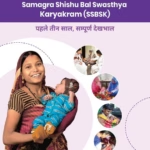
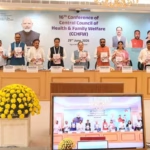
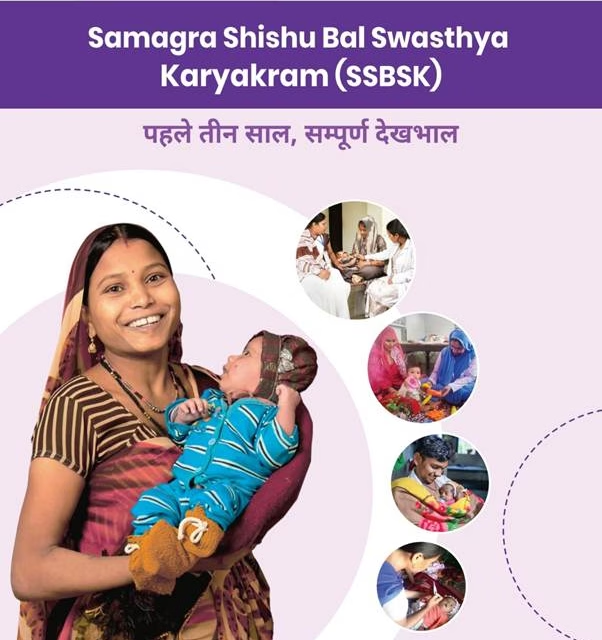
Union Minister of Health and Family Welfare, Shri Jagat Prakash Nadda, officially unveiled the Samagra Shishu Bal Swasthya Karyakram (SSBSK) on June 29, 2026, during the 16th Central Council of Health and Family Welfare (CCHFW) meeting. Operating under the central motto “पहले तीन साल सम्पूर्ण देखभाल” (Comprehensive Care During the First Three Years), the initiative merges two major existing frameworks: the Home-Based Newborn Care (HBNC) and the Home-Based Care for Young Child (HBYC) programmes into a single, structured system.
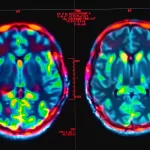
The policy shift arrives at a critical juncture for public health in India, targeting the first 28 days of life—vital for newborn survival—and the first 1,000 days, which neuroscientists identify as the window during which 90% of human brain development occurs.
A Risk-Stratified Approach to Pediatric Care
Rather than applying a one-size-fits-all approach, the SSBSK introduces a sophisticated “risk-stratified” protocol. Children identified as “at-risk”—due to factors such as low birth weight, prematurity, delayed initiation of breastfeeding, recent discharge from Special Newborn Care Units (SNCUs), malnutrition, recurrent illness, or developmental delays—will receive intensified tracking.
Under the new guidelines, the frequency of care is heavily front-loaded based on vulnerability:
-
At-Risk Newborns: Eligible for up to nine structured home visits within the first 42 days of life.
-
At-Risk Young Children: Scheduled for up to eight additional follow-up visits extending from infancy up to 36 months of age.
Independent public health experts see this as a logical progression in resource allocation. “By categorizing children based on clinical and socioeconomic risk profiles, the healthcare system can deploy frontline workers where they are needed most,” says Dr. Preeti Kumar, a maternal and child health policy specialist not involved in the drafting of the program. “Low birth weight and prematurity remain primary drivers of neonatal mortality in South Asia. Intensified monitoring during the fragile first month is scientifically sound.”
Mobilizing the Frontline: The Continuum of Care
Executing a home-based care model of this scale requires seamless collaboration among India’s massive network of community health workers. The SSBSK establishes coordinated protocols involving:
-
ASHAs (Accredited Social Health Activists)
-
ANMs (Auxiliary Nurse Midwives)
-
CHOs (Community Health Officers)
-
AWWs (Anganwadi Workers)
To ensure high-risk cases do not fall through the cracks, the programme mandates joint home visits by ANMs and CHOs on Day 3 and Day 7 for at-risk newborns, alongside dedicated clinical checks during the third and sixth months of life.
Furthermore, the strategy introduces structured community checkpoints. Well-Baby Sessions will now be embedded into every monthly Village Health, Sanitation and Nutrition Day (VHSND). Additionally, specialized monthly Shishu Shivirs (Child Health Camps) will be hosted at local Ayushman Arogya Mandirs (primary health wellness centers) to facilitate regular developmental screenings and local case management.
Expanding the Scope: Maternal Mental Health and Screen Time
In a notable departure from historical child health policies that focused strictly on immunization and nutrition, the SSBSK incorporates broader aspects of family well-being and modern environmental risks.
Maternal Post-Partum Mental Health
Recognizing that a child’s development is deeply intertwined with maternal well-being, frontline ASHA workers will now be trained to conduct early post-partum maternal mental health screenings. According to the World Health Organization (WHO), roughly 10% of pregnant women and 13% of women who have just given birth experience a mental disorder, primarily depression, a rate that is often higher in developing nations. By integrating these checks into routine child wellness visits, the government aims to de-stigmatize maternal depression and facilitate early referrals to clinical psychologists or counselors.
The Digital Threat to Brain Development
For the first time, national child health guidelines explicitly address the emerging challenges of the digital era. The SSBSK guidelines warn against excessive screen exposure and reduced physical, real-world interaction for infants.
The policy aligns closely with WHO guidelines on physical activity, sedentary behavior, and sleep for children under 5 years of age, which strictly recommend zero screen time for infants under one year old and limiting screen time to less than an hour per day for two- to three-year-olds. The SSBSK mandates that frontline workers actively counsel parents during home visits to swap digital devices for age-appropriate play, responsive caregiving, and active family engagement to avoid potential long-term risks to cognitive growth, emotional regulation, and social skills.
                                  SAMAGRA SHISHU BAL SWASTHYA KARYAKRAM (SSBSK)
                                                        |
                            +---------------------------+---------------------------+
                            |                                                       |
                 [Clinical Interventions]                                [Developmental & Modern Care]
                            |                                                       |
         +------------------+------------------+                 +------------------+------------------+
         |                                     |                 |                                     |
[Risk-Stratified Care]               [Community Platforms]       [Maternal Mental Health]     [Digital Screen Mitigation]
  - Up to 9 visits (0-42 days)         - Well-Baby Sessions        - Post-partum depression     - Counsel against early
  - Up to 8 visits (up to 36 mos)        at village VHSNDs           screening by ASHAs           device exposure
  - Joint ANM/CHO tracking             - Monthly Shishu Shivirs    - Targeted counseling        - Promote age-appropriate
    on critical days                     at Arogya Mandirs           & timely clinical referral   play and engagement
Digital Integration and Data Infrastructure
To track millions of children across diverse geographies, the SSBSK relies on an interconnected digital framework. The program leverages Decision-Support Systems (DSS) and child-wise digital tracking to send automated alerts for missed appointments or critical medical follow-ups.
This backend ecosystem will seamlessly exchange data with existing national digital health registries using ABHA (Ayushman Bharat Health Account) and specialized Baal-ABHA IDs for children. Key integrated platforms include:
-
U-WIN Portal: Digitally tracks infant vaccinations.
-
POSHAN Tracker: Monitors nutritional indicators across Anganwadi centers.
-
JANANI Portal & MPCDSR Portal: Coordinates maternal and child mortality surveillance.
-
RBSK 2.0 Portal: Manages early screening and intervention for birth defects.
The program also features specialized outreach strategies tailored specifically for urban areas, mapping out vulnerable children residing in informal urban settlements, migrant camps, and underserved slums where healthcare access remains fragmented.
Operational Challenges and Limitations
While the comprehensive scope of the SSBSK has drawn praise, health policy analysts note that its success rests entirely on execution and systemic capacity.
One primary concern is the workload of frontline workers. ASHAs and Anganwadi workers are already responsible for an array of tasks ranging from immunization drives to nutritional distribution and data logging. Adding structured mental health screenings, risk-stratified pediatric follow-ups, and complex digital reporting tools could push an already overextended workforce to its limits.
“The introduction of digital registries via Baal-ABHA IDs is excellent for continuity of care, but we must account for the persistent digital divide and connectivity issues in remote rural areas,” cautions Dr. Kumar. “Furthermore, identifying an at-risk child or a mother experiencing post-partum depression is only half the battle. If local primary health centers lack the specialized staff or medical supplies to handle referrals, the system stalls.”
Ensuring adequate ongoing training, robust internet infrastructure, and competitive compensation for frontline health workers will be critical variables determining whether the ambitious policy successfully moves from paper to practice.
References
Policy and Institutional Sources
-
Press Information Bureau (PIB) Delhi: Union Health Minister Shri Jagat Prakash Nadda Launches Samagra Shishu Bal Swasthya Karyakram (SSBSK) at the 16th CCHFW Meeting. Published June 29, 2026.
Medical Disclaimer
This article is for informational purposes only and should not be considered medical advice. Always consult with qualified healthcare professionals before making any health-related decisions or changes to your treatment plan. The information presented here is based on current research and expert opinions, which may evolve as new evidence emerges.