 0
0
 0
0
HYDERABAD, India — Public health officials in Telangana breathed a collective sigh of relief on Saturday, June 6, 2026, as hospital administrators confirmed that two Sudanese nationals suspected of harboring the deadly Ebola virus have tested negative. The individuals had been placed under strict isolation at Hyderabad’s Gandhi Hospital after presenting with acute fever symptoms. The definitive negative results, issued by the National Institute of Virology (NIV) in Pune, successfully resolve a brief but tense public health scare that triggered rigorous containment protocols and intensified thermal screening at Rajiv Gandhi International Airport.
The incident underscores the high state of alert maintained by Indian health authorities as central and east African nations battle fresh viral outbreaks. Though the immediate threat in Hyderabad has dissipated, the Ministry of Health and Family Welfare continues to enforce stringent surveillance guidelines for international travelers arriving from high-risk zones.
Inside the Hyderabad Isolation Scares
The scare unfolded over a 48-hour window, testing the structural readiness of Telangana’s specialized infectious disease protocols.
The first individual flagged was a 35-year-old Sudanese man who arrived at Rajiv Gandhi International Airport. During mandatory border screening, a thermal scanner logged his body temperature at 100°F ($37.8^\circ\text{C}$). Following standard emergency operating procedures, he was isolated immediately and transferred via a secured medical corridor to Gandhi Hospital.
The second patient, a 22-year-old Sudanese student enrolled at a private university in Hyderabad, was referred to the same facility on the evening of June 4. The student had sought care at a private clinic after developing a sudden, high fever. Recognizing the patient’s recent history of travel from the African continent, astute private clinicians quickly notified state epidemiological teams.
“The patient’s attendant was also admitted to the isolation ward initially as a strict safeguard, but was later discharged after being found clinically stable,” stated Dr. N. Vani, Superintendent of Gandhi Hospital.
Blood samples from both symptomatic individuals were dispatched via cold-chain transport to the NIV in Pune—India’s premier diagnostic authority for high-consequence pathogens. On Saturday, molecular testing officially ruled out the presence of the virus.
Dr. Vamsi Krishna, the designated nodal officer for Ebola preparedness at Gandhi Hospital, confirmed that both individuals remained clinically stable throughout their hospitalization and would be discharged following routine observation.
The Pathogen Profile: Understanding Transmission Dynamics
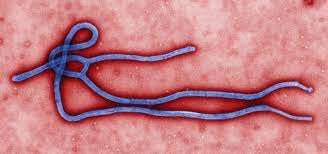
Ebola virus disease (EVD) remains one of the world’s most lethal viral infections, carrying an average case fatality rate of approximately 50%, with historical spikes ranging between 25% and 90% depending on the specific viral species and the speed of medical intervention. The illness is driven by a genus of viruses known as Orthoebolavirus. Three prominent species within this group—the Ebola virus (Zaire ebolavirus), the Sudan virus, and the Bundibugyo virus—are responsible for major human epidemics.
The incubation period—the time elapsed between contracting the pathogen and the first appearance of symptoms—ranges from 2 to 21 days. According to data provided by the U.S. Centers for Disease Control and Prevention (CDC), symptoms manifest suddenly and include:
-
High fever, debilitating fatigue, and generalized malaise
-
Severe muscle aches (myalgia) and persistent headaches
-
Acute sore throat
As the disease progresses, patients experience intense gastrointestinal distress, including protracted vomiting, severe diarrhea, and abdominal pain. While popular depictions often emphasize dramatic internal and external bleeding (hemorrhaging), clinical data shows that bleeding from the gums, nose, or gastrointestinal tract occurs less frequently and typically appears only in the advanced, terminal stages of the illness.
Crucially, health experts emphasize that public anxiety regarding international travel is frequently fueled by misconceptions about how the virus moves through communities.
“India currently has no confirmed Ebola cases,” noted Dr. Ravi Godse, an infectious disease specialist who has closely analyzed regional biosecurity measures. “The current concern stems from active outbreaks in Uganda and the Democratic Republic of the Congo, but Ebola simply cannot spread like COVID-19 or influenza. It is not an airborne pathogen. Transmission demands direct, physical contact with the blood, secretions, or other bodily fluids of an infected, symptomatic person, or through surfaces contaminated with those fluids.”
Because an asymptomatic individual cannot transmit the virus, the risk of casual transmission in public spaces, such as commercial aircraft or airport terminals, remains exceedingly low.
Global Context: The Current African Footprint
The heightened vigilance in India is a direct response to a complex epidemiological situation unfolding in sub-Saharan Africa. According to the June 4–5, 2026 situation reports from the World Health Organization (WHO) and the CDC, the Democratic Republic of the Congo (DRC) has documented 452 confirmed cases of Ebola disease resulting in 82 deaths. Concurrently, neighboring Uganda has verified 19 cases and 2 deaths.
The current chain of transmission involves the Bundibugyo virus, a specific strain requiring distinct medical countermeasures compared to the more common Zaire strain. The regional risk is further complicated by intense cross-border commerce; for instance, while South Sudan has reported zero confirmed cases to date, its shared borders with affected sectors have forced international health agencies to include the country in active surveillance zones.
The global reach of the current outbreak was illustrated on May 17, 2026, when an American healthcare worker operating in an isolation unit within the DRC tested positive for the Bundibugyo virus. The clinician was medically evacuated via specialized biocontainment aircraft to an isolation facility in Germany, where they are currently reported to be in stable condition.
India’s Fortified Defensive Network
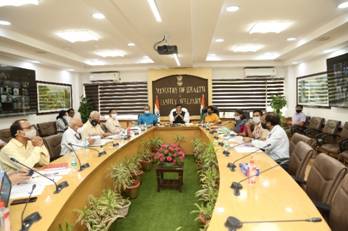
In response to the shifting global landscape, India’s Ministry of Health and Family Welfare issued a nationwide public health advisory on June 2, 2026. The ministry reconfirmed that India maintains a clean record with zero indigenous or imported cases of Ebola, but instructed regional centers to maximize active monitoring.
Telangana’s containment strategy relies heavily on a tiered screening network centered around Rajiv Gandhi International Airport. All inbound passengers originating from or transiting through the DRC, Uganda, and South Sudan undergo mandatory thermal imaging and brief epidemiological screening.
[Inbound Passenger from At-Risk Region]
                 │
                 ▼
     [Airport Thermal Screening]
                 │
      ┌──────────┴──────────┐
      ▼                     ▼
[Symptomatic: Temp >100°F] [Asymptomatic]
      │                     │
      ▼                     ▼
[Immediate Isolation]  [Category-I Designation]
      │                     │
      ▼                     ▼
[Secure Transport to]  [21-Day Mandatory]
[ Gandhi Hospital   ]  [ Home Isolation  ]
      │                     │
      ▼                     ▼
[NIV Pune RT-PCR Lab]  [Daily Health Monitoring]
According to Telangana Health Minister Damodar Rajanarsimha, the state’s preventative mechanism has functioned without failure. “As of late May, a total of 58 passengers had arrived in Hyderabad from Ebola-hit countries, and none exhibited symptoms of the disease,” Rajanarsimha stated.
These 58 asymptomatic travelers were classified under Category-I protocol, which dictates mandatory 21-day home isolation accompanied by daily health reporting conducted by localized district surveillance teams.
Gandhi Hospital serves as the state’s primary nodal center for Ebola management. The specialized ward features 10 fully self-contained isolation rooms equipped with dedicated ensuite plumbing to prevent sewage contamination, alongside 15 quarantine beds designed to accommodate secondary contacts.
Diagnostic Challenges and Countermeasure Gaps
While the resolution of the cases in Hyderabad brings near-term comfort, medical researchers stress that the episode highlights structural limitations in current global therapeutics.
A significant challenge for frontline clinicians is that the early clinical presentation of Ebola disease directly mimics several endemic tropical infections. Diseases such as severe malaria, typhoid fever, and meningococcal meningitis present with identical initial symptoms of fever, headache, and body aches. This diagnostic overlap means that health systems must maintain high-level isolation capabilities for all suspect cases until definitive RT-PCR molecular assay results are completed.
Furthermore, medical countermeasures are highly strain-specific. While the global pharmaceutical pipeline has successfully produced licensed vaccines—such as Merck’s Ervebo and Janssen’s dual-dose Zabdeno/Mvabea regimen—these interventions are strictly approved for use against the Zaire ebolavirus.
Critical Medical Gap: There are currently no widely licensed vaccines or specific antiviral therapies available to combat the Sudan or Bundibugyo strains.
Patients infected with the Bundibugyo strain driving the current African outbreaks must rely entirely on intensive supportive care. This involves aggressive intravenous rehydration, aggressive electrolyte management, and targeted symptomatic pharmacotherapy—interventions which, if deployed early, substantially drop mortality rates but do not eliminate the underlying viral progression. Candidate vaccines for these alternate strains remain trapped in early-to-mid-stage clinical trial protocols.
Guidance for the Public and Healthcare Providers
For the general population within India, the negative testing of the two travelers confirms that the community faces no immediate risk of local transmission. Public health officials reiterate that everyday activities carry no threat of exposure.
However, for international travelers, strict compliance with national advisories remains mandatory. Anyone returning from a designated outbreak zone within the past 21 days must carefully self-monitor for the sudden onset of fevers, unexplained weakness, or digestive disturbances. If symptoms manifest, individuals must immediately self-isolate from family members, avoid public transit, and contact state epidemiological helplines rather than presenting unannounced at standard outpatient clinics.
For healthcare professionals, the directive from the WHO and the National Centre for Disease Control (NCDC) is uniform: universal standard precautions must be maintained across all healthcare delivery points. When managing patients with unexplained febrile illness and a verified history of recent international travel, clinical staff must immediately implement enhanced infection control measures—including full personal protective equipment (PPE) and strict fluid barrier precautions—prior to diagnostic validation.
The successful containment and rapid clearance of the suspected cases in Hyderabad demonstrate that while the global threat of emerging viral pathogens remains persistent, structured border surveillance combined with rapid laboratory diagnostics remains the most effective defense against international outbreaks.
Medical Disclaimer: This article is for informational purposes only and should not be considered medical advice. Always consult with qualified healthcare professionals before making any health-related decisions or changes to your treatment plan. The information presented here is based on current research and expert opinions, which may evolve as new evidence emerges.
References
https://health.economictimes.indiatimes.com/news/industry/second-sudanese-national-admitted-to-hyderabad-hospital-also-tests-negative-for-ebola/131570958?utm_source=latest_news&utm_medium=homepage