 0
0
 0
0
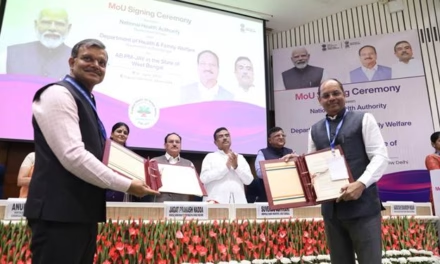
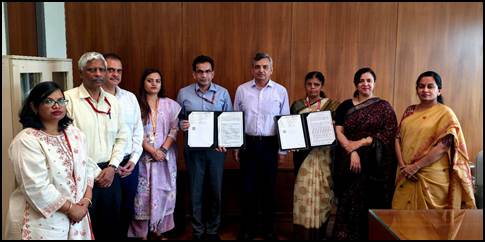
NEW DELHI – In a significant move to elevate India’s pharmaceutical regulatory landscape, the National Institute of Pharmaceutical Education and Research (NIPER), Hajipur, has entered into a strategic partnership with the Indian Pharmacopoeia Commission (IPC). The Memorandum of Understanding (MoU), signed Friday at Kartavya Bhawan, aims to bridge the gap between academic research and national safety standards, focusing on high-tech areas like biosimilars and gene therapy to ensure that the medicines reaching Indian households are of the highest global quality.
A Strategic Alliance for Patient Safety
The collaboration, witnessed by Manoj Joshi, Secretary of the Department of Pharmaceuticals, marks a pivotal moment for “The Pharmacy of the World.” By linking a premier academic research body like NIPER Hajipur with the IPC—the agency responsible for setting the standards for all drugs manufactured and sold in India—the government is creating a feedback loop between scientific innovation and regulatory enforcement.
“Such collaborations are crucial for strengthening India’s regulatory science ecosystem,” said Shri Manoj Joshi during the ceremony. “This initiative will help ensure the availability of safe, effective, and quality-assured healthcare products for our citizens.”
The partnership is designed to address the increasing complexity of modern medicine. As the industry shifts from simple chemical pills to complex biological treatments, the methods used to test their safety must also evolve.
Key Pillars of the Collaboration
The MoU outlines several technical frontiers where NIPER Hajipur’s researchers and IPC’s standard-setters will work side-by-side:
1. Impurity Profiling and Drug Safety
One of the most critical aspects of the agreement is impurity profiling. Modern drug manufacturing can sometimes leave behind trace amounts of unintended chemicals. Some of these, such as nitrosamines, are classified as “genotoxic impurities” because they can damage DNA and potentially increase cancer risk over long-term exposure.
The joint research will focus on identifying these microscopic risks and establishing strict protocols to ensure they are filtered out before drugs reach the pharmacy shelves.
2. Standardization of Advanced Therapies
India is rapidly becoming a hub for biosimilars (versions of biological medicines) and emerging cell and gene therapies. Unlike traditional drugs, these are made from living organisms and are incredibly complex to replicate.
-
Complex Biologics: Developing reference standards for these ensures that every batch of a biologic drug performs exactly like the last.
-
Cell & Gene Therapy: The partnership will help create the first sets of quality control protocols for these “frontier” treatments, facilitating their inclusion in the Indian Pharmacopoeia (IP).
3. Capacity Building and Training
Beyond the lab, the MoU focuses on the “human element.” It establishes a framework for faculty exchanges, specialized workshops, and internships. This ensures that the next generation of pharmacists and regulatory scientists is trained in the most advanced analytical methods available.
What This Means for the Public
For the average consumer, this agreement might seem like high-level bureaucracy, but its impact on daily health is direct.
When you buy a medication, its safety is guaranteed by the standards set in the Indian Pharmacopoeia. By involving NIPER Hajipur’s research expertise, the IPC can update these standards faster. This means:
-
Lower Risk of Contamination: More rigorous testing for impurities.
-
Affordable Innovation: Faster standardization of biosimilars can lead to more affordable versions of expensive life-saving drugs for cancer and autoimmune diseases.
-
Global Trust: Strengthening local standards boosts the reputation of Indian-made drugs globally, ensuring that “Made in India” remains a hallmark of quality.
Context: India’s Regulatory Evolution
This MoU follows a series of similar moves by the IPC to decentralize and strengthen drug monitoring. Earlier this year, the IPC signed agreements with the Pharmaceuticals and Medical Devices Bureau of India (PMBI) to enhance the quality of Jan Aushadhi (generic) medicines.
While India’s pharmaceutical sector has grown exponentially, it has faced international scrutiny regarding quality control in recent years. Experts suggest that integrating academic powerhouses like NIPER into the regulatory process is a proactive step toward “zero-defect” manufacturing.
Limitations and Future Outlook
While the MoU provides a robust framework, the transition from research to regulatory implementation is rarely instantaneous. Industry analysts note that developing reference standards for complex biologics can take years of validation. Furthermore, the success of the capacity-building initiatives will depend on sustained funding and the ability of the regulatory infrastructure to absorb new technologies.
Dr. V. Kalaiselvan, Secretary of the IPC, noted that the framework is flexible, allowing for project-based cooperation that can adapt as new medical technologies emerge. For now, the focus remains on transforming these scientific goals into “measurable action” that directly benefits patient outcomes.
Reference Section
Citations and Sources:
-
Press Information Bureau (PIB): “NIPER Hajipur Signs MoU with IPC to Strengthen Pharmaceutical Standards and Patient Safety,” published April 24, 2026.
Medical Disclaimer: This article is for informational purposes only and should not be considered medical advice. Always consult with qualified healthcare professionals before making any health-related decisions or changes to your treatment plan. The information presented here is based on current research and expert opinions, which may evolve as new evidence emerges.