 0
0
 0
0
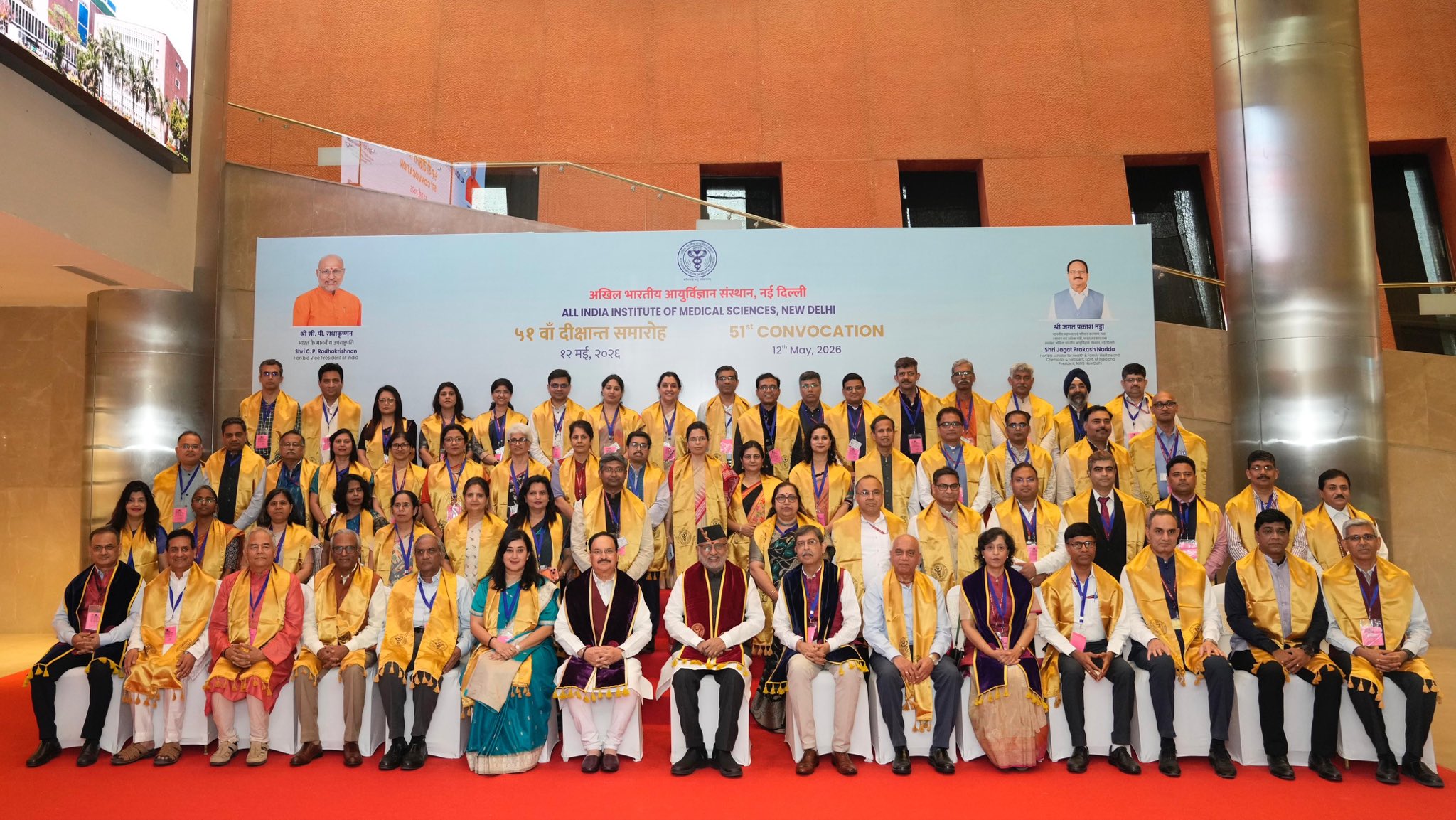
NEW DELHI – In a landmark address that bridged the gap between cutting-edge technology and the “human touch” of medicine, Vice President Shri C. P. Radhakrishnan presided over the 51st Convocation of the All India Institute of Medical Sciences (AIIMS) New Delhi on May 12, 2026. Speaking at the Bharat Mandapam, the Vice President declared that India’s premier medical institution is no longer merely chasing international standards but is actively setting them, while issuing a poignant reminder that no algorithm can replace the empathy of a physician.
The ceremony, which celebrated the graduation of a new cohort of doctors, researchers, and healthcare professionals, served as a status report on India’s rapidly evolving medical landscape. With AIIMS New Delhi climbing 40 places in global rankings over the last two years, the event highlighted a pivotal shift in the nation’s healthcare trajectory: the marriage of high-tech innovation with universal affordability.
From Benchmarks to Trailblazing: The Rise of the ‘AIIMS Brand’
The Vice President’s address underscored the remarkable ascent of AIIMS on the global stage. Currently ranked 105th globally in the QS World University Rankings, the institute has maintained its streak as the top-ranked medical facility in India’s National Institutional Ranking Framework (NIRF) for eight consecutive years.
“AIIMS has emerged as the nation’s primary engine of medical innovation,” Vice President Radhakrishnan noted. He specifically pointed to the institute’s recent technological breakthroughs, such as the successful execution of a remote robotic ultrasound performed on a patient in Antarctica earlier this year. This feat, experts say, represents a “proof of concept” for the future of rural and extreme-environment medicine.
“The feat demonstrated that geography is no longer a barrier to Indian clinical excellence,” the Vice President remarked, adding that the AIIMS brand has become “synonymous with trust and integrity” across Southeast Asia.
AIIMS by the Numbers: A Legacy of Excellence
-
Global Standing: 105th in QS World Rankings (up from 145th in 2024).
-
National Dominance: #1 in NIRF Medical Category (2018–2026).
-
Scientific Impact: 57 faculty members listed among Stanford University’s top 2% scientists globally.
-
Honors: Faculty members have collectively earned 68 Padma Awards (2 Vibhushan, 15 Bhushan, and 51 Shri).
The “AI vs. Bedside” Debate: A Call for Empathy
Perhaps the most resonant part of the address was the Vice President’s commentary on the role of Artificial Intelligence (AI) in modern medicine. While acknowledging the institute’s Indo-French Centre for AI in Health, he cautioned the graduating class against over-reliance on digital tools.
“While AI-driven technologies are transforming medicine, no artificial intelligence can replace the moral weight of a doctor’s presence at a patient’s bedside,” he stated. This sentiment echoes a growing discussion in the global medical community regarding “digital empathy”—the concern that as diagnostic tools become more automated, the therapeutic alliance between doctor and patient may weaken.
Dr. Arati Sharma, a public health consultant not affiliated with the research, notes that this perspective is vital for new graduates. “Technology is a diagnostic enhancer, not a caregiver. The ‘white coat’ effect—the psychological comfort a patient feels from a trusted human provider—is something we cannot yet code into a machine.”
Public Health Implications: Affordability and Expansion
For the general public, the significance of AIIMS lies in its unique dual mandate: providing world-class tertiary care while remaining accessible to the country’s most vulnerable populations. The Vice President praised the Ministry of Health and Family Welfare, led by Shri Jagat Prakash Nadda, for managing massive patient volumes without sacrificing academic or clinical quality.
The expansion of the “AIIMS model” to underserved regions across India is a cornerstone of the “One Nation, One Health” vision. This initiative aims to decentralize high-quality healthcare, ensuring that a patient in a rural district has access to the same standards of care as one in the capital.
What This Means for Patients
-
Standardized Care: The expansion of AIIMS institutions means fewer patients need to travel thousands of miles to New Delhi for specialized surgeries.
-
Technological Integration: Innovations like tele-robotic surgery and AI-driven diagnostics are being piloted to bridge the rural-urban healthcare divide.
-
Ethical Practice: A renewed focus on “ethics and empathy” in medical education aims to improve patient satisfaction and trust in public health systems.
Balancing Innovation with Reality
Despite the celebratory tone, the healthcare sector faces significant hurdles. Public health experts point out that while AIIMS sets the benchmark, the broader Indian healthcare system still grapples with a shortage of specialists and an uneven distribution of nursing colleges.
The Vice President addressed this by highlighting ongoing efforts to establish more medical and nursing colleges nationwide. However, critics often note that maintaining the “AIIMS standard” of excellence across dozens of new satellite campuses remains a logistical and pedagogical challenge. The graduating class of 2026 is expected to be the vanguard in ensuring this quality remains consistent.
A Mandate for the Future
As the ceremony concluded, the Vice President urged the graduates to lead with integrity. “The white coat you wear carries expectations far beyond personal success,” he said. He challenged the young doctors to ensure their work reflects both “professional skill and a commitment to the larger good.”
In an era of rapid technological disruption, the 51st Convocation of AIIMS New Delhi served as a reminder that while the tools of medicine may change, the mission remains the same: to serve humanity with humility and excellence.
Medical Disclaimer: This article is for informational purposes only and should not be considered medical advice. Always consult with qualified healthcare professionals before making any health-related decisions or changes to your treatment plan. The information presented here is based on current research and expert opinions, which may evolve as new evidence emerges.
References and Sources
Official Statements & Reports:
-
Press Information Bureau (PIB) Delhi. (2026, May 12). Vice President addresses 51st Convocation Ceremony of AIIMS New Delhi. Release ID: [Contextual].