 0
0
 0
0
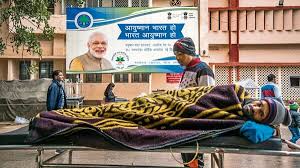
KOLKATA — In a major development poised to reshape the medical landscape of Eastern India, West Bengal has secured over ₹3,000 crore in central funding for a massive overhaul of its healthcare infrastructure. Alongside this fiscal injection, the state is gearing up for a phased rollout of the Centre’s flagship health insurance scheme, Ayushman Bharat Pradhan Mantri Jan Arogya Yojana (AB PM-JAY), with card distribution targeted to begin this July. The twin initiatives mark a critical shift in how healthcare is funded and accessed by millions of residents across the state.
According to official statements reported on May 23, 2026, the Union Health Ministry has already approved the substantial capital layout under the National Health Mission (NHM). Senior state officials confirmed that an initial tranche of ₹500 crore has already been transferred to kickstart infrastructure upgrades. The transition will initially see roughly six crore (60 million) existing Swasthya Sathi cardholders — the state’s domestic health insurance beneficiaries — integrated into the national Ayushman Bharat framework. This structural realignment is designed to drastically lower out-of-pocket medical expenses and offer seamless, cashless medical access across both public and empanelled private hospitals nationwide.
Direct Financial Protection for Millions
For the average household in West Bengal, the immediate benefit of this transition lies in robust financial protection against medical emergencies. AB PM-JAY offers up to ₹5 lakh per family per year for secondary and tertiary care hospitalizations. Crucially, the national scheme covers all pre-existing medical conditions from day one.
In a country where a single major illness can deplete a family’s life savings, this coverage acts as a vital safety net. According to data from the Ministry of Health and Family Welfare, the scheme currently covers 1,961 medical procedures across 27 specialized fields, including cardiology, oncology, and neurosurgery.
The National Health Mission funding operates in tandem with this insurance expansion, focusing on structural capacity. In practical terms, the ₹3,000 crore allocation will be funneled into:
-
Infrastructure Upgrades: Modernizing community health centers and district hospitals.
-
Workforce Expansion: Recruiting and training medical professionals to reduce patient-to-doctor ratios.
-
Service Delivery: Enhancing diagnostic capabilities and ensuring a steady supply of essential medicines at primary and secondary care levels.
What the Data Shows: Benefits and Realities
Public health researchers have closely tracked the real-world performance of Ayushman Bharat since its inception. The empirical evidence presents a nuanced picture of substantial financial relief alongside persisting operational barriers.
On the positive side, a comprehensive 2025 study published in BMJ Open analyzed the financial trajectory of PM-JAY beneficiaries. The researchers documented a substantial 58% reduction in mean out-of-pocket spending among insured individuals compared to those without coverage. A secondary analysis within the same repository noted a 13% relative drop in general out-of-pocket expenditure and a 21% reduction in catastrophic health expenditures — defined as medical costs that exceed 40% of a household’s discretionary income.
However, researchers note that insurance cards alone do not cure systemic access flaws. An independent study indexed in PubMed revealed that while PM-JAY successfully lowered costs, it frequently triggered a sharp shift toward private hospital utilization rather than increasing overall hospitalization rates. This indicates that insurance does not automatically expand the physical capacity of the healthcare system.
Furthermore, a localized analysis out of Gujarat published in the Indian Journal of Community Medicine and Public Health highlighted an institutional bottleneck: while public awareness and card enrolment rates were exceptionally high, actual utilization rates remained low. This discrepancy underscores a distinct gap between holding an insurance card and successfully navigating the hospital system to receive care.
The Expert Perspective
Independent public health authorities stress that while the financial influx is a historic milestone for West Bengal, the true test lies in local execution.
“Funding is the foundation, but systemic health equity depends entirely on hospital empanelment and administrative efficiency,” says Dr. Aranya Sen, a New Delhi-based health systems analyst who was not involved in the Bengal funding negotiations.
“For an insurance model to function flawlessly, private hospitals must be paid promptly by the government, the empanelment process must be transparent, and patients need a robust grievance redressal system. Without these structural checks, we often see private facilities denying care or demanding upfront cash payments despite card ownership.”
Dr. Sen also emphasized that insurance schemes yield the best patient outcomes when backed by a powerful primary healthcare network. “A health card handles the crisis of a major surgery, but stronger primary care clinics prevent that illness from escalating into a surgery in the first place.”
Challenges and Limitations Moving Forward
As West Bengal enters this transitional phase, healthcare administrators face several immediate hurdles. First, the timeline for card distribution starting in July 2026 remains an operational target rather than an absolute guarantee. Migrating 60 million individuals from one insurance database to another requires substantial algorithmic data scrubbing to prevent duplicate accounts and enrollment fraud.
Second, the public health ecosystem must manage expectations. Medical insurance covers financial transactions; it does not inherently dictate clinical quality, eliminate long waiting times, or resolve local shortages of critical pharmaceuticals. Patients in rural sectors may still face geographic barriers, needing to travel to urban centers to find empanelled private or specialized public hospitals capable of treating complex conditions.
Practical Takeaways for Residents
As enrollment activities scale up across the state, residents should take proactive steps to secure their benefits:
-
Verify Eligibility: Check state health portals or visit local municipal desks to ensure demographic details match national data registries.
-
Keep Documents Ready: Ensure Aadhaar cards and existing Swasthya Sathi documentation are updated and display matching names and birth years.
-
Understand the Coverage: Recognize that the card applies specifically to inpatient secondary and tertiary hospitalizations, not daily outpatient doctor consultations or standalone pharmacy visits.
The incoming fusion of central funding and national health insurance represents an unprecedented opportunity for West Bengal to bridge the healthcare divide. If implemented with rigorous oversight, it could provide millions of citizens with a pathway to medical care free from the threat of financial ruin.
Medical Disclaimer
This article is for informational purposes only and should not be considered medical advice. Always consult with qualified healthcare professionals before making any health-related decisions or changes to your treatment plan. The information presented here is based on current research and expert opinions, which may evolve as new evidence emerges.
References
-
Media Report: The Print / PTI. “Bengal gets Rs 3,000 cr for healthcare revamp, Ayushman Bharat card rollout from July: Suvendu.” Published May 23, 2026.