 0
0
 0
0
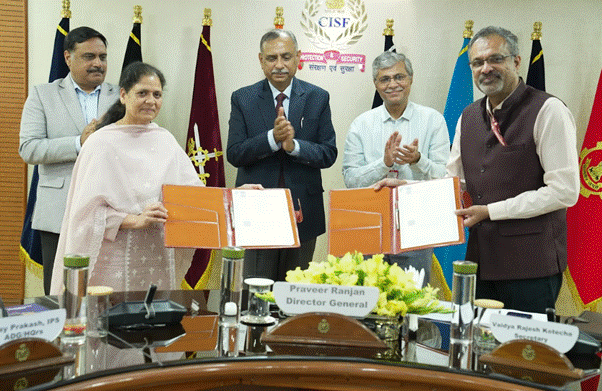
NEW DELHI — In a landmark move to bolster the physical and mental resilience of India’s frontline protectors, the Ministry of Ayush and the Central Industrial Security Force (CISF) signed a comprehensive Memorandum of Understanding (MoU) on March 19, 2026. This five-year partnership aims to integrate traditional Indian medicine systems—including Yoga, Ayurveda, and Unani—into the daily health protocols of over 170,000 CISF personnel and their families, prioritizing stress management and preventive care in high-pressure security environments.
The agreement was formalized at the CISF Headquarters in New Delhi by Dr. A. Raghu, Adviser (Ayurveda) for the Ministry of Ayush, and Smt. Pratibha Agarwal, Inspector General (Administration), CISF. The ceremony was attended by high-ranking officials, including Secretary of Ayush Vaidya Rajesh Kotecha and CISF Director General Shri Praveer Ranjan, IPS.
A Holistic Shield for High-Stress Careers
The CISF is tasked with guarding the nation’s most critical infrastructure, from nuclear installations and airports to the Delhi Metro. The nature of this work—characterized by long shifts, high alertness, and often isolation from family—presents unique physiological and psychological challenges.
Under the new MoU, the Ministry of Ayush will provide:
-
Technical Support: Developing specialized wellness modules tailored to the rigors of security duty.
-
Expert Guidance: Access to research councils and national institutes for evidence-based lifestyle interventions.
-
On-Site Care: The establishment of Ayush Outpatient Department (OPD) services within CISF units where feasible.
-
Integrated Wellness: Programs focusing on yoga, meditation, and dietary management to combat lifestyle diseases like hypertension and diabetes.
“This is not just about treating illness; it is about building a foundation of health,” noted a senior official from the Ministry of Ayush during the signing. “By integrating Ayush systems, we are providing our personnel with tools to manage stress and improve their quality of life proactively.”
The Science of Preventive Care in Uniform
The collaboration leans heavily on the growing body of evidence supporting traditional interventions for occupational stress. According to a 2023 study published in the Journal of Evidence-Based Integrative Medicine, regular yoga practice among paramilitary forces was linked to a significant reduction in cortisol levels—the body’s primary stress hormone—and improved cardiovascular health.
Dr. Meera Vasudevan, a preventive medicine specialist not involved in the partnership, suggests that this integration is timely. “Security personnel often suffer from ‘circadian disruption’ due to irregular shift patterns,” Dr. Vasudevan explains. “Ayurvedic principles regarding Dinacharya (daily routine) and specific yogic breathing techniques (Pranayama) can help stabilize the autonomic nervous system, potentially reducing the risk of burnout and chronic fatigue.”
Key Focus Areas of the MoU
| Focus Area | Implementation Strategy |
| Stress Management | Specialized Yoga and Meditation workshops for field units. |
| Lifestyle Medicine | Nutritional counseling based on Ayurvedic dietary principles. |
| Clinical Access | Setting up Ayush OPDs at major CISF establishments. |
| Family Wellness | Extending health sensitization programs to the families of personnel. |
Public Health Implications and Challenges
From a public health perspective, the initiative represents a shift toward “integrative medicine”—the practice of combining conventional medical treatments with traditional therapies. By focusing on the CISF, the government is utilizing a massive, disciplined workforce as a pilot for how traditional wellness can reduce the overall burden on the national healthcare infrastructure.
However, some medical experts urge a balanced approach. While preventive wellness is highly beneficial, it must complement, rather than replace, conventional emergency and acute medical care.
“The challenge lies in standardization,” says Dr. Sanjay Gupta, an occupational health consultant. “For these programs to be effective, the wellness modules must be scientifically validated and consistently applied across diverse geographical locations, from the humid coasts to the high-altitude industrial belts where CISF operates.”
Practical Takeaways for the General Public
While this MoU specifically targets security forces, the principles of the Ayush-CISF partnership offer valuable lessons for the general public:
-
Preventive Mindset: Transitioning from “sick care” to “well care” by adopting daily rituals like yoga or herbal supplements (under supervision) can mitigate long-term health risks.
-
Stress as a Vital Sign: Recognizing that mental stress has physical manifestations—and addressing it through holistic means—is essential for overall longevity.
-
Institutional Support: The move encourages other corporate and governmental sectors to view employee wellness not as a luxury, but as a core component of operational efficiency.
The MoU will remain in force until 2031, with periodic reviews to assess the health outcomes of the personnel involved. As the Ministry of Ayush continues to expand its footprint into the Ministry of Home Affairs’ jurisdictions, the “Indian model of wellness” is increasingly becoming a staple of national security policy.
References
-
Primary Source: Press Information Bureau (PIB) Delhi. (2026, March 19). Ayush Partners with CISF to Boost Preventive Healthcare and Wellness for Personnel.
Medical Disclaimer: This article is for informational purposes only and should not be considered medical advice. Always consult with qualified healthcare professionals before making any health-related decisions or changes to your treatment plan. The information presented here is based on current research and expert opinions, which may evolve as new evidence emerges.