 0
0
 0
0
GENEVA — Global efforts to combat air pollution have ground to a dangerous standstill, leaving billions of people breathing toxic air and disproportionately harming low- and middle-income nations. According to a comprehensive dataset released by the World Health Organization (WHO) on June 28, 2026, global progress on reducing fine particulate matter ($PM_{2.5}$) has plateaued since 2020.
The updated Sustainable Development Goal (SDG) indicators reveal a stark reality: in 2023, an estimated 6.5 billion people—more than 80% of the world’s population—were exposed to air pollution levels exceeding even the WHO’s most lenient interim target. Furthermore, nearly 2 billion people remained reliant on polluting cooking fuels and stoves into 2024, perpetuating a severe but preventable household health crisis.
A Plateau in Progress: What the New Data Show
The WHO’s updated indicators track three critical variables: mortality linked to household and ambient (outdoor) air pollution, urban $PM_{2.5}$ levels, and access to clean cooking energy. While ambient air quality showed steady global improvements leading up to 2020, that downward trend has effectively flattened over the last six years.
The data also lay bare a widening chasm of global health inequality. Exposure to air quality worse than the interim standard of 35 micrograms per cubic meter ($\mu g/m^3$) was 13 times higher in low- and middle-income countries (LMICs) than in high-income nations in 2023. Consequently, LMICs bear roughly 90% of the global health burden and premature deaths associated with unsafe air.
While parts of Asia have made notable strides in expanding access to clean cooking fuels, progress has stalled or actively reversed in other developing regions, particularly within isolated rural communities.
The Invisible Epidemic: Why $PM_{2.5}$ Matters
Air pollution is far more than an environmental footnote; it is a profound, systemic health crisis. Fine particulate matter ($PM_{2.5}$) consists of microscopic particles less than 2.5 micrometers in diameter—roughly 30 times thinner than a human hair. Because of their miniscule size, these particles bypass the body’s natural defenses, lodging deep within the lungs and entering the bloodstream.
[Inhaled PM2.5] ──> [Deep Lung Tissue] ──> [Bloodstream Entry] ──> [Systemic Inflammation]
The WHO estimates that combined outdoor and household air pollution is associated with approximately 7 million premature deaths annually. It acts as a primary driver of major noncommunicable diseases, including:
-
Ischemic heart disease and stroke
-
Chronic obstructive pulmonary disease (COPD)
-
Lung cancer
-
Acute lower respiratory infections in children
“Reliable data are essential for bold decision-making,” stated Bruce Gordon, WHO’s director a.i. for Environment, Climate Change, One Health and Migration. Gordon emphasized that tracking these metrics is vital because it forces science into the center of clean air and energy policy, helping governments pinpoint exactly where mitigation efforts are failing vulnerable communities.
Expert Commentary: The Cumulative Toll on Human Health
Independent public health experts note that the WHO’s findings align seamlessly with a broader scientific consensus. In 2021, the WHO drastically tightened its global air quality guidelines after systematic reviews demonstrated that prolonged exposure to even trace amounts of $PM_{2.5}$ causes severe cardiovascular and respiratory damage.
Dr. Aris Papageorgiou, a public health epidemiologist not involved in the WHO report, suggests visualizing air pollution not as an acute poisoning event, but as a chronic, low-grade stressor.
“Breathing polluted air is akin to sustaining repeated, micro-level insults to your lungs and blood vessels every minute of every day,” says Dr. Papageorgiou. “Over a decade, those minor insults culminate in chronic inflammation, arterial stiffening, and accelerated heart disease. This is why even a modest reduction in regional particulate levels can save thousands of lives at a population scale.”
Public Health Implications and Practical Steps
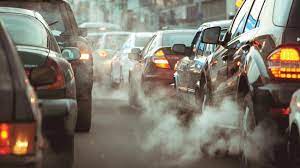
The underlying message from health authorities is clear: while individual protective measures have a place, the most significant health victories are achieved by eliminating pollution at its source.
| Pollution Type | Primary Sources | Targeted Interventions |
| Ambient (Outdoor) | Vehicle emissions, power generation, industrial manufacturing, waste burning | Stronger emissions controls, transition to renewable energy, expanded public transit |
| Household (Indoor) | Open-flame cooking, inefficient biomass stoves, kerosene heating | Distribution of clean cookstoves, transition to liquid petroleum gas (LPG) or electricity, improved home ventilation |
What Readers Can Do
While systemic policy change is the most powerful tool, individuals can take proactive measures to mitigate their personal health risks:
-
Monitor Local Air Quality: Check daily air quality index (AQI) reports. On high-pollution days, limit strenuous outdoor exercise, particularly for children, older adults, and pregnant individuals.
-
Improve Indoor Air: Avoid burning wood, incense, or candles indoors. If viable, utilize High-Efficiency Particulate Air (HEPA) purifiers in high-traffic living spaces.
-
Protect the Vulnerable: Ensure individuals with pre-existing asthma, cardiovascular disease, or respiratory illness have optimized action plans and uninterrupted access to rescue medications.
Methodological Limitations and Nuance
While the WHO report provides a vital macro-level overview, statisticians urge caution when interpreting country-to-country rankings. Because direct, ground-level air monitoring infrastructure is absent in many parts of the world, the WHO relies on harmonized, predictive mathematical modeling combined with satellite data to fill the gaps. Consequently, data precision varies significantly by region.
Furthermore, broad global or national averages can inadvertently mask local realities. A flatlining national average can obscure a city that has drastically cleaned up its transit sector, just as it can hide a district where industrial emissions have rapidly worsened. Public health officials emphasize that regional and municipal monitoring is crucial for designing effective, localized interventions.
The WHO has established an ambitious long-term target to slash air-pollution-related mortality by 50% by 2040. However, as this latest data indicates, without immediate, aggressive shifts away from fossil fuels and polluting domestic energy, the world remains severely off course.
References
- https://www.who.int/news/item/29-06-2026-new-sdg-data-shows-stalled-progress-on-air-pollution-and-health
Medical Disclaimer: This article is for informational purposes only and should not be considered medical advice. Always consult with qualified healthcare professionals before making any health-related decisions or changes to your treatment plan. The information presented here is based on current research and expert opinions, which may evolve as new evidence emerges.