 0
0
 0
0
WASHINGTON/NAIROBI — June 9, 2026 — On the eve of the largest FIFA World Cup in history, a sharp diplomatic and public health rift has emerged between the United States and the international community. The Trump administration has formally urged European nations to implement strict travel restrictions on individuals arriving from Central African countries currently battling a major Ebola outbreak.
The U.S. issued a demarche—a formal diplomatic statement of concern—on June 1, calling on European allies to mirror Washington’s aggressive border controls to prevent the virus from spreading during the month-long tournament. However, according to a European Union diplomat based in Africa, EU member states have yet to respond to the request, signaling deep-seated deliberation over a strategy that global health authorities warn could backfire.
The Outbreak: Scale, Urgency, and the World Cup Factor
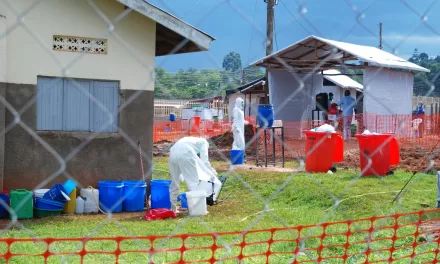
The outbreak, which began last month, is fueled by the Bundibugyo virus strain of Ebola. According to the Democratic Republic of Congo (DRC) Ministry of Health, the situation has rapidly escalated. As of June 8, 2026, the DRC has logged 550 confirmed cases and 101 confirmed deaths, with 309 individuals currently fighting the infection in isolation wards. Ituri Province remains the epicenter, capturing 518 of those confirmed cases across 17 health zones.
The virus has also breached borders into neighboring Uganda, which reports 19 confirmed cases and two deaths. Crucially, five of Uganda’s cases stem from local transmission, while 14 are linked to travel from the DRC. Acknowledging the gravity of the crisis, the World Health Organization (WHO) declared the outbreak a Public Health Emergency of International Concern (PHEIC) on May 17, 2026—marking only the third time in history an Ebola outbreak has triggered this ultimate level of global alert.
The timing could not be more volatile. The FIFA World Cup 2026™ kicks off this Thursday, June 11, at the iconic Estadio Azteca in Mexico City. Featuring an expanded format of 48 teams and 104 matches across 16 cities in the U.S., Canada, and Mexico, the tournament is expected to draw millions of international travelers.
The crisis has already upended sporting preparations. The DRC national soccer team was forced to cancel a domestic training camp and a public farewell event due to surging cases. While the team is still scheduled to play its opening match in Houston, Texas, fans from the DRC will be entirely absent due to sweeping U.S. border restrictions.
The U.S. Containment Strategy
Washington has chosen a path of strict border closure. A Centers for Disease Control and Prevention (CDC) order enacted on May 18, 2026, suspends entry into the United States for any foreign national who was physically present in the DRC, Uganda, or South Sudan within the preceding 21 days—the maximum incubation period for the virus. This 30-day directive also restricts green card holders from those nations.
Exemptions are carved out for U.S. citizens, nationals, lawful permanent residents, military personnel, and select government officials overseas, alongside their immediate families. While the CDC emphasizes that the immediate risk to the general American public remains low, officials argue that the unprecedented influx of global travelers demands preemptive action.
“Other countries must do their part to ensure this outbreak does not spread further. Action is required now,” an anonymous U.S. State Department official stated on Tuesday. “We are engaging diplomatically with countries around the world to coordinate our approach to protect our citizens, including the millions of visitors, fans, athletes, and tourists expected during the FIFA World Cup.”
Supporters of the U.S. stance point to the unpredictability of mega-events. Dr. Robert Redfield, former Director of the CDC, voiced significant concern regarding the outbreak’s trajectory during an interview with NewsNation.
“I believe this is going to become a very significant pandemic, probably going to leak into Tanzania, leak into southern Sudan, maybe leak into Rwanda. So, it’s going to be very disruptive,” Redfield warned.
However, Redfield added an important clinical caveat: Ebola spreads “only after you get sick,” unlike respiratory viruses like COVID-19 or influenza that transmit asymptomatically. This characteristic, he suggested, means that rigorous symptomatic screening and aggressive contact tracing could still effectively prevent a domestic outbreak in the U.S. without entirely relying on isolation.
Global Backlash: Why the WHO and Africa CDC Oppose Bans
The U.S. diplomatic push has met fierce resistance from international health bodies, who view blanket travel bans as counterproductive relics of old-school crisis management. On June 3, 2026, WHO Director-General Tedros Adhanom Ghebreyesus strongly criticized “blanket travel restrictions,” warning that they disrupt critical supply chains, starve local economies of resources, and discourage nations from transparently reporting future cases out of fear of economic reprisal.
WHO officials emphasize that the virus’s transmission mechanics do not justify sealing borders. Ebola is not an airborne infection; it requires direct contact with the blood or body fluids (such as saliva, sweat, or vomit) of an infected person who is actively showing symptoms. Standard symptoms include sudden fever, intense weakness, muscle pain, severe headache, vomiting, abdominal pain, and in advanced stages, internal and external bleeding.
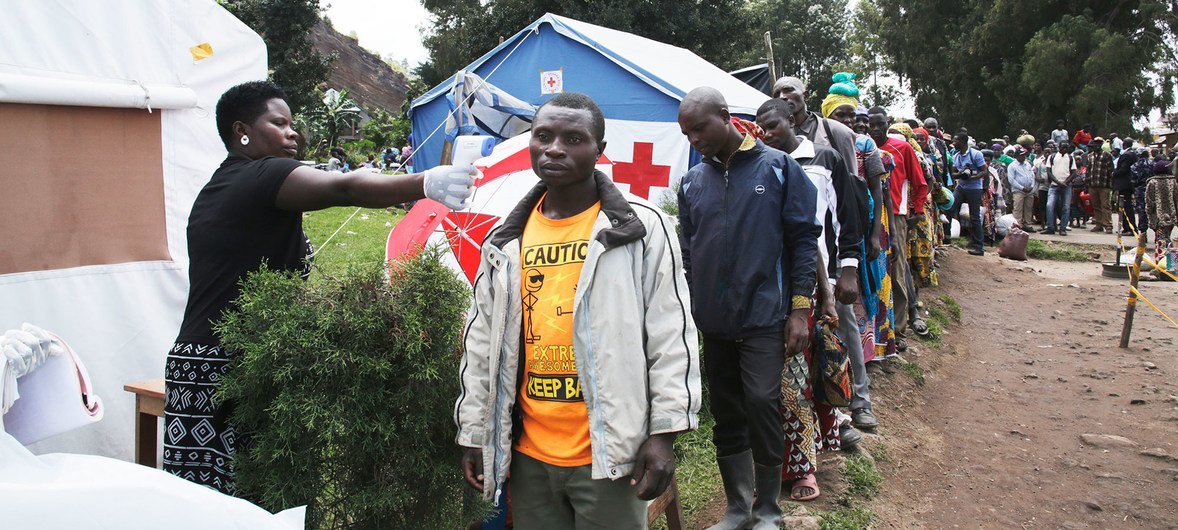
“Ebola is not a casual contact. It is not airborne,” noted a WHO official named Mahamud. “This relates to travel restrictions that are not supported under the International Health Regulations (IHR) recommendations.” Instead of bans, the WHO strongly advocates for stringent exit screening at airports, seaports, and land border crossings in affected regions.
Dr. Jean Kaseya, head of the Africa Centres for Disease Control and Prevention (Africa CDC), condemned the Western travel restrictions as “unacceptable” and economically punitive. He pointed out clear logical inconsistencies in the current U.S. policy, which includes countries like South Sudan that have registered zero suspected or confirmed cases.
“We cannot stop this outbreak with travel restrictions that Western countries have started to impose on African countries,” Dr. Kaseya asserted from Kinshasa. “The treatment Western countries are applying to Africa… it’s not acceptable.” Kaseya warned that while only two countries are currently affected, 11 bordering nations remain highly vulnerable, and restricting travel hampers the deployment of regional medical teams across borders.
A Different Beast: The Bundibugyo Strain
Compounding the anxiety among health officials is the specific sub-strain of the virus driving this outbreak. This crisis involves the Bundibugyo orthoebolavirus, which is genetically distinct from the notorious Zaire strain that caused the catastrophic 2014–2016 West African epidemic.
The critical pharmaceutical distinction between the two strains is summarized below:
| Strain Characteristics | Zaire Ebolavirus | Bundibugyo Ebolavirus |
| Approved Vaccines | Yes (e.g., Ervebo) | None approved |
| Targeted Treatments | Yes (Licensed monoclonal antibodies) | None approved |
| Historical Fatality Rates | 60% – 90% | 25% – 50% |
| Current Outbreak Fatality Rate | N/A | 9.8% (Confirmed) / 24.6% (Suspected) |
Because there are no licensed vaccines or therapeutic drugs available for the Bundibugyo strain, management relies entirely on supportive care, such as intensive fluid replacement and treating specific symptoms as they arise.
While the current outbreak’s confirmed fatality rate of 9.8% is notably lower than historical Zaire outbreaks, medical researchers warn that past Bundibugyo flare-ups (such as in Uganda in 2007 and the DRC in 2012) eventually climbed to lethality rates of 30% to 50%. The lower apparent rate right now may simply reflect early, aggressive supportive hospital care or gaps in final data tracking.
Furthermore, public health teams face severe operational headwinds in the DRC. The outbreak is unfolding against a backdrop of long-standing humanitarian crises, remote and densely forested geography, regional insecurity, and intense internal population movements driven by local trade. Interestingly, demographics show that the majority of cases are occurring in young adults aged 20–39, with females accounting for roughly two-thirds of the patients—a pattern often linked to traditional caregiving roles within families and healthcare settings.
What This Means for the Public and Travelers
For health-conscious soccer fans and international travelers heading to World Cup venues across North America, public health agencies emphasize that the immediate risk of contracting Ebola remains exceptionally low.
However, travelers should remain aware of the following structural shifts:
-
Enhanced Border Screening: The CDC, alongside Canadian and Mexican health authorities, has heightened visual screening and health questionnaire protocols at major international transit hubs.
-
Travel Advisories: The U.S. Department of State has issued strict Level 4 “Do Not Travel” advisories for the DRC, Uganda, and South Sudan.
-
Symptom Monitoring: Anyone who has traveled near Central Africa or been in contact with individuals from the region should monitor their health for 21 days. If symptoms like sudden fever, severe headache, or gastrointestinal distress emerge, they should isolate immediately and call a medical facility before arriving in person to prevent potential exposure.
As the World Cup opening whistle approaches on Thursday, European governments remain caught in a delicate balancing act. They must decide whether to align with the stringent, unilateral border controls favored by Washington or stand by the open-border, screen-and-contain doctrine championed by the WHO. The eyes of the global health community will be fixed on both the stadiums and the arrival terminals to see which strategy will prevail in containing a lethal pathogen in an interconnected world.
Medical Disclaimer
Medical Disclaimer: This article is for informational purposes only and should not be considered medical advice. Always consult with qualified healthcare professionals before making any health-related decisions or changes to your treatment plan. The information presented here is based on current research and expert opinions, which may evolve as new evidence emerges.
References
- https://www.reuters.com/business/healthcare-pharmaceuticals/us-urges-europe-impose-ebola-travel-bans-ahead-world-cup-2026-06-09/