 0
0
 0
0
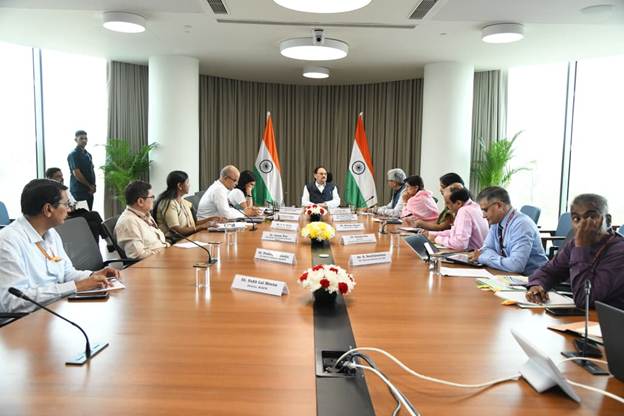
NEW DELHI — Union Health Minister Shri J.P. Nadda announced yesterday that India has initiated aggressive public health screening and airport surveillance networks following a surging outbreak of the rare Bundibugyo Ebola virus disease (BVD) in Central Africa. The high-level preparedness review comes directly on the heels of major international declarations, signaling a unified global effort to contain the pathogen before it maps onto new geographical territories.
While emphasizing that India has not reported any cases of this specific strain to date, Minister Nadda directed multiple apex health bodies—including the National Centre for Disease Control (NCDC) and the Indian Council of Medical Research (ICMR)—to transition all diagnostic, tracking, and isolation infrastructures into a constant state of operational readiness.
A Dual Declaration of Global Alarm
The aggressive precautionary measures were catalyzed by two consecutive high-level declarations:
-
The World Health Organization (WHO) designated the current African outbreak a Public Health Emergency of International Concern (PHEIC) under the International Health Regulations.
-
The Africa Centres for Disease Control and Prevention (Africa CDC) concurrently issued a Public Health Emergency of Continental Security (PHECS).
Data from the World Health Organization shows the situation escalates daily. As of May 21, 2026, the Democratic Republic of the Congo (DRC) documented 746 suspected cases and 176 deaths, centered largely around high-traffic mining zones in Ituri Province. The pathogen has demonstrated rapid geographic expansion, breaching international borders with confirmed cases emerging as far as Kampala, Uganda.
India’s Multi-Layered Defense Mechanism
To neutralize potential import risks, the Ministry of Health and Family Welfare has established a rigid, multi-tiered screening architecture. Standard Operating Procedures (SOPs) have been actively deployed across all international airports, maritime ports, and land points of entry.
+-------------------------------------------------------------+
|               INDIA'S THREE-TIER DEFENSE DESIGN             |
+-------------------------------------------------------------+
|  1. ENTRY BARRICADES                                        |
|     - Mandatory thermal imaging for unexplained fevers      |
|     - Travel history verification from high-risk corridors   |
|                                                             |
|  2. DOMESTIC ISOLATION NETWORKS                             |
|     - Dedicated biocontainment isolation wards per state     |
|     - Standardized hospital infection control guidelines    |
|                                                             |
|  3. DIAGNOSTIC VELOCITY                                     |
|     - ICMR-designated BSL-4 multi-laboratory tracking       |
|     - Immediate genomic sequencing of highly suspect cases  |
+-------------------------------------------------------------+
The Integrated Disease Surveillance Programme (IDSP) units, in unison with Airport Health Organizations (APHOs), are currently operating under heightened vigilance to isolate any incoming traveler exhibiting unexplained febrile illness (sudden, severe fever). Additionally, the central government issued a definitive travel advisory on May 24, strictly urging citizens to defer non-essential travel to the DRC, Uganda, and South Sudan.
Understanding the Biological Threat: What Makes Bundibugyo Unique?
The escalating concern among healthcare officials is rooted in the specific strain driving this outbreak. Ebola disease is a viral hemorrhagic fever—a severe illness that interferes with the blood’s ability to clot, leading to internal and external bleeding.
The genus Orthoebolavirus contains several distinct viral species. While the medical community has successfully developed vaccines (such as Ervebo) and monoclonal antibody therapies (like Inmazeb and Ebanga) over the past decade, these existing tools are exclusively effective against the Zaire strain.
Critical Medical Vulnerability: There are currently zero approved vaccines or targeted antiviral treatments optimized for the Bundibugyo virus strain.
Because of this specific molecular variance, the clinical management of Bundibugyo relies entirely on intensive supportive care, including:
-
Systematic intravenous fluid and electrolyte replenishment.
-
Maintaining blood pressure and oxygen stability.
-
Treating secondary co-infections aggressively.
Expert Perspectives: Balanced Risk Assessments
Independent epidemiologists advise against domestic panic, noting that India’s proactive, early response mirrors optimal public health strategy.
“The central government’s early actions are a textbook example of a pre-emptive defense,” explains Dr. Ananya Mukherjee, an independent infectious disease specialist and clinical consultant based in Mumbai. “Because the Bundibugyo strain lacks an off-the-shelf vaccine shield, containment at the point of entry is our most reliable weapon. The general public must understand that the threat level within India remains exceptionally low, but maintaining zero-lag diagnostic capabilities at our borders is entirely non-negotiable.”
Public health analysts point out that while the virus is highly lethal—historically exhibiting case fatality rates between 25% and 50%—it is fundamentally different from respiratory viruses like influenza or COVID-19. Ebola cannot spread through casual airborne contact. Transmission requires direct contact with the blood, bodily fluids, or tissues of infected individuals, or surfaces contaminated by those fluids.
Practical Realities for the Public
For the average citizen, the Central Government’s directives do not require a change in daily routine, but rather an awareness of international health contexts. Travel operators and individuals with mandatory business in East-Central Africa are advised to adhere strictly to local public health mandates, avoid healthcare environments within outbreak zones unless absolutely necessary, and monitor themselves for a strict 21-day incubation window post-return.
The Union Health Ministry continues to coordinate directly with international health frameworks, ensuring that if localized transmission parameters shift globally, India’s domestic protocols will pivot in real-time.
Reference Section
-
Press Information Bureau (PIB) Delhi: Union Health Minister Shri J P Nadda Reviews Preparedness Measures for Ebola Disease, Ministry of Health and Family Welfare, Government of India. Posted May 25, 2026.
- Medical Disclaimer: This article is for informational purposes only and should not be considered medical advice. Always consult with qualified healthcare professionals before making any health-related decisions or changes to your treatment plan. The information presented here is based on current research and expert opinions, which may evolve as new evidence emerges.