 0
0
 0
0
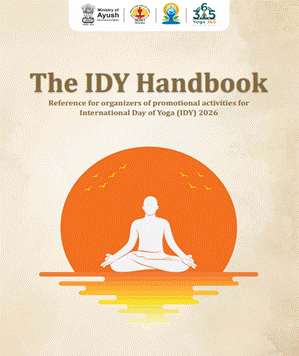
NEW DELHI — As preparations for the 12th annual International Day of Yoga (IDY) gather momentum worldwide, the Union Ministry of Ayush has officially released the IDY Handbook 2026. Announcing the publication from Delhi, government officials confirmed that the resource is now publicly accessible in English, Hindi, and 21 regional Indian languages. Designed to operate as a standardized digital and physical toolkit, the publication aims to democratize the practice of yoga, moving it from localized wellness centers into the daily lives of diverse populations. By providing verified blueprints, evidence-based guidelines, and digital instructional materials across 23 languages, the initiative addresses a longstanding barrier in public health: the lack of culturally and linguistically tailored preventative healthcare resources.
Expanding Reach Through Digital and Linguistic Standardization
The core objective of the 2026 handbook is to eliminate geographic and linguistic isolation, enabling educational institutions, non-governmental organizations, and healthcare groups to implement authentic wellness programs. Since the United Nations General Assembly recognized June 21 as the International Day of Yoga in December 2014, the annual celebration has scaled into a global movement. However, public health experts have frequently noted that regional language barriers often limit the accurate dissemination of mind-body practices.
To counteract this, the new handbook integrates the Common Yoga Protocol (CYP)—a scientifically curated, 45-minute sequence of simple loosening exercises, postures (asanas), breathing practices (pranayama), and meditation. Rather than serving as a static reading text, the digital version of the handbook functions as an interactive toolkit. It features embedded QR codes that link directly to instructional video demonstrations narrated in all 21 regional languages, ensuring that practitioners nationwide can follow standardized, safe guidance regardless of their native tongue.
The publication also details the Ministry’s key community programs scheduled in the countdown to June 21, including:
-
Yoga Sangam: Community integration initiatives.
-
Harit Yoga: Eco-friendly, sustainable outdoor yoga sessions.
-
Yoga Samavesh: Inclusive programs tailored for marginalized and rural communities.
-
Yoga Park & Yoga Unplugged: Public-space interventions designed to reduce workplace stress.
The Clinical Science Supporting the Protocol
While the handbook serves as an operational manual, its foundational material—the Common Yoga Protocol—is heavily rooted in clinical research. For years, medical experts have viewed yoga not merely as physical exercise, but as a multi-component mind-body intervention capable of modulating physiological stress.
Recent independent data published in peer-reviewed journals demonstrates that the specific sequence used in the CYP produces measurable changes in biological markers. A randomized controlled trial exploring the clinical effects of the CYP noted distinct improvements in cardiovascular and autonomic nervous system regulation.
According to data tracking the physiological outcomes of the protocol:
| Biomarker / Clinical Measure | Observed Outcome Post-CYP Intervention | Clinical Implication |
| Peripheral Blood CD34+ Cells | Statistically significant increase | Enhanced cellular repair, endothelial function, and vascular health |
| GHQ-12 & STAI Scales | Pronounced reduction in clinical scores | Substantial decrease in generalized anxiety and perceived psychiatric distress |
| Inflammatory Markers | Lowered baseline levels of circulating cytokines | Reduction in systemic low-grade chronic inflammation |
Furthermore, a 2025 exploratory sub-study published in PubMed Central (PMC) investigated the impact of the 45-minute daily CYP sequence over an eight-week period. The researchers observed significant positive shifts in autonomic modulation, including clear parasympathetic dominance (the body’s “rest and digest” system) and down-regulated markers of oxidative stress.
Independent Experts Weigh In: Benefits and Safeguards
Medical professionals not associated with the Ministry’s publication emphasize that providing a standardized, multilingual guide is an important step forward for public health, but they advocate for balanced implementation.
“Linguistic inclusivity in health documentation is highly valuable,” states Dr. Ananya Mukherjee, PhD, a clinical research scientist specializing in integrative physiology. “When individuals can access step-by-step instructions in their primary language, the risk of injury due to misunderstood physical adjustments drops significantly. Standardized protocols like the CYP help demystify the practice, turning it into a structured behavioral intervention.”
However, clinicians urge clinicians and consumers to apply appropriate guardrails. While the handbook serves as an open-access roadmap, yoga is not a one-size-fits-all therapy.
Dr. Rajesh Sharma, a consulting orthopedic specialist, notes the limitations of generalized protocols:
“We must maintain clinical objectivity. While a 45-minute standardized flow offers excellent primary preventative benefits for a sedentary adult, it presents distinct risks if performed without modification by individuals managing pre-existing structural issues. Patients diagnosed with severe spinal degenerative disease, advanced osteoarthritis, or unmanaged hypertension require supervised, tailored variations that a general handbook simply cannot provide.”
Public Health Implications and Citizen Engagement
From a public health standpoint, the IDY Handbook 2026 attempts to lower the entry barrier for lifestyle modifications. Chronic non-communicable conditions—such as metabolic syndrome, type 2 diabetes, and hypertension—are strongly influenced by persistent mental stress and physical inactivity. By supplying an authenticated, cost-free digital asset, the initiative provides a practical tool for daily self-care.
For the general public, the handbook transitions the International Day of Yoga from a single-day symbolic event into an ongoing daily habit. Beyond the physical sequences, the manual outlines citizen-partnership tracks in collaboration with the government’s MyGov portal, incorporating interactive wellness challenges, trivia, and peer-led community competitions. By aligning modern digital delivery with rigorous linguistic localization, the initiative seeks to establish a sustainable framework for population-wide preventative health.
The complete multilingual toolkit, video links, and community guidelines can be accessed publicly via the official government portal at: IDY Handbook 2026.
References
- https://www.pib.gov.in/PressReleasePage.aspx?PRID=2265395®=3&lang=1
The handbook can be accessed at: IDY Handbook 2026
Medical Disclaimer: This article is for informational purposes only and should not be considered medical advice. Always consult with qualified healthcare professionals before making any health-related decisions or changes to your treatment plan. The information presented here is based on current research and expert opinions, which may evolve as new evidence emerges.