 0
0
 0
0
BHOPAL — In a decisive move to address a deepening public health crisis, Madhya Pradesh Governor Mangubhai Patel issued an urgent directive on Tuesday, calling for “top priority” status for the elimination of sickle cell anemia and tuberculosis (TB). Speaking at a high-level health summit, Governor Patel emphasized that the convergence of these two diseases represents a critical battleground for the state, particularly within its vulnerable tribal communities.
The Governor’s call to action aligns with India’s ambitious national deadlines: achieving a TB-free nation by 2025 and eliminating sickle cell disease (SCD) as a public health threat by 2047. With Madhya Pradesh currently bearing one of the highest burdens of both conditions in the country, the Governor urged health authorities to accelerate screening, ensure drug availability, and bridge the “last-mile” gap in rural healthcare delivery.
The Dual Burden: A State in the Crosshairs
Madhya Pradesh stands at the epicenter of India’s sickle cell challenge. SCD is a hereditary blood disorder where red blood cells take on a rigid, crescent shape, leading to excruciating pain crises, chronic anemia, and progressive organ damage. According to state health data, the prevalence of the sickle hemoglobin gene ranges from 10% to 33% across 27 districts. Approximately 67,861 individuals are currently living with the disease statewide.
The crisis is most acute in the tribal heartlands. Districts such as Alirajpur, Anuppur, Chhindwara, and Dindori account for nearly 75% of the state’s SCD cases.
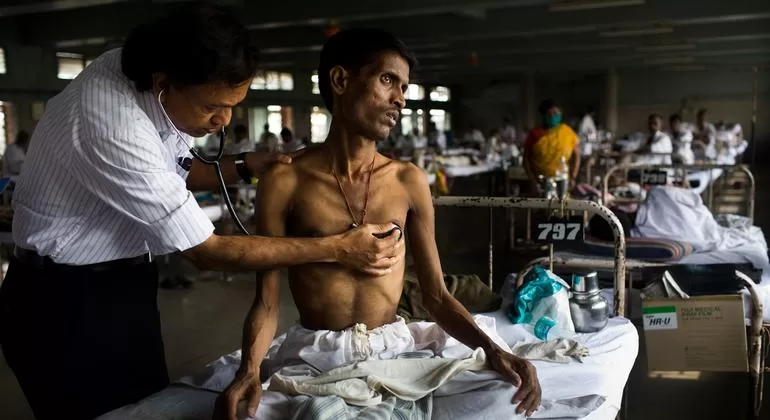
Simultaneously, the state is grappling with a formidable TB epidemic. In 2025, Madhya Pradesh reported 1.71 lakh TB cases, with an average of 13 deaths occurring daily. While urban centers like Bhopal, Indore, and Gwalior have emerged as hotspots due to population density, the intersection of TB and SCD in rural areas creates a “syndemic”—where two diseases interact to worsen the outcomes of both.
The Biological Intersection
The link between SCD and TB is particularly perilous. Medical research indicates that individuals with sickle cell disease are significantly more susceptible to TB infections.
“The spleen, which acts as the body’s primary filter against bacteria, often becomes dysfunctional in sickle cell patients at a young age,” explains Dr. Rohit Sarin, former Director of the National Institute of Tuberculosis and Respiratory Diseases. “This impaired immunity, combined with the fact that SCD pain crises can often mask the early symptoms of TB, like chest pain or fatigue, leads to dangerously late diagnoses.”
Studies published in the Journal of Clinical and Diagnostic Research have shown a co-prevalence rate as high as 51 per 1,000 in high-risk groups, highlighting the need for integrated screening protocols where every SCD patient is routinely screened for TB and vice versa.
National Missions: A Roadmap for Elimination
To combat these threats, the Indian government has deployed two massive public health engines:
-
National Sickle Cell Anaemia Elimination Mission (NSCAEM): Launched in 2023, this mission aims to screen 70 million people under the age of 40 by 2026. As of mid-2024, over 3.37 crore screenings have been completed. A cornerstone of this initiative is the distribution of “Sickle Cell Status” genetic cards, which help families make informed reproductive decisions to prevent the transmission of the gene.
-
National TB Elimination Programme (NTEP): Under the TB Mukt Bharat Abhiyaan, the government has shifted toward active case-finding. Since late 2024, over 20 crore vulnerable individuals have been screened, leading to the diagnosis of 28 lakh cases—including 9 lakh individuals who were asymptomatic.
In Madhya Pradesh, these missions have translated into free hydroxyurea therapy—a gold-standard medication that can reduce SCD hospitalizations by 50%—and the certification of over 46,000 gram panchayats as “TB-Free.”
Expert Insights and Challenges
While the infrastructure is expanding, experts warn against complacency. Dr. Urvashi Singh, a Professor of Microbiology at AIIMS, stresses the importance of the Ni-kshay Mitra initiative, which connects TB patients with community volunteers for nutritional and emotional support. “Sustaining treatment adherence is the biggest hurdle. In tribal regions, the ‘last-mile’ gap—where patients must travel hours for a diagnostic test—remains a barrier,” she noted.
Furthermore, gender disparities have surfaced in recent data. A 2022 study highlighted that females account for 51.56% of co-prevalent SCD-TB cases, often due to delayed healthcare seeking and higher rates of underlying nutritional anemia.
Limitations also persist regarding the 2047 timeline for SCD. Critics argue that while long-term genetic counseling is vital, the immediate need for specialized critical care centers in tribal districts is underfunded. Additionally, the rise of multi-drug-resistant TB (MDR-TB) in urban slums poses a constant threat to the 2025 elimination goal.
What This Means for You: Practical Steps
For residents of Madhya Pradesh and other high-prevalence regions, the Governor’s focus signals a shift toward more accessible care.
-
Seek Screening: If you or a family member experience persistent fatigue, unexplained joint pain, or a cough lasting more than two weeks, visit a Primary Health Center (PHC). Screening for both SCD and TB is free.
-
Utilize the Sickle Cell Card: Before marriage or planning a pregnancy, knowing your sickle cell carrier status is essential. Genetic counseling can help prevent the more severe forms of the disease in future generations.
-
Support Nutrition: Both diseases thrive on malnutrition. Participating in the Nikshay Poshan Yojana provides monthly financial support for TB patients to purchase high-protein foods, which is equally beneficial for managing the anemia associated with SCD.
The Path Forward
The Governor’s directive is more than a policy statement; it is a recognition of the structural inequalities in healthcare. By prioritizing these two diseases, Madhya Pradesh aims to break the cycle of poverty and ill health that has plagued its tribal belts for decades.
“Efforts to eliminate Sickle Cell Anaemia and TB should be given highest priority,” Governor Patel concluded. “The medicine is available, the science is clear; what we need now is the collective will of the community to ensure no one is left behind.”
Medical Disclaimer: This article is for informational purposes only and should not be considered medical advice. Always consult with qualified healthcare professionals before making any health-related decisions or changes to your treatment plan. The information presented here is based on current research and expert opinions, which may evolve as new evidence emerges.
References
- https://tripuratimes.com/ttimes/mp-guv-urges-priority-for-sickle-cell-tb-services-36217.html