 0
0
 0
0
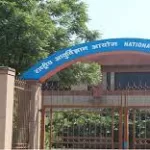
RANCHI, INDIA — Following a high-profile investigation into admission irregularities, the Rajendra Institute of Medical Sciences (RIMS), Ranchi, has initiated a comprehensive verification process for the caste and residential documents of all 148 students admitted under the state quota to its 2025 MBBS cohort. The sweeping administrative action, intensifying in June 2026, comes in the wake of a definitive probe that exposed a forged Scheduled Tribe (ST) certificate used to secure admission, triggering a full-scale Criminal Investigation Department (CID) inquiry and sudden leadership changes at one of Jharkhand’s premier medical institutions.
The Catalyst: Forgery Sparking Systemic Audits
According to statements from the RIMS Public Relations Officer, the institute will bypass standard online validation protocols, instead sending the physical caste and residence certificates of all 148 state-quota medical students directly to their respective issuing district authorities for rigorous physical verification.
The institutional crackdown follows the formal cancellation of at least one student’s MBBS admission after district administrators officially confirmed that the submitted ST certificate was fabricated. This incident is not isolated; RIMS officials reported a similar admission cancellation in December 2025 under comparable circumstances.
The investigation escalated dramatically on June 24, 2026, when CID detectives conducted extensive searches and document scrutinies at the RIMS campus. The law enforcement probe was initiated following formal complaints alleging the systemic use of forged caste and disability certificates to circumvent competitive cutoff thresholds. The fallout from the June 24 raid led to the immediate resignation of the institute’s director and the swift appointment of an officiating director to oversee both the medical facility and the ongoing internal investigation.
Shifting From Digital Scans to Physical Proof
In past admission cycles, medical institutions routinely relied on digital verification databases to cross-reference certificates. However, the CID’s findings suggest that sophisticated fraudulent intermediaries have learned to exploit gaps in online verification systems. The probe has reportedly uncovered red flags surrounding the documentation of multiple current students, encompassing both caste reservations and disability quotas.
Furthermore, the investigation has expanded beyond academic admissions. Detectives are currently reviewing procurement and tender irregularities allegedly linked to individuals associated with the previous administrative regime.
In a decisive policy pivot, RIMS administration announced a transition toward localized physical verification. By sending documents directly to district revenue offices, the institute aims to establish an unalterable paper trail directly tied to the primary issuing authorities.
Systemic Risks to Healthcare Equity and Public Trust
Reservation and state-quota allocations are fundamental public health mechanisms designed to ensure equitable representation for historically marginalized communities and local residents. When these systems are compromised, the immediate impact ripples far beyond administrative metrics.
“Document-based reservation misuse represents a severe breach of academic and social equity,” notes Dr. Arpita Basu, an independent medical education policy expert. “Every seat secured through a fraudulent certificate directly deprives an eligible, hardworking local candidate of their medical career. Furthermore, it artificially inflates competitive cutoffs, systematically placing genuine applicants at a distinct disadvantage.”
Former medical admissions officer Rajesh Verma emphasizes that the vulnerability lies in the disconnect between centralized counseling bodies and localized institutions.
“Relying strictly on online databases can create a false sense of security. A robust system must pair rapid digital cross-checks with mandatory, time-bound verification loops involving regional district revenue offices. We need protocols that protect the integrity of the system without introducing bureaucratic delays that penalize legitimate students,” Verma states.
Long-Term Implications for the Public Health Workforce
The integrity of medical school admissions is intrinsically linked to the stability of regional healthcare systems. State quotas are strategically engineered to train local doctors who understand regional demographic challenges and are statistically more likely to remain in the state to serve underserved, rural populations.
When fraudulent candidates exploit the system, it disrupts targeted workforce planning. The erosion of merit-based and equitable admission processes ultimately threatens community trust in public healthcare institutions. If the public perceives that the physicians staffing state medical facilities entered the profession through deceptive practices, the foundational doctor-patient relationship is severely undermined.
Broader Regional Trends and Institutional Challenges
The revelations at RIMS Ranchi appear to be part of a broader, systemic challenge facing Jharkhand’s medical education sector. Similar admissions fraud cases have surfaced across the state over the last several months. Multiple state-run medical colleges reported canceling admissions in late 2025 due to verified certificate manipulation, indicating an organized effort by illicit networks to game the state’s medical enrollment system.
However, independent analysts caution against drawing premature conclusions regarding the total scale of the current fraud at RIMS. Because the CID investigation remains active and public administrative updates are tightly controlled, legal proceedings must conclude before individual responsibility and systemic culpability can be fully quantified.
Medical education experts argue that ad-hoc, college-level changes—such as RIMS’ shift to physical verification—are merely reactionary band-aids. Sustained prevention requires broad policy reforms, including:
-
Unified, real-time data sharing between the Ministry of Health, the National Medical Commission (NMC), and state revenue departments.
-
Standardized, multi-layered verification protocols enforced during the centralized counseling phase rather than months after classes begin.
-
Stringent criminal penalties targeting the fraudulent intermediaries and agencies manufacturing these documents.
Guidance for Students and the Public
For prospective and current medical students, the unfolding situation highlights the necessity of absolute transparency. Candidates must ensure that all personal, residential, and reservation documentation is pristine, fully verifiable, and sourced strictly through official government channels to insulate themselves from sudden administrative cancellations. Counseling authorities are also urged to issue clearer, more stringent documentation guidelines well ahead of upcoming admission cycles.
For the general public, the RIMS Ranchi inquiry underscores why strict institutional checks and balances are vital. Ensuring fair, transparent, and uncompromised access to medical seats is not merely a matter of academic compliance—it dictates the quality, diversity, and equity of the healthcare workforce serving communities for generations to come.
Medical Disclaimer
Medical Disclaimer: This article is for informational purposes only and should not be considered medical advice. Always consult with qualified healthcare professionals before making any health-related decisions or changes to your treatment plan. The information presented here is based on current research and expert opinions, which may evolve as new evidence emerges.
References
-
Study/News Citation: “Rims Ranchi to verify documents of 148 state‑quota MBBS admissions after fake ST certificate case,” Times of India, June 30, 2026.