 0
0
 0
0
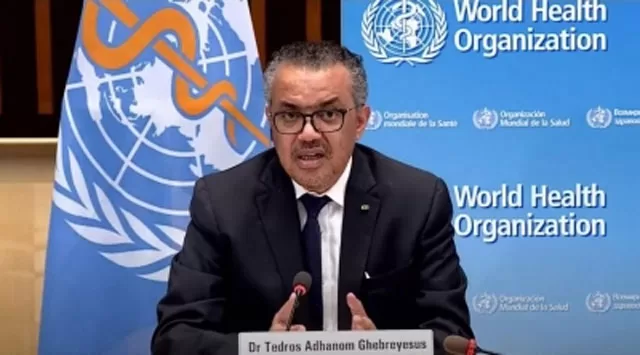
GENEVA, SWITZERLAND — At a high-level side event during the World Health Assembly yesterday, the Norwegian Agency for International Development (Norad) announced a US$3 million grant to the World Health Organization’s (WHO) emergency care expansion. The funding is earmarked directly for the Acute Care Transformation through Basic Emergency Care (ACTxBEC) initiative, an aggressive global health campaign designed to equip frontline health workers with standardized, life-saving clinical skills.
This financial injection targets sub-Saharan Africa, a region disproportionately affected by a high burden of acute medical crises and critical infrastructure shortages. By training first-contact providers—including nurses, midwives, clinical officers, and ambulance personnel—the initiative aims to address the deadly “know-do” gap in low-resource settings, transforming initial medical contact into immediate survival.
The Golden Hour: Turning Training into Survival
In emergency medicine, the first hour of care—often referred to as the “golden hour”—dictates a patient’s ultimate prognosis. Yet, in many rural and resource-limited healthcare facilities, this window is lost not due to a lack of effort, but due to a gap in systematic emergency protocols.
The Basic Emergency Care (BEC) programme, developed by the WHO in partnership with the International Committee of the Red Cross (ICRC) and the International Federation for Emergency Medicine (IFEM), offers an open-access, systematic framework to counter this challenge. Rather than training providers in highly specialized, tech-heavy interventions, BEC focuses on the rapid evaluation and stabilization of critical syndromes using the classic ABCDE approach (Airway, Breathing, Circulation, Disability, and Exposure).
Frontline workers are trained to respond to time-critical conditions that account for a massive portion of global mortality, including:
-
Severe trauma and road injuries
-
Acute infections and sepsis
-
Diabetic emergencies
-
Life-threatening obstetric complications, such as postpartum hemorrhage
By standardizing initial assessment, the programme teaches nurses and clinical officers how to identify early signs of shock or respiratory failure, initiate immediate treatment, and safely stabilize patients before or during transfer to referral hospitals.
Proven Metrics: Halving Mortality in Real-World Settings
Unlike abstract global health strategies, the BEC curriculum is backed by robust, field-tested metrics. According to data tracked by the WHO and published outcomes across first-level district hospitals in nations such as Liberia, Nepal, Uganda, and Zambia, the structured training has led to a striking 34% to 50% reduction in in-hospital mortality for acute conditions.
The clinical dividends are even more pronounced in pediatric care. Data compiled by the WHO Foundation shows that following systematic BEC implementation across select regional facilities, emergency mortality decreased by 60% for children under five and by 59.8% for individuals under 18.
MORTALITY REDUCTION AFTER BEC IMPLEMENTATION
┌──────────────────────────────────────┬──────────────────┐
│ Patient Group / Setting              │ Mortality Drop   │
├──────────────────────────────────────┼──────────────────┤
│ General Hospital Acute Admissions    │ 34% – 50% Lower  │
│ Pediatric Emergencies (Under 18)     │ 59.8% Lower      │
│ Early Childhood Trauma (Under 5)     │ 60.0% Lower      │
└──────────────────────────────────────┴──────────────────┘
“What makes these numbers remarkable is that they were achieved in everyday, resource-constrained clinical environments, without investing in multi-million-dollar intensive care units,” explains Dr. Aris Papadopoulos, an independent international public health consultant not affiliated with the WHO initiative. “By embedding structured, algorithmic decision-making into the existing nursing workforce, the health system extracts maximum utility from its existing resources.”
A Catalyst for Global Health Transformation
Norad’s US$3 million contribution arrives as a critical catalyst for the ACTxBEC initiative, which carries an ambitious funding target of US$25 million. The ultimate objective of this capital campaign is to scale the training infrastructure to 1,000 health facilities, a move projected to save an estimated 50,000 lives annually.
Financed through the WHO Foundation’s Lifeline Fund (also known as Lifeline: the Acute Care Action Fund), the pool currently stands at US$18.5 million. This includes:
-
An initial US$12.5 million anchor commitment from Laerdal Global Health, a non-profit dedicated to low-resource resuscitation training.
-
US$3 million from the AKO Foundation.
-
The newly announced US$3 million grant from Norad.
The initiative closely aligns with World Health Assembly Resolution 76.2, which mandates the integration of emergency, critical, and operative care into broader country-level health frameworks.
“Strengthening health systems and supporting health workers to deliver effective acute care is essential to universal health coverage and health security,” stated Dr. Bruce Aylward, WHO Assistant Director-General for Universal Health Coverage, during a recent technical brief on the fund’s expansion.
Real-World Counterarguments and Implementation Obstacles
Despite the overwhelming statistical success of the pilot programs, independent global health policy experts urge a balanced perspective, pointing out that training is not a panacea for broken supply chains.
“A standardized training course like BEC is a foundational step, but its long-term efficacy relies heavily on institutional support,” cautions Dr. Sarah Jenkins, an epidemiologist specializing in health systems performance. “If a trained midwife perfectly diagnoses hemorrhagic shock using her ABCDE protocol, but the clinic lacks intravenous fluids, oxygen, or an operational ambulance to execute a referral, the training’s impact hits a hard bottleneck.”
Furthermore, health ministries face significant hurdles regarding workforce attrition. In many rural African health centers, staff turnover is exceptionally high. Without continuous, decentralized refresher courses and a dedicated institutional budget to onboard new staff, the clinical benefits of a one-time training push risk degrading within 18 to 24 months.
What This Means for Global Communities
For consumers and health-conscious readers, this development highlights a shift in how global health agencies view healthcare equity. Universal Health Coverage (UHC) has traditionally focused on primary preventive care, such as vaccinations and chronic disease management. However, this investment acknowledges that emergency care is an essential, non-negotiable pillar of a functional health system.
For individuals living in or traveling through developing economies, the expansion of the ACTxBEC initiative means that first-line clinics will increasingly possess the capability to stabilize patients locally. It transitions the concept of timely emergency response from an urban luxury to a basic healthcare standard.
References
1. Institutional and Global Policy Sources
-
World Health Organization (WHO): Departmental Update, “Norad’s US$ 3 million boost to WHO emergency care programme set to save thousands of lives,” Published May 18, 2026.
Medical Disclaimer: This article is for informational purposes only and should not be considered medical advice. Always consult with qualified healthcare professionals before making any health-related decisions or changes to your treatment plan. The information presented here is based on current research and expert opinions, which may evolve as new evidence emerges.