 0
0
 0
0
NEW DELHI — In a major effort to elevate traditional Indian wellness to the global stage, the Ayush Export Promotion Council (AYUSHEXCIL) and the Spices Board of India formalized a strategic partnership today. Signed on May 25, 2026, in the nation’s capital, the historic Memorandum of Understanding (MoU) aims to systematically integrate Ayurveda and natural medicinal plants with India’s extensive spice export sector. Spearheaded by the Union Ministry of Ayush, the multi-tiered initiative seeks to transform everyday household spices into scientifically validated, globally standardized health products, potentially reshaping both public health options and international wellness markets.
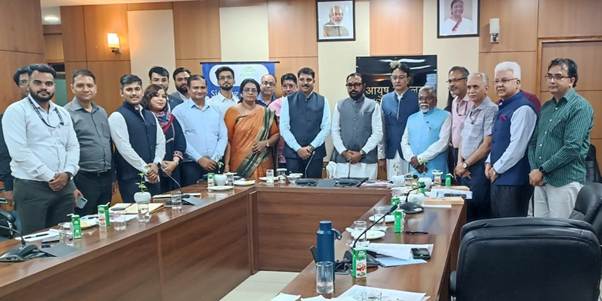
The formal agreement was executed by Dr. Anurag Sharma, Chairman of AYUSHEXCIL, and Shri M. S. Manivannan, IAS, Secretary of the Spices Board of India. The signing took place in the presence of Shri Prataprao Jadhav, Union Minister of State (Independent Charge) for the Ministry of Ayush and Minister of State for Health and Family Welfare. Celebrating the alliance as a “visionary and forward-looking partnership,” Minister Jadhav announced the conceptualization of the “Spice and Heal” initiative. This dedicated framework is designed to leverage international regulatory channels to reposition India from a culinary spice exporter to a world leader in holistic medicine and functional nutrition.
Validating Ancient Traditions with Modern Science
For centuries, natural compounds found in Indian spices have served as the cornerstone of traditional preventive care. However, historical reliance on anecdotal success has frequently restricted their adoption within mainstream global healthcare. The new AYUSHEXCIL–Spices Board framework addresses this gap directly by prioritizing:
-
Scientific validation
-
Standardized testing
-
Robust farm-to-export traceability frameworks
By establishing strict quality control standards, the initiative aims to provide international healthcare professionals and consumers with empirical assurance regarding the purity, bio-availability, and safety of traditional formulations.
Medical research increasingly confirms what traditional practices have long held true. For instance, curcumin, the active polyphenol found in turmeric (Curcuma longa), has been extensively documented in peer-reviewed clinical literature for its strong anti-inflammatory and antioxidant properties. Similarly, piperine, the primary alkaloid in black pepper (Piper nigrum), is clinically proven to drastically improve nutrient absorption, frequently multiplying the bioavailability of other vital therapeutics.
The collaborative effort will focus on developing and standardizing international market channels for value-added commodities, including:
-
Functional foods (dietary options offering health benefits beyond basic nutrition)
-
Nutraceuticals
-
Certified herbal extracts
-
Specialized Ayurvedic formulations
Economic and Public Health Integration
The structural integration of these two massive sectors is designed to generate significant socioeconomic ripple effects. According to ministry officials, the unified export roadmap will offer direct technical and commercial support to micro, small, and medium enterprises (MSMEs), agricultural startups, and local farmers.
By scaling up the production of high-value medicinal grade crops rather than raw culinary spices, local farming communities stand to achieve significantly higher profit margins. This objective closely aligns with national economic priorities like Make in India and Heal in India, transforming regional agricultural strengths into standardized global exports.
From a public health perspective, the global promotion of medicinal spices offers a supportive, non-pharmaceutical avenue for managing chronic, lifestyle-related conditions. Chronic low-grade inflammation is a primary driver of non-communicable illnesses, including cardiovascular disease, metabolic syndrome, and certain degenerative conditions. Integrating therapeutically active spices into daily diets provides a safe, preventive strategy to reduce systemic inflammation. Furthermore, as global healthcare systems face mounting challenges from antimicrobial resistance, the validated antimicrobial and immune-supportive properties of secondary plant metabolites offer highly promising areas for adjunctive healthcare solutions.
Evaluating the Challenges: Standardization and Safety
Despite the significant potential of the “Spice and Heal” initiative, leading medical experts urge caution regarding the unmonitored use of highly concentrated herbal supplements.
“While the therapeutic attributes of natural compounds like turmeric, ginger, and black pepper are undeniable, the global medical community requires uniform standardization before these products can be integrated into formal treatment plans,” notes Dr. Aranya Sen, an independent clinical pharmacologist not involved in the initiative. “Concentrated nutraceuticals do not behave the same way as culinary spices used in cooking. High-dose herbal extracts can cause adverse interactions with conventional pharmaceuticals—such as blood thinners or diabetes medications—and may present risks of hepatotoxicity if processing standards are poorly regulated.”
Furthermore, botanical products frequently face significant hurdles regarding environmental contamination. Heavy metal bioaccumulation from soil, pesticide residues, and microbial contamination during post-harvest storage are persistent challenges in herbal exports.
To achieve widespread clinical trust, the AYUSHEXCIL and Spices Board partnership must strictly enforce its promised traceability and standardization protocols. Independent analytical testing and transparent labeling will be vital to prove that these products are entirely free from contaminants and accurately dosed.
Next Steps for Global Consumer Safety
To address these international regulatory challenges, the newly formed alliance will actively engage with the Codex Alimentarius Commission (Codex)—the international food standards body established by the Food and Agriculture Organization (FAO) and the World Health Organization (WHO). Through synchronized Codex engagement, India aims to spearhead the creation of definitive global safety standards for medicinal spices and functional ingredients.
For the everyday consumer, this landmark partnership marks a shift toward highly regulated, trustworthy natural alternatives. As the “Spice and Heal” framework rolls out standardized products over the coming years, individuals looking to incorporate traditional wellness into their daily routines can expect clearer labeling, proven safety profiles, and verified therapeutic potency.
Reference Section
-
Press Information Bureau (PIB) Delhi, Ministry of Ayush. (May 25, 2026). AYUSHEXCIL and Spices Board of India Sign MoU to Strengthen Global Promotion of Ayush Products and Medicinal Spices. Release ID: 2265130.
Medical Disclaimer: This article is for informational purposes only and should not be considered medical advice. Always consult with qualified healthcare professionals before making any health-related decisions or changes to your treatment plan. The information presented here is based on current research and expert opinions, which may evolve as new evidence emerges.