 0
0
 0
0
PARIS — A French passenger evacuated from a cruise ship grappling with a rare hantavirus cluster has developed symptoms of the illness during a repatriation flight to France, Prime Minister Sebastien Lecornu announced on May 10, 2026. The individual was part of a group of five French nationals transported from the Dutch-operated MV Hondius, which had been held under quarantine off the Canary Islands. Upon landing, all five evacuees were immediately transferred to strict isolation at Bichat–Claude-Bernard Hospital in Paris for intensive monitoring and diagnostic testing.
While the World Health Organization (WHO) maintains that the risk to the general public remains low, the development has sparked international interest due to the specific strain of the virus involved: the Andes virus. Unlike most hantaviruses, which are transmitted solely from rodents to humans, the Andes variety has a documented, albeit limited, ability to spread between people.
Crisis on the High Seas: The MV Hondius Outbreak
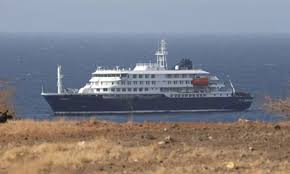
The MV Hondius, an expedition-style vessel designed for rugged travel, departed from Ushuaia, Argentina, on April 1, 2026. The ship carried 147 individuals—86 passengers and 61 crew members—representing 23 different countries. The itinerary included some of the most remote locations in the South Atlantic, such as South Georgia, Tristan da Cunha, and Ascension Island.
The voyage took a dark turn on May 2, when global health authorities were notified of a cluster of severe acute respiratory illnesses among those on board. Laboratory results later confirmed the presence of hantavirus. As of May 8, the WHO reported eight cases linked to the ship—five confirmed and three suspected. Tragically, three of those cases have resulted in death.
Understanding the Andes Virus
Hantaviruses are a family of viruses primarily hosted by rodents, such as deer mice and certain South American rats. Humans typically contract the virus by inhaling aerosolized particles of infected rodent urine, droppings, or saliva—often while cleaning enclosed, dusty spaces like sheds or cabins.
However, the Andes virus, endemic to parts of South America, is unique.
“The Andes virus is the only hantavirus species for which human-to-human transmission has been clearly documented in real-world settings,” the WHO noted in a briefing on May 7.
Evidence suggests this transmission occurs only through prolonged, close contact, such as between family members, intimate partners, or caregivers. It does not appear to spread through casual contact in public settings, which is a key reason health officials are urging calm.
Symptoms and Progression
According to the Centers for Disease Control and Prevention (CDC), the illness can manifest in two phases:
-
Early Symptoms: Fever, fatigue, and muscle aches (especially in the thighs, hips, and back). Patients may also experience headaches, dizziness, and gastrointestinal issues.
-
Late Symptoms: Four to ten days after the initial phase, the illness can progress to Hantavirus Cardiopulmonary Syndrome (HCPS). This includes severe shortness of breath and coughing as the lungs fill with fluid.
“Symptoms often start with what looks like a moderate flu,” explains Dr. María Luisa Hinojosa, an infectious-disease specialist not involved in the outbreak investigation. “But within a few days, some patients can develop intense shortness of breath and low blood pressure. Early recognition and supportive hospital care are the only tools we have, as there is no specific cure or vaccine for hantavirus.”
The French Response and Public Health Measures
The passenger who developed symptoms during the flight to Paris is currently being treated as a suspected case. While the French government has not yet confirmed a hantavirus diagnosis, the Prime Minister’s office is taking no chances.
“Our priority is to prevent the spread of the virus,” Prime Minister Lecornu stated via X (formerly Twitter). He indicated that a formal decree would outline isolation measures for close contacts and bolster national surveillance.
The other four repatriated passengers are undergoing a 72-hour hospital observation period, which will be followed by 45 days of home quarantine. This extended period accounts for the virus’s incubation window and ensures that any potential secondary transmission is nipped in the bud.
Maria Van Kerkhove, WHO’s director for epidemic and pandemic preparedness and prevention, emphasized that while everyone on the ship is considered a “high-risk contact,” the broader threat to mainland France or the Canary Islands is negligible.
Expert Perspectives: Risk vs. Reality
Medical experts are quick to distinguish this outbreak from more highly contagious respiratory threats.
“Because of the route of transmission, we are not looking at a scenario like measles or influenza,” commented Dr. John T. Brooks, an expert in emerging infectious diseases. “It’s a reminder that even viruses that are usually zoonotic can, in rare circumstances, cross the human-to-human barrier when the right conditions come together.”
Dr. Catherine Smallwood, a senior emergency-response specialist at the WHO, added that while the shipboard cluster is scientifically significant, it is not the precursor to a pandemic. “This episode underscores the importance of surveillance, but it does not mean that hantaviruses are becoming a mainstream respiratory threat,” she said.
Remaining Unknowns
Several questions continue to puzzle investigators:
-
The Source: How did the virus get onto the ship? It remains unclear if it was introduced via a rodent at a port, exposure during a remote landing, or by a passenger who was already incubating the virus before boarding.
-
Transmission Efficiency: With a small sample size of eight cases, it is difficult for scientists to determine exactly how efficiently the virus moved between individuals in the confined environment of a cruise ship.
Guidance for Travelers and the Public
For the general population, no changes to daily routines are necessary. However, for those who have recently traveled in South America or were aboard the MV Hondius, health authorities recommend the following:
-
Monitor Health: Watch for fever, severe muscle pain, or shortness of breath for three weeks following potential exposure.
-
Seek Immediate Care: If symptoms appear, contact a healthcare provider immediately and disclose your travel history.
-
General Prevention: When in rural or rodent-prone areas, avoid stirring up dust. Use wet mopping techniques with disinfectant rather than sweeping or vacuuming, and ensure adequate ventilation in enclosed spaces.
As the five French nationals remain under observation in Paris, the global health community continues to monitor the situation, viewing it as a localized, contained event that highlights the complex relationship between humans and zoonotic diseases.
Medical Disclaimer: This article is for informational purposes only and should not be considered medical advice. Always consult with qualified healthcare professionals before making any health-related decisions or changes to your treatment plan. The information presented here is based on current research and expert opinions, which may evolve as new evidence emerges.
References
-
BBC News: “French national from hantavirus cruise ship shows symptoms on return flight.” May 10, 2026.