 0
0
 0
0
LA PRYOR, Texas — On June 3, 2026, the U.S. Department of Agriculture (USDA) confirmed the first domestic case of New World screwworm in American cattle since 1966. The flesh-eating parasite was identified in a three-week-old calf on a ranch in Zavala County, Texas, roughly 30 miles northeast of the U.S.-Mexico border. The discovery has triggered immediate federal and state containment protocols, rattling a domestic livestock sector already dealing with historic supply pressures and raising important public health questions for the region.
Understanding the Parasite: A Subsurface Threat
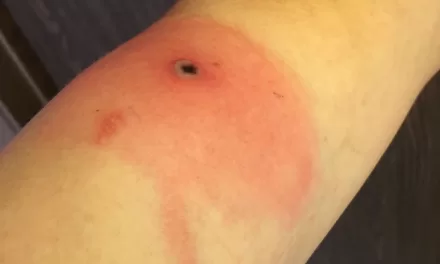
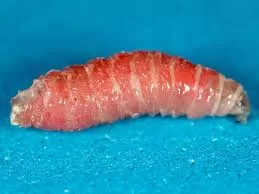
The New World screwworm (Cochliomyia hominivorax) is a highly destructive parasitic fly. Unlike typical blowflies that feed on dead tissue, female screwworm flies actively seek out minor, open wounds on living, warm-blooded animals—including livestock, wildlife, pets, and occasionally humans.
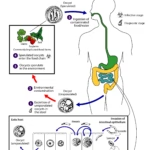
As illustrated in the life cycle diagram above, the process begins when an adult fly deposits eggs at a wound site (1). Within hours, the larvae hatch and aggressively burrow deep into the living flesh to feed (2). This causes an infestation known medically as myiasis. The larvae grow significantly, eventually dropping into the soil to pupate (3) before emerging as adult flies (4) to repeat the cycle. If left untreated, the extensive tissue destruction and secondary infections can easily be fatal to the host animal.
In this specific case, laboratory testing by the USDA’s National Veterinary Services Laboratories in Ames, Iowa, confirmed that the larvae were recovered from the umbilical region of the young calf.
Containment Actions and the “Sterile Fly” Strategy
The USDA’s Animal and Plant Health Inspection Service (APHIS) acted swiftly to isolate the site. Federal officials established a 20-kilometer (12-mile) containment zone around the location in La Pryor, implementing strict livestock movement restrictions and enhanced vector monitoring.
To suppress the biological spread, officials are deploying the Sterile Insect Technique (SIT)—the exact method used to eradicate the pest from the U.S. in the mid-20th century.
“This is not doomsday. I am cautiously optimistic,” noted Dr. Phillip Kaufman, a professor of entomology at Texas A&M University who is advising the state’s response team.
The strategy relies on releasing millions of factory-reared, microscopically altered male flies into the wild. Because female screwworm flies only mate once in their lifetime, breeding with these sterile males results in unfertilized eggs that never hatch, causing local populations to collapse.
To bolster this defense, the USDA partnered earlier this year with the Army Corps of Engineers to construct a massive production facility at Moore Airbase in Edinburg, Texas, capable of producing up to 500 million sterile flies per week.
Economic Vulnerabilities in the Cattle Sector
The timing of the breach is particularly challenging for American agriculture. The U.S. cattle herd has shrunk to its lowest numbers in 75 years due to multi-year droughts and high feed costs. Consequently, beef production is tight, and consumer prices are already at record highs.
Texas is home to the nation’s largest cattle industry, managing more than 12 million head. Economists warn that a widespread outbreak could inflict up to $1.8 billion in damages across the state from direct livestock losses, intensive animal care, and increased farm labor.
Financial markets reacted immediately to the news on June 3. On the Chicago Mercantile Exchange, August feeder cattle futures dropped 1.7%, finishing down 5.8 cents at 342.625 cents per pound, while shares of prominent processing firms like Tyson Foods and JBS experienced noticeable intraday declines.
Evaluating the Risks to Public Health
For the general public, health authorities emphasize that the immediate threat remains minimal. The Centers for Disease Control and Prevention (CDC) reconfirmed that the New World screwworm fly is not established in the United States, and the risk of local transmission to humans is very low. The parasite has no impact on food safety, meaning commercial beef supplies remain entirely safe to consume.
However, the risk is not completely zero. The parasite traveled more than 1,100 miles through Central America and Mexico over the last three years, logging over 171,000 animal cases and roughly 1,960 human cases across regions like Costa Rica and Panama. The U.S. recorded its first travel-associated human case in August 2025, involving an individual returning from El Salvador. That patient fully recovered without spreading the infestation.
Preventive Guidelines for Regional Residents
Medical authorities recommend basic precautions for individuals living or working near livestock zones in South Texas:
-
Wound Care: Keep any open skin wounds clean, treated with antiseptic, and thoroughly covered with bandages to prevent fly access.
-
Protective Clothing: Wear loose-fitting, long-sleeved shirts and long pants when working outside around animals.
-
Repellents: Apply EPA-registered insect repellents to skin, or treat outerwear with 0.5% permethrin.
Administrative Frictions and Regulatory Defenses
The incident has generated friction between state and federal officials. Texas Agriculture Commissioner Sid Miller voiced sharp criticism, arguing that the federal government’s border-zone trapping and suppression efforts failed to halt a predictable 1,100-mile march northward through Mexico. Miller called on federal leaders to heavily expand the Screwworm Suppression System (SWASS) to prevent a localized case from becoming an established ecological foothold.
On the veterinary front, regulatory bodies have unlocked emergency tools to assist ranchers. The Food and Drug Administration (FDA) recently issued an Emergency Use Authorization (EUA) for a specialized topical spray designed for lactating dairy cows, featuring a brief 10-day milk withdrawal period. This complements the December 2025 conditional approval of Exzolt Cattle-CA1, an oral solution manufactured by Merck Animal Health to help prevent emerging larvae from surviving.
Veterinary entomologists emphasize that regular visual inspections are a farm’s best line of defense. Dr. Sonja Swiger and Dr. T.R. Lansford III of the Texas Animal Health Commission advise livestock handlers to look for unusual, foul-smelling discharge from animal wounds or unusually lethargic behavior in herds, and to report any suspicious larvae immediately to state or federal veterinarians.
Medical Disclaimer
This article is for informational purposes only and should not be considered medical advice. Always consult with qualified healthcare professionals before making any health-related decisions or changes to your treatment plan. The information presented here is based on current research and expert opinions, which may evolve as new evidence emerges.
References
- https://www.reuters.com/business/healthcare-pharmaceuticals/unconfirmed-us-case-flesh-eating-screwworm-rattles-cattle-markets-traders-say-2026-06-03/