 0
0
 0
0
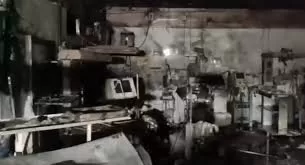
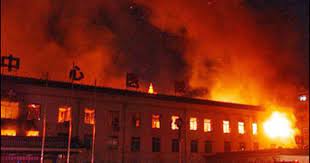
LUCKNOW — A major crisis was averted early Friday morning when a fire broke out at the Asha Jyoti / One Stop Centre located within the Lok Bandhu Raj Narayan Combined Hospital campus in Lucknow. The incident prompted an immediate, large-scale evacuation of patients and medical staff from the affected area and neighboring wards. According to official reports, firefighting teams quickly brought the blaze under control, and miraculously, no casualties or serious injuries were reported. State and local authorities have already visited the site and ordered a formal technical inquiry to investigate the cause of the fire.
Key Developments and the Incident Response
The alarm was raised in the early hours of Friday when dense smoke and flames were detected emanating from a section of the hospital premises. Preliminary accounts indicate that the fire originated near an electrical panel inside the Asha Jyoti Centre.
Hospital staff, demonstrating commendable agility, immediately activated emergency protocols. Aided by local fire services, teams worked rapidly to clear the smoke-logged facility. State-level officials and the Chief Fire Officer arrived on-site to coordinate containment efforts and ensure that nearby wards housing critical patients were secure. While the immediate blaze was successfully doused, the incident has reignited serious discussions regarding infrastructural safety in public healthcare facilities.
The Logistics of Patient Movement and Early Findings
While initial media reports during rapidly changing emergencies can often be contradictory, official updates confirmed that swift containment prevented the fire from spreading to high-dependency units.
To put the scale of such operations into perspective, hospital infrastructure data highlights the immense pressure placed on emergency services during these events. For instance, during a similar, highly publicized fire incident at the very same Lok Bandhu hospital facility in April 2025, approximately 200 patients had to be rapidly evacuated and transferred to neighboring institutions.
Fortunately, the current emergency did not require a mass external migration of that magnitude, though emergency protocols were executed with identical urgency. Early forensic assessments point toward an electrical fault or short circuit as the primary trigger, though a definitive conclusion awaits the submission of the formal technical inquiry.
Expert Perspective: The Anatomy of Hospital Fires
Hospital environments present highly unique challenges during fire emergencies. To understand these complexities, we spoke with medical and safety experts regarding the physics of hospital blazes.
“Statistically, the vast majority of hospital fires are linked to electrical failures, overloaded circuits, or oxygen-related ignition sources,” explains Dr. Anil Verma, a public health emergency specialist who was not involved in the incident. “Wards with high-flow oxygen create oxygen-enriched atmospheres where materials ignite much more easily and burn far more fiercely.”
Dr. Verma stresses that infrastructure is only half the battle; human response dictates the survival rate.
“In indoor fires, smoke inhalation typically causes far more fatalities than direct thermal burns. Removing patients rapidly from smoke-filled zones—especially individuals who are already on supplementary oxygen or suffering from respiratory compromise—is what ultimately reduces mortality risk. The absence of casualties in this Lucknow incident points to highly effective, rapid on-ground coordination.”
Context and Background: Systemic Risks in Healthcare Facilities
Globally and across India, recurring incidents in medical facilities highlight inherent structural vulnerabilities. Hospitals are dense environments combining:
-
High Electrical Loads: Constant operation of heavy diagnostic machinery, life-support systems, and climate control.
-
Medical Gas Pipelines: Pressurized oxygen lines that can rapidly accelerate an existing flame.
-
Vulnerable Populations: Patients who are completely immobile, sedated, or critically ill, rendering standard self-evacuation impossible.
Standard mitigation measures recommended by fire safety authorities and hospital accreditation bodies include regular electrical load audits, functional compartmentalized fire alarms, and completely unobstructed evacuation routes.
However, compliance remains an ongoing challenge. The Lok Bandhu hospital itself was the focus of intense scrutiny following the aforementioned April 2025 fire, which resulted in a government-constituted probe panel tasked with reviewing safety lapses. The recurrence of an electrical fire at the same campus underscores the stubborn persistence of these infrastructural hazards.
Implications for Public Health and Hospital Operations
While the immediate outcome of Friday’s fire is a relief, the event carries broader implications for public health administration.
Continuity of Care
Even when patients are evacuated safely, the sudden displacement of individuals from specialized wards or Intensive Care Units (ICUs) strains surrounding emergency systems. Displaced patients require seamless continuity-of-care arrangements to ensure that treatment disruptions do not lead to secondary health complications.
System-Level Lessons
This incident serves as a stark reminder that reactive measures are insufficient. Healthcare networks must transition to proactive safety paradigms. This includes enforcing routine, third-party electrical audits, strict oxygen-safety protocols, and maintaining functional, automated suppression systems. Furthermore, public health advocates emphasize that publishing transparent inquiry results is vital to restoring public trust and providing a concrete blueprint for other medical institutions.
Limitations of Current Reports
Readers should note that current data is preliminary and primarily based on initial statements from hospital administrators, first responders, and early eyewitness accounts. The comprehensive technical cause, and whether systemic maintenance lapses contributed to the event, will only be clarified once the official government probe panel releases its final report.
Historically, early reporting on hospital emergencies often includes conflicting details regarding injury counts or patient transfers. Until the formal technical investigation concludes, official government briefings should be treated as the authoritative account.
Practical Takeaways for the Public
For Patients and Caregivers
When a loved one is admitted to a medical facility, it is entirely within your rights to ask the nursing staff or hospital administration about basic safety measures. Ensure you know the location of the nearest emergency exit, ask about the facility’s evacuation plan for non-ambulatory patients, and note whether fire extinguishers and alarms are visible and unobstructed in the ward.
For Healthcare Managers and Administrators
Compliance with national building and fire safety codes must be viewed as a non-negotiable component of patient care. Regular staff training drills specifically tailored to smoke management and the safe movement of bedridden patients are essential. Continuous electrical load assessments must be conducted to ensure modern medical equipment does not overload legacy wiring systems.
Medical Disclaimer
Medical Disclaimer: This article is for informational purposes only and should not be considered medical advice. Always consult with qualified healthcare professionals before making any health-related decisions or changes to your treatment plan. The information presented here is based on current research and expert opinions, which may evolve as new evidence emerges.
References
Media & Agency Reports
-
“Fire breaks out at One Stop Centre in Lucknow hospital, no casualties,” ThePrint (PTI), June 26, 2026.