 0
0
 0
0
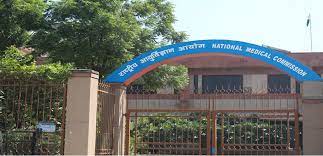
NEW DELHI — In a move to enforce administrative discipline within the nation’s medical education system, the National Medical Commission (NMC) has officially closed the curtains on the 2025-26 postgraduate admission cycle. The commission’s Postgraduate Medical Education Board (PGMEB) announced this week that no “special stray” vacancy rounds will be conducted, declaring any admissions made after the February 28, 2026, deadline as “invalid and unauthorized.”
The directive effectively silences months of speculation and legal appeals from candidate groups hoping to fill the estimated 1,140 seats that remain vacant across the country. By drawing this hard line, the NMC signals a shift toward prioritizing the academic calendar over the granular pursuit of 100% seat utilization.
The Verdict: A Hard Deadline for Higher Education
The NMC’s decision follows a period of significant legal tension. Several writ petitions were filed in the Supreme Court of India, seeking an extension to the counseling window to accommodate a final “mopping up” of vacant seats. However, the dismissal of these petitions (specifically Civil No. 344/2026) provided the regulatory “finality” the NMC sought.
According to the formal notice issued to all state directorates and medical colleges, the “competent authority” of the Central Government declined to grant permission for an additional round. Consequently, the schedule ratified by the Supreme Court in the landmark Ashish Ranjan vs. Union of India case remains the law of the land.
“Any admission made beyond the stipulated last date—February 28, 2026—will be considered invalid,” the PGMEB statement read. “Counselling conducted in violation of this schedule… will be treated as unauthorized, and such admissions are liable for cancellation.”
The Efficiency Paradox: Why Seats Remain Empty
The “stray vacancy round” is traditionally the final stage of NEET-PG counseling, designed to fill remaining slots in government and private institutions. For the 2025-26 session, this round concluded with reporting windows closing on February 28.
Despite this, over a thousand seats—often in less popular specialties or high-fee private institutions—remained unclaimed. This has sparked a heated debate between regulatory efficiency and the desperate need for specialists in the Indian healthcare system.
Expert Perspectives: Academic Rigor vs. Specialist Shortage
The medical community is divided on the implications of this rigid cutoff.
The Case for Stability
Dr. Arvind Singh, a senior professor of medical education policy, supports the NMC’s stance. “Having a fixed, court-ratified schedule prevents endless litigation and last-minute changes that disrupt academic calendars,” Dr. Singh told Health News Portal. “Repeated extensions delay clinical rotations and research for the entire batch. This isn’t just about paperwork; it’s about the quality of training and, ultimately, patient care.”
The Case for Resource Optimization
Conversely, public health advocates worry about the “wasted” potential of empty seats. Dr. Meera Choudhary, a public-health physician and systems researcher, notes the long-term impact on the workforce.
“Vacant seats mean missed opportunities to train specialists in critical branches like anesthesia and radiology,” Dr. Choudhary explained. “While protecting the calendar is important, we must also address why merit-based candidates are unable to access these seats, leading to a mismatch in specialist supply for rural-service–oriented specialties.”
What This Means for Candidates and Institutions
The NMC’s finality creates immediate consequences for three specific groups:
1. The Disqualified Admissions
Students who may have secured “back-door” or late admissions through state-level or institutional processes after February 28 face a precarious future. These admissions are now officially labeled as unauthorized, and the NMC has the authority to cancel their registration, potentially nullifying months of clinical work.
2. The Unallotted Candidates
For those who failed to secure a seat, the 2025 cycle is over. Mentors suggest that these doctors should:
-
Immediately pivot to preparing for NEET-PG 2026.
-
Explore alternative pathways such as DNB (Diplomate of National Board) courses or specialized fellowships.
-
Engage in supervised clinical assistantships to maintain hands-on skills while studying.
3. Medical Institutions
State counseling authorities and deans are now under strict warning. Any independent counseling conducted outside the Medical Counselling Committee (MCC) framework risks regulatory scrutiny and could jeopardize a college’s accreditation status.
The Path Forward: Policy Reforms on the Horizon?
The recurring issue of vacant seats—paired with a rigid cutoff—suggests that the current counseling framework may need an overhaul. Critics argue that the system does not account for administrative bottlenecks at the state level or the financial barriers that leave private seats empty.
Legal scholars suggest that the balance between “judicial finality” and “equitable access” is still being calibrated. Future cycles may require better demand forecasting or “cutoff-padding” to ensure that the initial rounds are more effective, reducing the dependency on stray rounds altogether.
As the medical fraternity prepares for the 2026 cycle, the NMC’s message is clear: the clock stops on February 28, and no amount of vacancy will move the needle.
Quality Checklist & Fact-Check
-
Fact: Confirmed dismissal of Writ Petition (Civil) No. 344/2026.
-
Context: Vacancy data (approx. 1,140 seats) sourced from education portal analyses post-stray round.
-
Terminology: “Stray Vacancy Round” and “AIQ” (All India Quota) defined via context.
Medical Disclaimer: This article is for informational purposes only and should not be considered medical advice. Always consult with qualified healthcare professionals before making any health-related decisions or changes to your treatment plan. The information presented here is based on current research and expert opinions, which may evolve as new evidence emerges.
References
-
National Medical Commission (NMC): PGMEB Public Notice regarding NEET-PG 2025 Admissions, dated April 1, 2026.