 0
0
 0
0
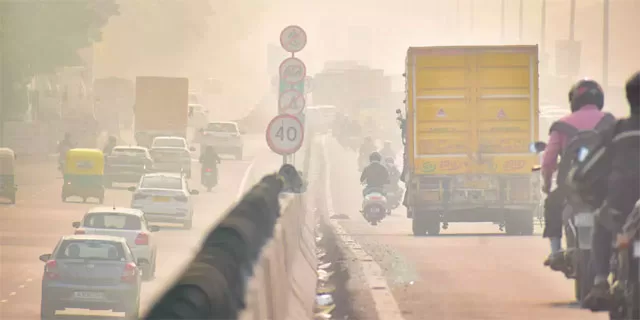
NEW DELHI — In a alarming revelation that highlights the expanding footprint of urban environmental hazards, a major scientific report reveals that road transport emissions in India claimed approximately 90,000 lives and caused 15,300 new cases of pediatric asthma in 2024 alone. Translating to one premature death every six minutes and a new childhood asthma diagnosis every 34 minutes, these numbers mark vehicular pollution as a critical, ongoing public health emergency across the nation.
The study, titled Health Benefits of Zero-Emission Transport Through 2050: India and published by the International Council on Clean Transportation (ICCT) on July 29, 2026, maps out both the staggering human cost of reliance on fossil fuels and a viable path forward. Researchers estimate that an accelerated transition toward zero-emission vehicles (ZEVs) could prevent up to 1.7 million premature deaths and 97,200 pediatric asthma cases in India between now and 2050.
A Silent Public Health Crisis: Key Findings
India currently ranks second globally in premature deaths tied to road transport emissions, second only to China, and accounts for 13% of all transport-related deaths worldwide.
The geographic burden, however, is far from equal. The National Capital Region (NCR), which houses roughly 5% of India’s population, bears a starkly disproportionate share of the health fallout:
-
9% of national transport-related premature deaths (8,100 deaths in 2024)
-
23% of new childhood asthma cases (3,500 cases in 2024)
Within Delhi proper, exhaust fumes were directly linked to roughly 2,800 premature deaths and 1,500 childhood asthma diagnoses in a single year. In 2024, the population-weighted exposure to transport-specific fine particulate matter ($\text{PM}_{2.5}$) reached 13 micrograms per cubic meter ($\mu\text{g/m}^3$). This figure alone—originating only from vehicle tailpipes—is more than 2.5 times the World Health Organization’s (WHO) recommended annual exposure limit for total $\text{PM}_{2.5}$ from all environmental sources combined ($5\,\mu\text{g/m}^3$).
“The burden is starkly uneven. The NCR accounts for nearly a quarter of India’s road transport-attributable childhood asthma cases,” stated Lingzhi Jin, senior researcher at the ICCT and co-author of the report. “These are children exposed to traffic pollution during their daily routines—going to school, playing outside, and living their lives.”
Heavy-Duty Vehicles: The Disproportionate Polluters
While passenger cars and two-wheelers make up the vast majority of vehicles on Indian roads, heavy-duty commercial vehicles—primarily diesel trucks and buses—are responsible for the lion’s share of toxic tailpipe emissions.
In 2024, heavy-duty vehicles accounted for:
-
79% of tailpipe nitrogen oxide ($\text{NO}_x$) emissions
-
64% of tailpipe $\text{PM}_{2.5}$ emissions
$\text{NO}_x$ emissions react in the atmosphere to form ground-level ozone and fine particles, both of which are powerful respiratory irritants capable of causing irreversible lung damage, exacerbating chronic obstructive pulmonary disease (COPD), and triggering severe asthma attacks in vulnerable populations.
Path to Prevention: Electrification as a Medical Intervention
To determine potential health outcomes, ICCT researchers compared two main policy pathways:
-
Baseline Scenario: Current electrification policies remain unchanged through 2045.
-
Ambitious Scenario: Zero-emission vehicles account for 100% of new vehicle sales by 2045.
Under the ambitious scenario, the public health dividends by mid-century are vast:
| Health/Environmental Metric | Projected Reduction by 2050 (vs. Baseline) |
| Annual Premature Deaths | 55% decrease |
| New Pediatric Asthma Cases | 85% decrease |
| Tailpipe Pollutants ($\text{PM}_{2.5}$, $\text{NO}_x$, $\text{CO}$) | 60% to 90% decrease |
“Ambitious electrification is strong enough to break the link between growing vehicle fleets and rising health harm,” explained Josh Miller, senior director at the ICCT and co-author of the global assessment.
Amit Bhatt, India Managing Director at ICCT, emphasized that real-world conditions often worsen exhaust impact beyond standard laboratory testing. “Vehicles on the road can emit significantly more pollution under real-world operation than what is measured under laboratory testing. The only way to eliminate tailpipe emissions entirely is through electrification,” Bhatt noted.
Global Context and Environmental Health Inequity
Globally, road transport pollution led to nearly 700,000 premature deaths and 250,000 new childhood asthma cases in 2024—the equivalent of one death every 45 seconds.
Without aggressive policy intervention, transport-related deaths in low- and lower-middle-income countries are projected to jump by over 200% by 2050. Conversely, high-income nations are expected to see a 48% decline as cleaner fleets replace aging internal combustion engines. Transitioning to 100% ZEV sales globally by 2045 could prevent 8.8 million premature deaths globally, narrowing this widening equity gap.
Practical Action and Public Health Recommendations
From a clinical and public health perspective, tackling traffic emissions requires both structural policy changes and individual protective measures.
Systemic Policy Priorities
-
Targeted Fleet Electrification: Prioritizing high-frequency public buses and heavy commercial freight fleets for immediate zero-emission transitions.
-
Scrappage and Low-Emission Zones: Accelerating the removal of older, high-emitting diesel vehicles and establishing low-emission zones in dense urban cores.
-
Enforcing Real-World Standards: Implementing stricter, real-world drive-cycle compliance testing to ensure vehicles meet emissions regulations outside the lab.
Individual Actions for Residents
-
Monitor Local Air Quality: Use reliable Air Quality Index (AQI) apps to check daily $\text{PM}_{2.5}$ and $\text{NO}_2$ levels, avoiding intense outdoor exercise near major arterial roads during peak traffic hours.
-
Use Personal Protection: High-filtration masks (such as N95 or FFP2 respirators) significantly reduce the inhalation of combustion-derived fine particles during high-exposure commutes.
-
Opt for Clean Mobility: Utilizing electric public transit, walking, or cycling on low-traffic routes helps minimize both personal exposure and urban emissions.
Study Considerations and Grid Dynamics
While the ICCT’s epidemiological models rely on rigorous data from the Global Burden of Disease 2021 study, the authors acknowledge inherent uncertainties. Health outcomes are influenced by local weather dynamics, population health baseline variations, and the speed of infrastructure adoption.
Furthermore, the overall health benefits of electric vehicles are directly tied to the cleanliness of the power grid. As India rapidly expands its solar and renewable energy capacity, the indirect emissions associated with charging electric vehicles will drop, maximizing long-term health gains.
Conclusion
The evidence from the ICCT report is unequivocal: road transport pollution is an escalating public health crisis that demands immediate, evidence-based intervention. Treating vehicle electrification as an essential health initiative offers a clear strategy to protect future generations, clean urban air, and save nearly 1.7 million lives over the coming decades.
Medical Disclaimer
Medical Disclaimer: This article is for informational purposes only and should not be considered medical advice. Always consult with qualified healthcare professionals before making any health-related decisions or changes to your treatment plan. The information presented here is based on current research and expert opinions, which may evolve as new evidence emerges.
References
-
International Council on Clean Transportation (ICCT). Health Benefits of Zero-Emission Transport Through 2050: India. Published July 29, 2026.