 0
0
 0
0
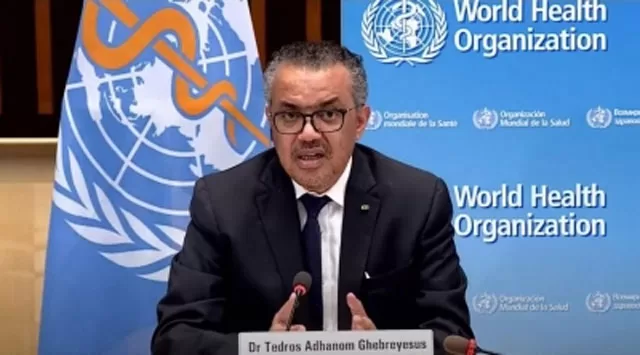
GENEVA — In a rare and stinging rebuke of a major member state’s health policy, World Health Organization (WHO) Director-General Tedros Adhanom Ghebreyesus on Wednesday condemned a U.S.-funded clinical trial in Guinea-Bissau. The study, funded by the Centers for Disease Control and Prevention (CDC), seeks to withhold the hepatitis B birth-dose vaccine from thousands of newborns to study “non-specific” health outcomes—a move Tedros labeled a breach of fundamental medical ethics.
The controversy, erupting during a February 11 press conference at WHO headquarters, marks a deepening rift between established global health standards and a shifting U.S. health landscape under the leadership of Health and Human Services (HHS) Secretary Robert F. Kennedy Jr.
The Trial: A “Policy Window” or a Perilous Gap?
The proposed five-year study, led by the Guinea-Bissau-based Bandim Health Project, is backed by $1.6 million in funding from the CDC and private philanthropic groups. Its objective is to monitor 14,000 infants to assess how the hepatitis B vaccine affects overall newborn mortality, hospitalizations, and neurodevelopment.
To achieve this, researchers planned a randomized controlled trial:
-
Group A: Receives the standard hepatitis B vaccine within 24 hours of birth.
-
Group B: Does not receive the birth dose, following the current local “practice” until Guinea-Bissau officially integrates the birth dose into its national program, slated for 2027 or 2028.
Researchers described this delay as an “ethical policy window.” However, global health authorities argue that “practice” is only the current status because of resource limitations, not because the vaccine isn’t the recognized standard of care.
Why the Birth Dose Matters
Hepatitis B is a viral infection that attacks the liver and can cause both acute and chronic disease. It is most often transmitted from mother to child during birth or through contact with infected blood.
According to WHO data, Guinea-Bissau is a “high-prevalence” region. Adult infection rates hover around 18.7%, and pre-vaccination data showed that up to 16% of young children carried the virus. When an infant is infected at birth, they have a 90% chance of developing a chronic infection, which often leads to liver cirrhosis or cancer later in life.
“Guinea-Bissau is one of the countries with high prevalence,” Tedros stated. “Withholding a birth dose could actually expose infants to a high chance of infection, and that means including a significant proportion of deaths.”
The Shadow of U.S. Policy Shifts
The funding of this trial follows a seismic shift in American immunization policy. In December 2025, the CDC’s Advisory Committee on Immunization Practices (ACIP)—newly influenced by the Kennedy administration—voted to end the 1991 recommendation for universal newborn hepatitis B vaccination in the U.S.
The new U.S. guidance suggests the birth dose is only necessary for infants born to mothers who test positive for the virus. This “informed consent” model, championed by CDC Acting Director Jim O’Neill, reverses decades of practice that reduced pediatric infections in the U.S. by 99%.
HHS spokesperson Emily Hilliard defended the Guinea-Bissau trial as a “gold-standard” effort to fill evidence gaps regarding the vaccine’s broader health effects. Proponents argue that because no large-scale randomized controlled trials (RCTs) were conducted on the birth dose in West African settings, the study is scientifically valuable.
A Breach of Global Standards
The medical community’s response has been swift and largely critical. Under the Declaration of Helsinki, the ethical cornerstone of human research, it is generally considered unethical to use a placebo or “no-treatment” group when a proven, effective intervention exists.
“Equipoise—the genuine uncertainty about which treatment is better—simply doesn’t exist here,” says Dr. Arthur Caplan, a renowned bioethicist at NYU Langone Health. “The evidence overwhelmingly favors vaccination. You don’t test the parachute by asking half the people to jump without one.”
Dr. William Moss, a vaccine expert at the Johns Hopkins Bloomberg School of Public Health, echoed these concerns. “Randomizing away from a life-saving intervention in endemic areas risks unnecessary harm. We have decades of safety data showing this vaccine is exceptionally safe.”
The Safety Record: > The hepatitis B vaccine is 95–100% effective. Extensive meta-analyses have shown no link between the vaccine and autism, multiple sclerosis, or sudden infant death syndrome (SIDS). Common side effects are limited to mild soreness at the injection site.
Public Health Implications and the Path Forward
The trial is currently suspended following the international outcry, but local officials in Guinea-Bissau suggest it may resume after further review. Public health experts warn that even the existence of the debate could have “ripple effects,” damaging vaccine confidence in a region already struggling with healthcare infrastructure.
For parents and healthcare providers, the controversy highlights a growing tension between “individualized” vaccine schedules and the “cocoon” of protection provided by universal programs. In high-prevalence areas, the birth dose acts as a safety net, protecting infants even when maternal screening fails or household transmission occurs.
As the WHO prepares a formal statement on the matter, the global health community remains on high alert. The outcome of this standoff may well define the boundaries of international research ethics for the next decade.
References
- https://health.economictimes.indiatimes.com/news/industry/who-chief-slams-unethical-us-vaccine-trial-in-g-bissau/128233353?utm_source=latest_news&utm_medium=homepage
Medical Disclaimer: This article is for informational purposes only and should not be considered medical advice. Always consult with qualified healthcare professionals before making any health-related decisions or changes to your treatment plan. The information presented here is based on current research and expert opinions, which may evolve as new evidence emerges.