 0
0
 0
0
Published: June 1, 2026
Key Findings: A Rapidly Escalating Public Health Crisis
While the official tally stands at 134 confirmed cases (including nine in Uganda), field data suggests a significantly larger crisis shifting beneath the surface. As of late May 2026, suspected cases in the DRC alone have soared to 906, with 223 suspected deaths awaiting laboratory reclassification.
The crisis marks the 17th Ebola outbreak in the DRC’s history. This time, transmission is concentrated heavily in the country’s eastern corridor:
-
Ituri Province: Concentrates 88% of all confirmed cases.
-
North Kivu & South Kivu Provinces: Reporting secondary, active clusters.
What has elevated regional panic is the virus’s highly fluid cross-border movement. Cases documented in Uganda include a transnational driver who transported the initial index case, a Congolese healthcare worker, a woman traveling across borders to seek specialized medical care, and two local Ugandan medical staff. The outbreak’s reach has also extended globally: one confirmed case—a U.S. physician exposed while volunteering in a DRC field clinic—is currently in strict isolation receiving specialized care in Germany.
The Bundibugyo Virus: What Makes This Strain Different?
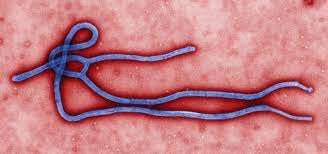
First identified during a 2007 outbreak in western Uganda, the Bundibugyo virus is the most recently discovered of the four Orthoebolavirus species known to cause severe disease in humans. To contextualize its behavior, scientists frequently contrast it with the notorious Zaire Ebola strain, which caused the catastrophic 2014–2016 West African epidemic.
While the Zaire strain often exhibits a terrifying mortality rate of 60% to 90% if untreated, historical data shows Bundibugyo has typically been less lethal, though still highly dangerous.
“Past Bundibugyo outbreaks reported in Uganda and the DRC in 2007 and 2012 recorded case fatality rates ranging from nearly 30% to 50%,” notes the WHO’s epidemiological brief.
The current outbreak’s 14% case fatality rate among confirmed patients appears encouraging, but experts strongly caution against complacency. Dr. Tom Ksiazek, a renowned virologist at the University of Texas Medical Branch who directed the CDC’s Special Pathogens Branch when the virus was first isolated in 2007, urges a measured perspective.
“Bundibugyo might be slightly less deadly than the standard Ebola virus or the Sudan virus,” Dr. Ksiazek explained. “However, a 30%-plus mortality rate historically is still quite scary. It is difficult to speak with absolute precision right now because the global medical community simply does not have a wealth of experience with this strain.”
The Critical Challenge: No Licensed Vaccine or Treatment
The most daunting operational hurdle for medical teams on the ground is a stark baseline reality: there are zero licensed vaccines or targeted therapeutics approved for the Bundibugyo strain. This contrasts sharply with recent Zaire strain outbreaks, where deployment of the highly effective Ervebo vaccine radically blunted transmission lines.
“There is nothing even close to ready for standard clinical trials or mass distribution,” says Dr. Celine Gounder, an infectious disease specialist and epidemiologist who treated patients on the front lines of the West African epidemic. “This means responders, healthcare professionals, and aid organizations are forced entirely back to basic, supportive public health interventions.”
To bridge this therapeutic vacuum, an independent panel convened by the WHO has fast-tracked several experimental candidate products for emergency field trials:
| Candidate Product | Developer / Sponsor | Stage / Target Timeline | Status for Current Outbreak |
| rVSV Bundibugyo Vaccine | Int. AIDS Vaccine Initiative (IAVI) | 7–9 months | Preclinical development |
| Oxford/AstraZeneca Platform | Serum Institute of India | 2–3 months | Awaiting additional animal data |
| MBP134 Monoclonal Antibody | Mapp Biopharmaceutical | Immediate | Prioritized for field trials |
| Maftivimab® (Monoclonal) | Regeneron | Immediate | Prioritized for field trials |
| Remdesivir (Antiviral) | Gilead Sciences | Immediate | Prioritized for field trials |
| Obeldesivir (Post-Exposure) | Gilead Sciences | Immediate | Currently in mid-stage trials |
Despite these pipeline options, immediate biological relief is far off. “The most promising candidate vaccine specifically designed to neutralize the Bundibugyo virus will not be available for field use for at least six to nine months,” confirmed Dr. Vasee Moorthy, senior advisor for Science and Strategy at the WHO.
Transmission Dynamics and Risk Factors
Like other ebolaviruses, Bundibugyo is a zoonotic pathogen (a disease that jumps from animals to humans), with fruit bats suspected by researchers to be the primary natural reservoir. Spillover to humans occurs through close contact with the blood, secretions, or organs of infected wildlife, such as bats or non-human primates. Once a human host is infected, person-to-person transmission amplifies rapidly through direct contact with infected bodily fluids.
Two primary vectors are driving the current amplification:
-
Inadequate Infection Prevention and Control (IPC): Routine clinical settings lacking robust protective assets. To date, 16 health and care workers have been confirmed infected in the DRC.
-
Unsafe Traditional Burial Practices: Rituals involving direct contact with the bodies of deceased victims.
The virus features an incubation period ranging from 2 to 21 days. Crucially, individuals are not contagious until they show symptoms. Early clinical presentation—including fever, extreme fatigue, muscle aches, headache, and a sore throat—is highly non-specific, frequently causing clinicians to mistake it for malaria or typhoid. This delays isolation protocols. As the disease advances, it progresses to severe vomiting, diarrhea, impaired kidney and liver function, and, in a subset of patients, internal and external hemorrhaging (bleeding).
“The virus has a massive head start,” warned Tom Frieden, former director of the U.S. Centers for Disease Control and Prevention. Current epidemiological modeling indicates that the Bundibugyo virus was likely circulating undetected in local communities for nearly two months before the official alarm was raised.
Response Efforts: Experience Meets Local Realities
The DRC possesses world-class expertise in handling filoviruses, having successfully neutralized numerous complex outbreaks. The central government is managing a multi-pronged national response alongside provincial teams in Ituri. To bolster solidarity, WHO Director-General Dr. Tedros Adhanom Ghebreyesus recently joined DRC Health Minister Dr. Samuel Roger Kamba on a high-level assessment mission directly to Bunia.
[National Response Operations Center]
       │
       ├─► Rapid Response Teams (Field Deployment)
       ├─► Expanded Diagnostics (774 Samples Collected ➔ 19.2% Positivity Rate)
       ├─► Optimized Treatment Centers (Supportive Care Delivery)
       ├─► Aggressive Contact Tracing (2,635 Active Contacts Logged)
       └─► Community Engagement (Mobilizing Faith & Local Leaders)
However, executing these protocols has proven exceptionally challenging. Response teams face an array of compounding structural vulnerabilities:
-
Severe Insecurity: Three recent security incidents led by armed groups in the Mongbwalu and Rwampara health zones disrupted active surveillance and put containment teams at extreme physical risk.
-
Infrastructure Constraints: The remote, dense topography of Ituri makes contact tracing difficult, while local referral networks lack sufficient isolation beds.
-
High Population Mobility: The conflict-affected populations in the border zones move constantly, shifting active transmission lines daily across the porous DRC-Uganda border.
Risk Assessment and Global Implications
The Africa CDC has categorized the outbreak as a Public Emergency of Continental Security (PHECS). Concurrently, the WHO has placed its risk assessment at “very high” nationally, “high” regionally, and “low” on a global scale.
The WHO currently explicitly advises against any sweeping international trade or travel restrictions targeting the DRC or Uganda, emphasizing that such closures devastate local economies and discourage transparent reporting.
However, mathematical models generated by Dr. Ruth McCabe, an infectious-disease epidemiologist at Imperial College London, suggest the formal tallies are significantly skewed. “Our current projections show that the actual case burden is likely upwards of 900 cases, and because of existing observation blind spots, total cases could easily exceed 1,000,” Dr. McCabe noted.
What This Means for Readers: Practical Health Guidance
For health-conscious citizens, international travelers, and readers tracking global health security, experts emphasize that standard, rigorous public health protocols are highly effective at stopping transmission.
-
Practice Strict Hand Hygiene: Frequent washing with soap and water or utilizing alcohol-based rubs destroys the lipid envelope of the virus.
-
Seek Timely Care: Anyone returning from an affected region who experiences a sudden onset of fever, severe headache, or muscle fatigue should isolate and contact healthcare providers immediately.
-
Avoid Bodily Fluid Contact: Do not come into contact with clothing, bedding, or items fluids from an ailing person may have touched.
-
Rely on Verified Information: Misinformation spreads faster than viral pathogens. Turn strictly to ministries of health, the CDC, and official WHO channels for operational updates.
Dr. Ksiazek emphasizes that while specialized cures do not exist, modern medicine is far from defenseless. “Excellent supportive care—specifically aggressive intravenous rehydration, electrolyte stabilization, and symptom management—reduces mortality rates significantly,” he stated.
Study Limitations and Uncertainties
Journalistic and scientific objectivity requires highlighting the substantial analytical uncertainties clouding this crisis:
-
The Diagnostic Backlog: The reported 19.2% test positivity rate is likely skewed. Over 100 patient blood samples remain backlogged or in transit to reference laboratories in Kinshasa due to logistic barriers.
-
Data Scarcity: Because the global medical community has only ever documented two previous Bundibugyo outbreaks (the 2007 Uganda event and a minor 38-case cluster in the DRC in 2012), long-term viral behavior, mutation tracking, and exact mortality baselines remain poorly understood.
-
Delayed Case Reclassification: Due to ongoing security-driven blackouts, epidemiological teams are experiencing significant delays in reconciling suspected community deaths with official laboratory results.
The Path Forward: Balancing Hope and Realism
The coming weeks will dictate whether this outbreak can be systematically choked out or if it will expand into a wider regional crisis. With targeted vaccines months out, the situation presents a foundational test for traditional public health frameworks.
“This deep experience, combined with strong political leadership… provides a firm foundation for bringing the current outbreak under control,” the joint DRC-WHO ministerial statement concluded. “The investments made today in scaling up laboratory assets, training field workers, and reinforcing local surveillance systems will leave a permanent healthcare legacy for the people of Ituri and the DRC as a whole.”
Medical Disclaimer
Medical Disclaimer: This article is for informational purposes only and should not be considered medical advice. Always consult with qualified healthcare professionals before making any health-related decisions or changes to your treatment plan. The information presented here is based on current research and expert opinions, which may evolve as new evidence emerges.
References & Sources
- https://www.who.int/news/item/31-05-2026-joint-statement-by-the-government-of-the-democratic-republic-of-the-congo-and-who-concerning-the-outbreak-of-ebola-disease-caused-by-the-bundibugyo-virus