 0
0
 0
0
MUMBAI — In critical medical emergencies, the line between life and death often hinges on a concept known in emergency medicine as the “golden hour”—the first 60 minutes following a severe injury or acute medical event when prompt medical intervention is most likely to prevent permanent organ damage or death. Yet for millions across India, those crucial minutes are frequently lost to congested traffic, untraceable dispatch systems, and chaotic, unstandardized private transport fees.
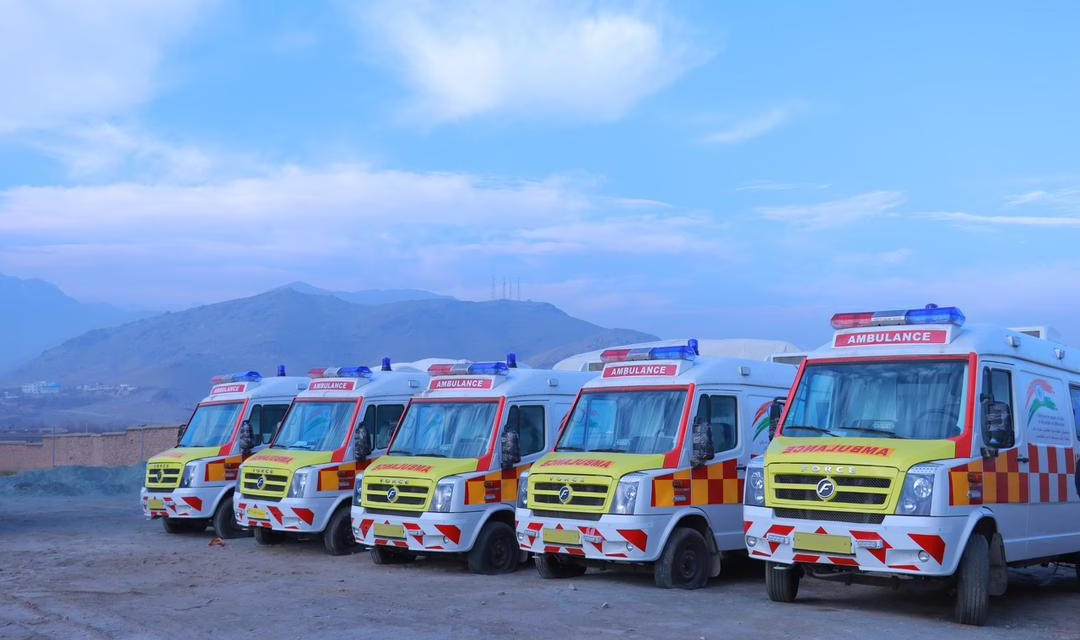
To close this dangerous gap, Maharashtra is preparing to launch a comprehensive, technology-first ambulance policy. The state initiative aims to unify every registered ambulance—both public and private—under a centralized digital network. The proposed framework promises real-time GPS tracking, standardized fare transparency, and pre-hospital clinical coordination, marking one of the most ambitious emergency medical services (EMS) modernizations in the region’s history.
A Unified Digital Framework for Emergency Response
At the heart of the proposed policy is an integrated digital ecosystem designed to connect patients, first responders, and health administrators through dedicated mobile applications and centralized monitoring tools.
Under the new plan:
-
For Citizens: A central mobile application will allow users to locate the nearest available ambulance, view real-time location and estimated arrival time (ETA), and review transparent fare estimates prior to booking. The platform will also offer preliminary video guidance to assist bystanders in administering basic first aid while waiting for help to arrive.
-
For Drivers & Paramedics: A driver-facing app will manage call dispatches, navigation, and duty status. Simultaneously, in-vehicle tablets will enable paramedics to record vital signs and treatment logs in real time, sharing clinical data directly with receiving hospitals prior to arrival.
-
For Regulators: A central dashboard accessible by the Regional Transport Office (RTO) and the Public Health Department will monitor vehicle movements, response times, rejected service calls, and potential billing discrepancies across the state.
       [ Centralized Digital Ecosystem ]
                      │
   ┌──────────────────┼──────────────────┐
   ▼                  ▼                  ▼
[ Citizen App ]  [ Driver App ]  [ RTO Dashboard ]
  • Nearby EMS     • Navigation    • Live Oversight
  • Live Tracking  • Call Status   • ETA Auditing
  • Clear Fares    • Onboard Vitals• Fraud Prevention
Bridging Operational Gaps in Emergency Care
The policy builds upon Maharashtra’s existing emergency transport infrastructure—the Maharashtra Emergency Medical Services (MEMS) operating via the toll-free hotline 108. According to state health department figures, between February 2014 and December 2024, MEMS ambulances attended to over 10.5 million (1.05 crore) emergency calls. This included more than 1.7 million pregnancy-related emergencies and over 6.4 million acute medical incidents.
Despite the scale of the 108 network, private ambulance operations have historically operated in a regulatory gray area. Unregulated pricing during peak demand and unpredictable response times have created significant uncertainty for patients and their families.
“Real-time visibility can help reduce avoidable delays, but the bigger gain comes when dispatch, routing, and handover are all connected,” explains Dr. Amit Gupta, an emergency medicine specialist and health systems researcher. “For the public, this policy is not just about seeing an icon move across a screen. It is about whether the health system can move a critically ill patient from booking to arrival to hospital handover with fewer operational gaps and clearer accountability.”
What the Science Says About EMS Digitalization
The decision to focus heavily on GPS dispatch and dynamic routing aligns with a growing body of global pre-hospital care research.
A comprehensive 2024 review of emergency medical services strategies found that implementing real-time GPS dispatch and dynamic routing algorithms can reduce emergency response times by 18% to 25% depending on geographic layout and urban congestion. Further international studies published in 2024 highlight that modern EMS systems target median response times of under 9 minutes, with international health guidelines—including framework literature linked to the World Health Organization (WHO)—frequently citing an ideal urban response threshold of under 8 minutes for high-acuity calls.
| Emergency Parameter | Current Challenges | Proposed Policy Solution |
| Dispatch & Location | Variable dispatch times; difficulty navigating to patient location | Centralized GPS routing and automated vehicle location (AVL) tracking |
| Pricing Transparency | Unstandardized private fares; risk of price gouging | Upfront fare estimates provided via citizen application prior to booking |
| Clinical Continuity | Verbal handovers; delayed diagnostic prep at hospitals | In-transit digital recording of patient vitals sent ahead to emergency rooms |
| Bystander Assistance | Panic; lack of immediate guidance before arrival | Integrated video first-aid guides for CPR, severe bleeding, and burn care |
Public Health Implications and Implementation Hurdles
If executed effectively, the system could democratize emergency care access across both densely populated metro areas like Mumbai and Pune, as well as under-resourced rural sectors where distance remains a primary barrier to specialized care. By offering live digital first-aid instructions—such as guided cardiopulmonary resuscitation (CPR), hemorrhage control, and burn management—the platform leverages bystanders as effective first links in the chain of survival.
However, health policy analysts note that technological interventions carry inherent execution risks:
-
Connectivity & Infrastructure: Cellular dead zones in remote rural regions could disrupt live tracking and in-transit data transmission.
-
Workforce Integration: Ensuring hundreds of independent private operators and drivers adhere to platform logging requires rigorous enforcement and ongoing clinical training for paramedics.
-
Outcome Metrics Beyond Speed: Emergency medical researchers emphasize that while faster arrival times are critical, speed alone does not guarantee survival. Clinical competence, properly equipped vehicles, and hospital bed availability are equally decisive factors.
While the policy proposal represents a significant structural leap forward, its ultimate success will depend on transparent enforcement, reliable technical infrastructure, and a sustained focus on patient clinical outcomes.
References
- https://health.economictimes.indiatimes.com/news/policy/real-time-tracking-improved-services-key-features-of-proposed-maharashtra-ambulance-policy/132828144?utm_source=latest_news&utm_medium=homepage
Medical Disclaimer: This article is for informational purposes only and should not be considered medical advice. Always consult with qualified healthcare professionals before making any health-related decisions or changes to your treatment plan. The information presented here is based on current research and expert opinions, which may evolve as new evidence emerges.