 0
0
 0
0
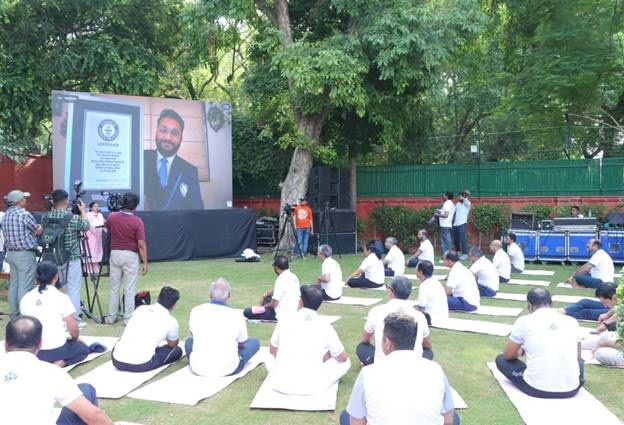
NEW DELHI — In a massive demonstration of how digital technology is transforming public health outreach, India’s Ministry of Ayush secured a new Guinness World Record on June 14, 2026. A verified audience of 435,831 concurrent viewers tuned in to a single YouTube live stream to practice the Common Yoga Protocol (CYP).
The event, organized in collaboration with the Morarji Desai National Institute of Yoga (MDNIY) and digital wellness platform Habuild, shattered the previous record of 2,46,252 viewers set in 2024 by an impressive margin of nearly 190,000 participants.
This global digital gathering serves as the curtain-raiser for the upcoming International Day of Yoga (IDY) on June 21, 2026, which features the theme “Yoga for Healthy Ageing” (स्वस्थ आयु के लिए योग). The primary physical celebrations are scheduled to take place in Kolkata, West Bengal. However, this record-breaking virtual event underscores a broader shift in preventative healthcare: the utilization of mass media and digital streaming to make lifestyle interventions accessible to a global audience.
The Push for “Yoga 365”
Public health officials are increasingly looking for scalable solutions to combat the rising global burden of non-communicable diseases (NCDs) such as hypertension, type 2 diabetes, and mental health disorders. The Ministry of Ayush is leveraging this world record to pivot away from viewing yoga as an annual celebration, pushing instead for a sustained campaign called “Yoga 365”—championing the mantra “Har Ghar Yoga, Har Din Yoga” (Yoga in Every Home, Yoga Every Day).
“Today’s achievement demonstrates the extraordinary power of Yoga to connect people across regions, cultures, and nations through a shared commitment to health and well-being,” stated Shri Prataprao Jadhav, Union Minister of State (IC) for Ayush and Minister of State for Health & Family Welfare, during his address to the participants. “As we move towards International Day of Yoga 2026, I urge everyone to embrace the spirit of ‘Yoga 365’ and contribute towards building a healthier, stronger, and more resilient society.”
Vaidya Rajesh Kotecha, Secretary of the Ministry of Ayush, echoed this sentiment, emphasizing that the event’s metrics represent a deeper public shift. “This achievement is not merely about setting a new world record… The overwhelming participation demonstrates the growing recognition of Yoga as a powerful tool for health and well-being. Our objective is to encourage people to embrace Yoga not as a one-day event, but as a lifelong practice.”
The Science of “Yoga for Healthy Ageing”
The focus of the 2026 campaign aligns closely with current epidemiological data regarding global aging demographics. According to data from the World Health Organization (WHO), the proportion of the world’s population over 60 years old will nearly double from 12% to 22% between 2015 and 2050. This shift requires cost-effective, low-risk interventions to maintain functional capacity and cognitive health in older adults.
Independent clinical research increasingly supports the physiological benefits of regular yoga practice, particularly for aging populations:
-
Musculoskeletal and Balance Benefits: A systematic review published in the Journal of Clinical Medicine demonstrated that regular yoga practice significantly improves static balance, lower-body flexibility, and mobility in older adults, directly reducing the risk of accidental falls—a leading cause of injury in seniors.
-
Cardiovascular and Metabolic Markers: According to clinical trials published in The Lancet, mind-body interventions like yoga and controlled breathing (pranayama) help down-regulate the sympathetic nervous system. This results in measurable reductions in resting blood pressure, lower systemic inflammation markers (such as C-reactive protein), and improved glycemic control.
-
Cognitive and Mental Longevity: Neuroimaging studies compiled by the National Institutes of Health (NIH) show that long-term practitioners of yoga and meditation exhibit less age-related gray matter atrophy in the hippocampus and prefrontal cortex, areas of the brain critical for memory and executive functioning.
+-----------------------------------------------------------------------+
|                 Guinness World Record Viewership Growth               |
+-----------------------------------------------------------------------+
| 2024 Record:  ======== 246,252 Viewers                                |
| 2026 Record:  ============= 435,831 Viewers                           |
+-----------------------------------------------------------------------+
| Net Increase: +189,579 Viewers (approx. 77% growth in digital reach)  |
+-----------------------------------------------------------------------+
Expert Perspectives: The Digital Delivery of Wellness
While the numbers are historic, independent medical experts urge a balanced interpretation of what digital mass-participation events mean for long-term clinical health outcomes.
“A livestream of this scale is a phenomenal public health marketing tool,” said Dr. Ananya Mukherjee, a preventive medicine specialist and public health researcher not affiliated with the Ministry’s study. “It builds community, reduces the barrier to entry, and generates necessary enthusiasm. However, the true challenge lies in translation. Watching a stream once a year does not alter a person’s cardiovascular profile. The true medical value depends entirely on whether those 435,000 viewers transition this single experience into a habitual daily practice.”
Dr. Mukherjee also pointed out a critical safety limitation regarding unsupervised, mass digital broadcasts.
“The Common Yoga Protocol is well-designed and generally safe for the public. However, practicing yoga via a one-way YouTube stream lacks the personalized correction of an in-person instructor. For individuals with existing conditions—such as severe osteoporosis, advanced osteoarthritis, or poorly controlled glaucoma—certain poses involving deep forward bends or inversions can actually pose injury risks. Digital health initiatives must always remind viewers to modify movements according to their physical limitations.”
Implications for Public Health and the Future
The success of the broadcast highlights a growing blueprint for digital therapeutics and public wellness interventions. As high-speed internet access expands globally, live-streamed, culturally rooted practices provide a cost-effective method to encourage physical activity across diverse socio-economic groups.
Prominent regional leaders, including Dr. Mohan Yadav, Chief Minister of Madhya Pradesh, and Mukesh Mahaling, Minister for Health and Family Welfare of Odisha, noted in broadcasts during the event that integrating traditional practices like yoga into primary, everyday lifestyles acts as a crucial layer of preventive healthcare, potentially easing the patient load on tertiary care hospital systems.
For the general consumer, the takeaway is straightforward: digital platforms have made lifestyle management resources readily accessible in the home. However, health literacy remains paramount. Consumers are encouraged to participate in digital sessions like the “Yoga 365” movement while remaining mindfully aware of their individual medical histories and physical boundaries.
Medical Disclaimer
Medical Disclaimer: This article is for informational purposes only and should not be considered medical advice. Always consult with qualified healthcare professionals before making any health-related decisions or changes to your treatment plan. The information presented here is based on current research and expert opinions, which may evolve as new evidence emerges.
References
-
Press Information Bureau (PIB) Delhi: Government of India, Ministry of Ayush. “Ministry of Ayush Creates New Guinness World Record for Largest Viewership of a YouTube Live Yoga Stream.” Published 14 June 2026.