 0
0
 0
0
NEW DELHI — In a decisive move to tighten the net around one of the world’s oldest and most misunderstood diseases, the Delhi government has initiated the process to declare leprosy a notifiable disease under the Delhi Epidemic Diseases Act.
The proposal, cleared by the health department on May 1, 2026, and currently awaiting final administrative approval, marks a significant shift in the capital’s public health strategy. By mandating that every case be reported to health authorities, officials aim to bridge the gap between private treatment and public surveillance, ensuring that no patient falls through the cracks of the healthcare system.
Closing the Data Gap
Under the new mandate, all healthcare providers—ranging from prestigious private hospitals and corporate clinics to individual practitioners and government centers—will be legally required to report every new diagnosis of leprosy to the District Leprosy Officer.
Currently, a massive portion of the leprosy burden remains “invisible” to the government’s National Leprosy Eradication Programme (NLEP). A recent pan-India study revealed that approximately 44.1% of leprosy patients seek care in the private sector. Because these cases are often not reported to central registries, public health officials cannot accurately track transmission trends or conduct the necessary “contact tracing” to protect the families and neighbors of those infected.
“Notification is not about policing; it is about precision,” says Dr. Aranya Sen, a public health consultant not involved in the proposal. “If we don’t know where the cases are, we cannot deploy resources to stop the transmission at the source.”
Understanding Leprosy: The Medical Reality
Leprosy, also known as Hansen’s disease, is a chronic infectious condition caused by the slow-growing bacterium Mycobacterium leprae. Contrary to age-old myths, it is not highly contagious and is easily treatable with Multi-Drug Therapy (MDT).
The disease primarily affects the:
-
Skin: Often appearing as pale or reddish patches with a loss of sensation.
-
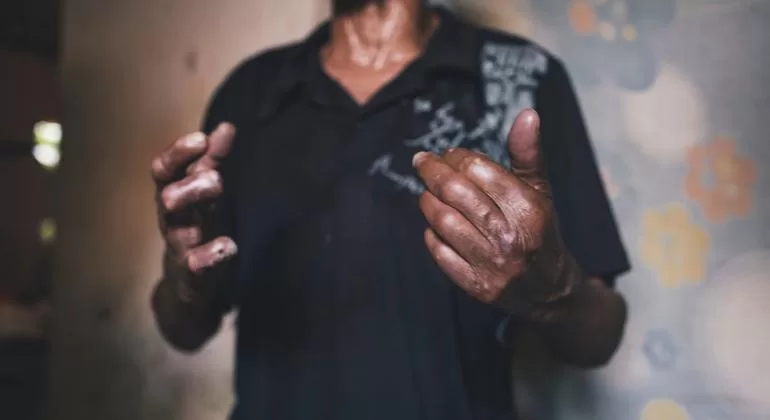
Peripheral Nerves: Leading to numbness or muscle weakness in the hands and feet.
-
Mucosa: Affecting the upper respiratory tract.
-
Eyes: Which can lead to sight loss if left untreated.
The World Health Organization (WHO) reported over 172,000 new cases globally in 2024. While India achieved the formal definition of “elimination” (less than one case per 10,000 people) in 2005, it still accounts for a disproportionately high percentage of the global caseload.
Why Timing is Everything
The primary danger of leprosy is not the infection itself, but the delay in diagnosis. When the bacteria go unchecked, they cause permanent nerve damage. This leads to the physical deformities and disabilities historically associated with the disease.
“The proposal is meant to help identify hidden cases, stop transmission, and ensure patients receive standard treatment with dignity,” stated Delhi Health Minister Pankaj Kumar Singh. By making the disease notifiable, the city hopes to catch infections in the early stages—before sensory loss leads to injury or permanent disability.
The National Roadmap
Delhi’s move aligns with India’s National Strategic Plan and Roadmap for Leprosy 2023–2027. This ambitious federal goal aims for the “interruption of transmission” at the district level by 2027. Delhi now joins other major states, including Maharashtra, West Bengal, and Karnataka, which have already implemented mandatory reporting.
Expert Perspectives: Stigma and Surveillance
While the medical community largely welcomes the move, some experts emphasize that surveillance is only half the battle. The shadows of stigma and discrimination continue to haunt leprosy control efforts.
“Stigma is the biggest barrier to ending leprosy,” explains Dr. Meera Jacob, an infectious disease specialist. “If a patient fears that being ‘notified’ will lead to social isolation or workplace discrimination, they might avoid seeking care altogether. Mandatory reporting must be handled with the utmost confidentiality and sensitivity.”
Furthermore, for notification to be effective, the administrative process must be seamless. Health authorities must ensure that the influx of new data leads to immediate action, such as providing free MDT kits and conducting “clue-based” screenings in high-risk neighborhoods.
What This Means for Residents
For the average resident of Delhi, this policy change should be viewed as a strengthening of the safety net rather than a cause for alarm.
Public Health Advice:
-
Check for Symptoms: Look for persistent skin patches that are lighter than the surrounding skin and, crucially, have a loss of feeling or sensation.
-
Early Action: If you notice numbness in your fingers or toes, or unexplained weakness in your grip, consult a dermatologist or a general physician immediately.
-
Treatment is Free: In India, leprosy treatment (MDT) is provided free of charge at all government health facilities.
-
Non-Contagious after Treatment: Once a patient begins the first few doses of MDT, they are no longer infectious and can continue their daily lives and work without risk to others.
Limitations and the Road Ahead
Critics of mandatory reporting policies often point out that “notifiable” status can sometimes lead to bureaucratic “box-ticking” rather than improved patient outcomes. For Delhi’s plan to succeed, it must be paired with:
-
Provider Education: Training private doctors to recognize early symptoms that mimic other skin conditions.
-
Privacy Protections: Ensuring that patient data is used only for public health tracking and not shared in ways that could lead to discrimination.
-
Community Awareness: Continued campaigns to debunk the myth that leprosy is a “curse” or untreatable.
As Delhi moves forward, the success of this initiative will be measured not just by the number of cases reported, but by the reduction in Grade 2 disabilities (visible deformities) among new patients.
Medical Disclaimer: This article is for informational purposes only and should not be considered medical advice. Always consult with qualified healthcare professionals before making any health-related decisions or changes to your treatment plan. The information presented here is based on current research and expert opinions, which may evolve as new evidence emerges.
References
News Reports:
-
Hindustan Times. “Delhi govt set to declare leprosy a notifiable disease.” (May 1, 2026).
-
Times of India. “Delhi moves to make leprosy a notifiable disease.” (May 1, 2026).