 0
0
 0
0
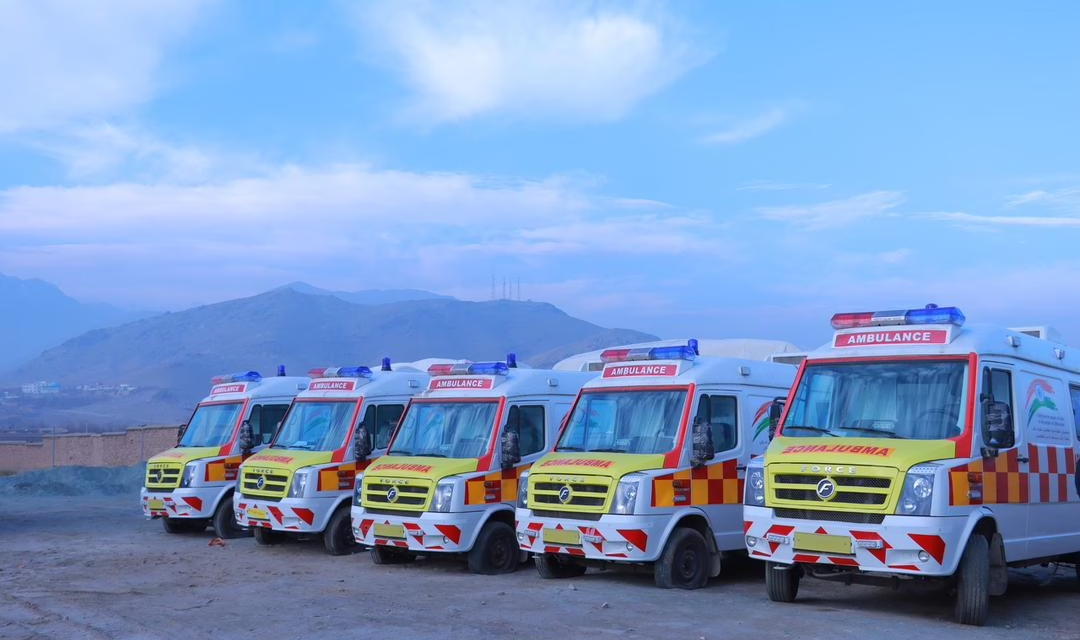
NEW DELHI — In a significant move to fortify the capital’s healthcare safety net, the Delhi government announced this week the deployment of 20 advanced geriatric ambulances specifically designed to meet the complex medical needs of senior citizens.
The initiative, reported by the Economic Times and PTI, aims to reduce emergency response times and provide high-quality pre-hospital support for the city’s aging population. These specialized units will integrate with the existing Centralised Accident and Trauma Services (CATS), increasing Delhi’s operational fleet to 351 vehicles accessible via the 102 and 112 emergency helplines.
Tailored Care for a Vulnerable Demographic
Older adults do not experience medical emergencies in the same way younger patients do. According to the National Institute on Aging (NIA), age-related physiological changes—such as decreased muscle mass, altered blood pressure regulation, and diminished bone density—mean that a “minor” fall for a younger person can be a life-threatening event for a senior.
The new geriatric fleet is equipped with modern life-support capabilities tailored for “frailty-informed” care. Unlike standard ambulances, these units are expected to feature equipment designed for gentler patient handling and monitoring systems calibrated for the subtle clinical signs often found in the elderly.
“Older adults often need slower, more careful assessment because a small injury or subtle symptom can signal a serious problem,” says Dr. Lisa Dubois, a geriatric emergency medicine specialist (unaffiliated with the Delhi project). “The value of these specialized units lies in the transition from ‘scoop and run’ to a more nuanced ‘assess and stabilize’ approach.”
The Science of Subtle Symptoms
One of the primary drivers behind this specialized rollout is the diagnostic complexity of geriatric patients. The American Heart Association (AHA) notes that heart attacks in older adults often lack the “textbook” crushing chest pain. Instead, they may present with:
-
Sudden confusion or altered mental state
-
Extreme weakness or unexplained fatigue
-
Shortness of breath
-
Fainting or “near-fainting” spells
Research published in The Journal of Emergency Medicine (2024) highlights the stakes: patients aged 75 and older classified as high-risk for falls had an 11.8% mortality rate within 30 days, compared to just 3% in low-risk groups. This nearly four-fold increase in risk underscores the necessity of early, specialized intervention.
Addressing the “Silver Tsunami”
Delhi’s health-system upgrade arrives as India faces a demographic shift. A report by UNFPA India projects that the nation’s elderly population will surpass 20% of the total population by 2050.
Delhi Health Minister Pankaj Kumar Singh stated that this initiative is part of a broader health-system upgrade, with a phased expansion goal of 1,000 ambulances. The move aligns with the National Programme for the Health Care of the Elderly (NPHCE), which seeks to provide comprehensive, community-based care for India’s seniors.
| Feature | Standard Ambulance | Geriatric-Specific Ambulance |
| Primary Goal | Rapid transport for trauma/acute illness | Stabilization & frailty-sensitive transport |
| Equipment | Standard life support | Advanced monitoring for subtle vitals |
| Focus | General population | Comorbidity and medication management |
| Staffing | General Paramedics | Specialized training in geriatric assessment |
Potential Challenges and Limitations
While the deployment is a landmark step, public health experts urge a cautious assessment of its long-term impact. The World Health Organization (WHO) emphasizes that emergency vehicles are only one link in a chain.
“An ambulance is only as effective as the hospital receiving the patient,” notes the WHO’s framework on integrated care. Several questions remain regarding the specific training protocols for the paramedics staffing these units. For the program to succeed, these specialized crews must be trained to recognize polypharmacy issues (complications from multiple medications) and cognitive impairments like dementia, which can complicate emergency triage.
Furthermore, without a seamless “handover” protocol to geriatric wards in hospitals, the time saved on the road could be lost in crowded emergency rooms.
Practical Advice for Caregivers
For families in Delhi, the arrival of these ambulances serves as a reminder to take senior symptoms seriously. Medical professionals advise against the “wait and watch” approach for the following:
-
Sudden Change in Mentation: If a senior becomes suddenly confused or lethargic, it may indicate a urinary tract infection (UTI), dehydration, or a stroke.
-
Unexplained Falls: Even if no bones appear broken, a fall can indicate an underlying cardiac or neurological issue.
-
Silent Symptoms: Treat sudden breathlessness or “feeling faint” with the same urgency as chest pain.
As Delhi moves toward a more age-friendly infrastructure, these 20 ambulances represent a critical first step in ensuring that the city’s elders receive care that is not just fast, but appropriate for their stage of life.
Reference Section
Sources:
-
Economic Times Health / PTI: “Delhi to have 20 geriatric ambulances to boost emergency care for elderly,” April 16, 2026.
Medical Disclaimer: This article is for informational purposes only and should not be considered medical advice. Always consult with qualified healthcare professionals before making any health-related decisions or changes to your treatment plan. The information presented here is based on current research and expert opinions, which may evolve as new evidence emerges.