 0
0
 0
0
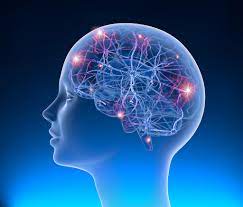
SAN FRANCISCO – In a move that signals a tectonic shift in the landscape of biomedical research, the Chan Zuckerberg Biohub (CZ Biohub) has unveiled a landmark five-year, $500 million initiative: the Virtual Biology Initiative. Announced in April 2026, the project aims to bridge the gap between silicon and soul by building artificial intelligence models capable of simulating the complex behavior of human cells.
Founded by Meta co-founder Mark Zuckerberg and pediatrician-philanthropist Priscilla Chan, the initiative seeks to create “predictive models of life.” By teaching computers to understand the fundamental unit of human existence—the cell—the Biohub aims to transform how we diagnose, treat, and potentially prevent every known human disease.
What is the Virtual Biology Initiative?
At its core, the Virtual Biology Initiative is an ambitious effort to apply the “Large Language Model” approach—the same technology behind modern AI chatbots—to the “language” of biology. Rather than predicting the next word in a sentence, these AI systems are being trained to predict how a cell will respond to external stressors, genetic mutations, or new medications.
The $500 million commitment is structured to drive both internal innovation and global collaboration:
-
Internal Research ($400 Million): Allocated to CZ Biohub’s internal labs to generate massive, high-quality datasets.
-
External Grants ($100 Million): Directed toward researchers worldwide to ensure the data represents a diverse global population.
“We are moving from a descriptive era of biology, where we observe what happens, to a predictive era, where we can simulate it,” says Alex Rives, Head of Science at the Biohub.
The “Weather Map” of Human Health
To understand the scale of this project, consider a modern weather satellite. Forecasters use data on temperature, pressure, and wind to predict a storm’s path. The Virtual Biology Initiative aims to do the same for the human body.
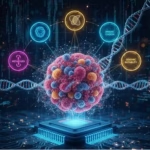
Instead of wind speeds, the AI uses multi-modal data:
-
Genomics: The blueprint of our DNA.
-
Proteomics: The proteins that do the heavy lifting in our cells.
-
Spatial Biology: Understanding where components are located within a tissue, which is often as important as what they are.
By processing billions of data points through NVIDIA’s specialized “accelerated computing” hardware, the Biohub intends to build models that can “see” disease before it manifests physically. This allows scientists to perform “virtual experiments,” testing thousands of drug combinations in a computer in seconds—a process that would take years in a traditional “wet lab.”
A Global Coalition for Open Science
The Biohub is not venturing into this frontier alone. The initiative acts as a central nervous system for several elite research organizations:
| Partner Institution | Primary Contribution |
| Allen Institute | Massive datasets in neuroscience and immunology. |
| Broad Institute (MIT/Harvard) | Leadership in single-cell genomics and cancer analysis. |
| Human Cell Atlas | A global effort to map every cell type in the human body. |
| Human Protein Atlas | Cataloging protein expression across all human tissues. |
Critically, the project adheres to an “Open Science” ethos. Much like the Human Genome Project of the 1990s, the data and tools generated will be made freely available to researchers everywhere. This is particularly significant for scientists in lower-resource settings, such as parts of India and Africa, who will gain access to world-class biological maps without the prohibitive costs of generating the data themselves.
Real-World Impact: From Rare Diseases to Alzheimer’s
While the “cure for all diseases” remains an aspirational long-term goal, the practical implications for public health are already emerging.
1. Accelerating Drug Discovery
Currently, it takes an average of 10–12 years and billions of dollars to bring a new drug to market. AI-driven “virtual screens” can prioritize the most promising molecular pathways, potentially cutting years off the development timeline for cancers and heart disease.
2. Tackling Neurodegeneration
Diseases like Alzheimer’s and Parkinson’s are notoriously difficult to study because they progress slowly over decades. AI models can simulate these long-term cellular changes, helping researchers identify early “tipping points” where medical intervention might be most effective.
3. Precision Medicine
“For the patient, this means the end of trial-and-error medicine,” explains Dr. Jonathan Weissman, a professor at MIT and investigator at the Howard Hughes Medical Institute. “If we can simulate how your specific cells respond to a drug, we can tailor therapies to the individual with unprecedented accuracy.”
Cautious Optimism: The Hurdles Ahead
Despite the excitement, the scientific community remains grounded. Biology is infinitely more chaotic than computer code.
Data Bias and Representation
A significant concern for global health is data equity. If the AI is trained primarily on data from Western populations, its predictions may not be accurate for individuals of Asian or African descent. The Biohub has attempted to mitigate this by earmarking $100 million for external global data generation, but the gap remains a challenge.
The “Black Box” Problem
“A model can predict an outcome, but it does not always tell you why,” notes Emma Lundberg, co-director of the Human Protein Atlas. AI is excellent at finding patterns, but it lacks the human capacity to understand biological “causality.” Continued physical experimentation in labs will remain essential to validate AI predictions.
What This Means for You
For the average health-conscious consumer, these developments won’t change your prescription tomorrow. However, they represent a fundamental change in the “infrastructure” of healthcare.
-
Faster Access to Cures: Expect a gradual increase in the speed at which new treatments for rare and complex diseases reach the clinic.
-
Better Safety: AI simulations can help predict toxic side effects of drugs before they are ever tested in humans.
-
Personalized Insights: Within the next decade, your doctor may use “digital twin” models of your own cells to determine the most effective diet or medication for your specific biology.
The Path Forward
The Virtual Biology Initiative is a $500 million bridge between the biological and digital worlds. While the road to “curing all diseases” is long and fraught with complexity, the ability to simulate life at the cellular level marks the beginning of a more precise, equitable, and efficient era of human medicine.
As Mark Zuckerberg and Priscilla Chan noted at the unveiling, the goal is not just to build a tool, but to empower a generation of scientists with the “Google Maps” of human biology.
Medical Disclaimer: This article is for informational purposes only and should not be considered medical advice. Always consult with qualified healthcare professionals before making any health-related decisions or changes to your treatment plan. The information presented here is based on current research and expert opinions, which may evolve as new evidence emerges.
Reference Section
- https://health.economictimes.indiatimes.com/news/health-it/what-is-mark-zuckerbergs-ai-biohub-inside-the-500-million-effort-to-analyse-human-cells-with-artificial-intelligence/130842288?utm_source=top_story&utm_medium=homepage