 0
0
 0
0
NEW DELHI – For years, the narrative surrounding India’s air quality has been dominated by the dramatic, “apocalyptic” grey skies of November. However, a landmark decade-long analysis released in May 2026 suggests that our focus on a single “pollution season” may be blinding us to year-round health risks.
The study, conducted by the research think tank Envirocatalysts, utilized data from the Central Pollution Control Board (CPCB) spanning 2015 to 2026. The findings reveal that air pollution is not a monolith but a shifting cocktail of chemicals that change with the seasons. By identifying the distinct “fingerprints” of different pollutants, researchers argue that India must move away from emergency “band-aid” fixes toward pollutant-specific, year-round interventions.
The Seasonal Shift: More Than Just Winter Smog
The heart of the research lies in a new public dashboard that tracks five major culprits: PM2.5, PM10, Nitrogen Dioxide (NO2), Carbon Monoxide (CO), and Ozone (O3). While the public often uses the general Air Quality Index (AQI) as a guide, this study breaks down the specific seasonal peaks that impact human health in different ways.
The Winter Peak: Particulate Matter (PM2.5 and PM10)
From October to February, Delhi and the surrounding Indo-Gangetic Plain experience staggering levels of particulate matter.
-
PM2.5: In December and January, levels averaged between 153–240 µg/m³. To put that in perspective, the World Health Organization (WHO) recommends a 24-hour limit of just 15 µg/m³.
-
PM10: Coarser particles, often linked to construction and road dust, hit peaks of 240–446 µg/m³ in January, dwarfing the national standard of 100 µg/m³.
The Summer Surge: Ozone and NO2
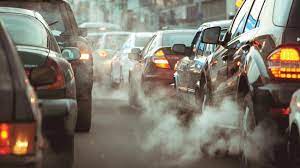
As the heat rises, so do different risks. Nitrogen Dioxide (NO2), largely a byproduct of vehicular combustion, peaks in November but remains elevated in warmer months. More concerning is Ground-level Ozone, which climbs in May, reaching levels of 67–101 µg/m³. Unlike the high-altitude ozone layer that protects us from UV rays, ground-level ozone is a potent respiratory irritant formed when sunlight reacts with vehicle and industrial emissions.
“The variations of each pollutant are the fingerprints that expose underlying sources,” explains Sunil Dahiya, founder of Envirocatalysts. “Systematic reduction can only happen when action is taken at the source, rather than waiting for the wind to blow the smoke away.”
Expert Insights: A Tale of Two Smogs
The health implications of these findings are profound. While winter pollution is often visible, the “photochemical smog” of summer is nearly invisible but equally damaging.
Dr. Anjumoni Deka, a public health expert at the Indian Institute of Public Health-Delhi, who was not involved in the Envirocatalysts study, notes a distinct clinical pattern. “These data points confirm what we see in our clinics. We see a massive surge in acute respiratory distress and COPD flare-ups in the winter due to PM levels. However, in the summer, we see an increase in severe asthma attacks and eye irritation linked to ozone.”
Dr. Deka emphasizes that “pollutant-specific strategies” are essential. For instance, a child with asthma might need to be shielded from outdoor play in May due to ozone just as much as in November due to PM2.5.
Understanding the “Why”: Emissions vs. Meteorology
A common misconception is that pollution only “happens” in winter because of stubble burning. The Envirocatalysts study clarifies that while emissions from biomass burning are a factor, meteorology plays a starring role.
In winter, a phenomenon called thermal inversion occurs. Cold air gets trapped near the ground by a layer of warm air above it, acting like a lid on a pot. This traps vehicle exhaust, industrial fumes, and dust. In contrast, the summer monsoon provides “dilution,” where rain washes particles out of the air, bringing PM2.5 levels down to a relatively breathable 25–66 µg/m³.
However, the high temperatures of May accelerate the chemical reactions that create ozone, proving that “clear blue skies” can sometimes be deceptively toxic.
Practical Implications for Your Health
For the average citizen, this data shifts the strategy for personal protection.
-
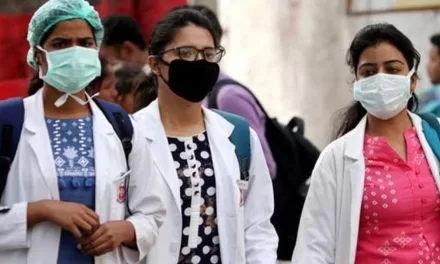
Check Pollutants, Not Just AQI: Use dashboards to see which pollutant is high. If ozone is the primary concern, N95 masks (which filter particles) may be less effective than simply staying indoors during the hottest part of the day.
-
Winter Protection: During PM2.5 spikes, high-quality air purifiers with HEPA filters are essential for vulnerable groups, including the elderly and those with pre-existing heart conditions.
-
Advocacy: Understanding that NO2 comes from traffic allows citizens to push for better public transport and electric vehicle infrastructure as a year-round health necessity, not just a winter emergency measure.
Limitations and the Path Forward
Despite the depth of the ten-year analysis, researchers admit there are gaps. The data relies heavily on CPCB monitoring stations, which are often placed in urban centers. This can leave “hyper-local” hotspots—such as neighborhoods near industrial clusters or waste-burning sites—unaccounted for.
Furthermore, while the dashboard democratizes data for cities under the National Clean Air Programme (NCAP), the enforcement of emission cuts remains a political and logistical challenge. Critics argue that until there is a “polluter pays” model that transcends seasonal weather patterns, the dashboard serves as a mirror to a crisis rather than a cure.
As we move toward the latter half of 2026, the message from the scientific community is clear: Air pollution is a 365-day health challenge. We can no longer afford to wait for the first frost to start worrying about the air we breathe.
Reference Section
- https://health.economictimes.indiatimes.com/news/industry/study-of-seasonal-pollutant-trends-key-to-tackling-air-pollution-data/130842263?utm_source=top_story&utm_medium=homepage
Medical Disclaimer: This article is for informational purposes only and should not be considered medical advice. Always consult with qualified healthcare professionals before making any health-related decisions or changes to your treatment plan. The information presented here is based on current research and expert opinions, which may evolve as new evidence emerges.