 0
0
 0
0
Read Time:4 Minute, 52 Second
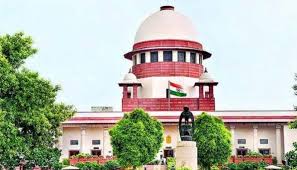
NEW DELHI — In a major move to address India’s long-standing rural healthcare crisis, the Supreme Court of India has recommended that the Union Government establish a uniform, nationwide policy governing compulsory rural service for medical graduates.
The proposal emerged on August 7, 2026, during hearings before a two-judge bench comprising Justices P.S. Narasimha and Alok Aradhe. The court was presiding over a legal challenge against Karnataka’s state-level mandatory rural service laws. Highlighted during the session was the underlying philosophy that medical education serves a vital public purpose, with Justice Narasimha noting that medical students carry an essential “obligation towards nation building.”
In response to the bench’s proposal, the Solicitor General of India agreed to consult with the Union Government regarding a standardized, pan-Indian framework. The apex court has granted the Centre three weeks to present its stance on formulating a nationwide policy.
The Root Cause: The Karnataka Dispute
The immediate trigger for the Supreme Court’s intervention is a writ petition challenging notifications issued under the Karnataka Compulsory Service Training by Candidates Completed Medical Courses Act, 2012 (and its 2015 Rules).
Under current Karnataka rules, every MBBS graduate, postgraduate, and super-specialty candidate who studies in a government university—or occupies a government-subsidized seat in a private institution—must complete one year of public rural service. Fulfilling this obligation is a prerequisite to receiving a No-Objection Certificate (NOC) and securing permanent registration with the state medical council.
Current Fragmented Landscape vs. Proposed Uniform Policy
┌─────────────────────────────────────────────────────────────┐
│ CURRENT STATE-LEVEL POLICIES                                │
│ • Service Duration : 1 to 5 years (varies by state)        │
│ • Financial Penalties: Up to ₹50 Lakh bond defaults          │
│ • Private Candidates: Patchwork rules & legal uncertainty   │
└──────────────────────────────┬──────────────────────────────┘
                               │
                               ▼
┌─────────────────────────────────────────────────────────────┐
│ PROPOSED NATIONAL FRAMEWORK                                 │
│ • Uniform Duration : Standardized nationwide (e.g., 1-2 yrs) │
│ • Standardized Bonds: Fair penalty & exemption structures   │
│ • Equitable Scope   : Equal clarity for public & private    │
└─────────────────────────────────────────────────────────────┘
The friction intensified in July 2023, when Karnataka extended this mandate to private seat students paying full tuition at private and deemed universities. Student petitioners argue this expansion violates constitutional protections under Article 14, contending that full-fee-paying students form a distinct category from government-subsidized students and should not face identical mandatory service obligations.
Why a Single National Framework Matters
India presents a stark paradox: it boasts one of the largest outputs of medical graduates globally, yet millions of rural residents lack access to basic primary healthcare. The current decentralized approach relies on individual state mandates, leading to an inconsistent patchwork of regulations.
| Policy Parameter | Current State-by-State Approach | Proposed National Standard |
| Service Duration | Highly variable (1 to 5 years) | Standardized timeframe across all states |
| Bond Penalties | Inconsistent (ranging up to ₹50 lakh) | Uniform financial and administrative terms |
| Registration Barriers | State-level NOC holds create friction | Streamlined single-window registration |
| Student Mobility | Encourages migration to low-mandate states | Level playing field nationwide |
This lack of uniformity routinely leads to legal disputes, administrative bottlenecks, and uneven doctor placement across underserved regions.
Judicial Precedents & Public Health Realities
This is not the first time the apex court has addressed compulsory medical service. In a landmark 2019 ruling, the Supreme Court upheld the constitutionality of state service bonds for postgraduate and super-specialty students in public institutions. The court reasoned that because state governments invest substantial taxpayer funds into training medical professionals, service mandates represent a reasonable mechanism to deliver specialist care to rural areas.
However, public health experts emphasize that compulsory service is only one piece of the puzzle.
“The shortage of doctors in rural areas is not just about numbers; it’s about distribution. A uniform policy with clear guidelines on posting, remuneration, and working conditions would make rural service more attractive and effective.”— Dr. K.K. Talwar, Former Chairman, Medical Council of India Board of Governors
Research published in the Indian Journal of Medical Ethics reinforces this view: mandatory postings successfully redistribute clinical workforce numbers only when coupled with adequate compensation, safe housing, basic clinical infrastructure, and clear career progression pathways.
Legal Concerns: Service vs. “Bonded Labour”
While the objective of improving rural access remains a public health priority, mandatory service policies face criticism from legal scholars and student advocacy groups.
In April 2025, another Supreme Court bench expressed deep concern over aggressive state bond policies, particularly those forcing All India Quota candidates into remote, ill-equipped posts under severe financial threat, observing that uncalibrated mandates risk resembling modern “bonded labour.”
                 Key Policy Trade-offs
┌─────────────────────────────────────────────────────┐
│  PUBLIC HEALTH IMPACT                               │
│  (+) Direct primary care coverage for remote areas │
│  (+) Reduced reliance on informal providers         │
└──────────────────────────┬──────────────────────────┘
                           │
                           ▼
┌─────────────────────────────────────────────────────┐
│  STUDENT & SYSTEMIC CHALLENGES                      │
│  (-) Delayed specialization and career start        │
│  (-) Risks of working in under-resourced clinics    │
└─────────────────────────────────────────────────────┘
Furthermore, a 2024 government task force report on medical education reform advised phasing out oppressive compulsory service bonds in favor of voluntary, incentive-backed rural postings to reduce early-career financial strain on young physicians.
What This Means for Patients and Medical Professionals
-
For Medical Students & Interns: A national policy offers regulatory clarity, eliminating conflicting state-by-state bond conditions, standardized penalty structures, and a transparent assignment process.
-
For Rural Patients & Communities: Standardized deployments could translate into more consistent physician coverage at Primary Health Centres (PHCs) and Community Health Centres (CHCs), bridging primary care gaps.
The Union Government is expected to present its response to the Supreme Court following the three-week adjournment, setting the stage for potential structural reform in Indian medical education and rural healthcare delivery.
Medical Disclaimer: This article is for informational purposes only and should not be considered medical advice. Always consult with qualified healthcare professionals before making any health-related decisions or changes to your treatment plan. The information presented here is based on current research and expert opinions, which may evolve as new evidence emerges.
References
-
Supreme Court Proceedings: Ashish Redu v. Government of Karnataka, W.P.(C) No. 332/2024, Supreme Court of India, Proceedings dated August 7, 2026.


Happy
0 %

Sad
0 %

Excited
0 %

Sleepy
0 %

Angry
0 %

Surprise
0 %