 0
0
 0
0
KOLKATA — In a major development for regional public health and the scientific community, the Central Government and the West Bengal State Government have agreed to deploy a suite of central science, innovation, and startup schemes across the state with immediate effect.
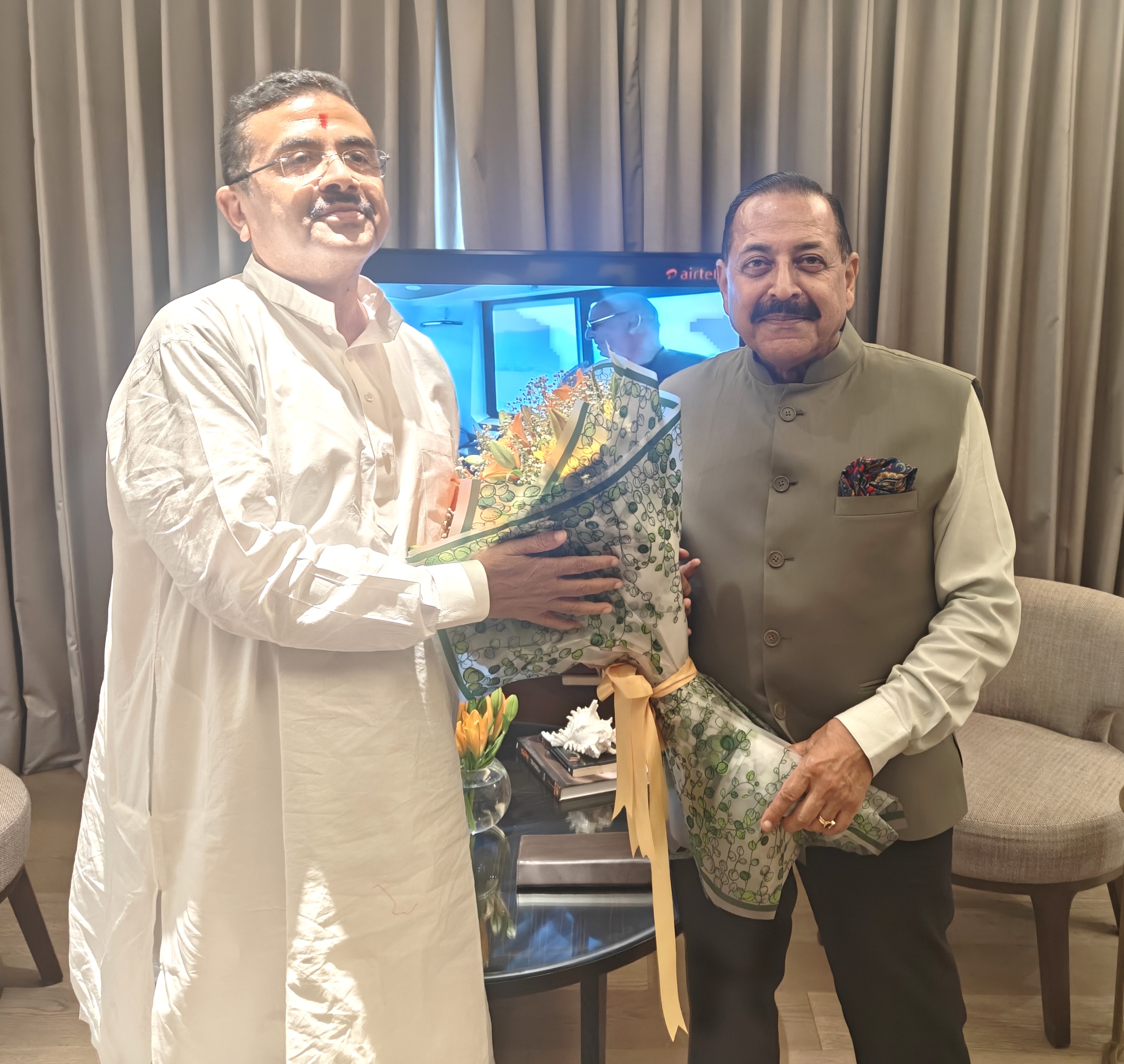
The decision was finalized following an extensive high-level meeting in Kolkata between Union Minister of State for Science and Technology Dr. Jitendra Singh and West Bengal Chief Minister Suvendu Adhikari. The bilateral framework establishes a time-bound roadmap to scale up central flagship programs while funding major clinical interventions, including specialized research into groundwater arsenic poisoning and collaborative trials for advanced cancer therapies.
Direct Public Health Interventions: Arsenic and Cancer
The meeting yielded two high-priority scientific directives addressing critical public health challenges that disproportionately impact Eastern India.
                  ┌────────────────────────────────────────┐
                  │  CENTRE-STATE CLINICAL RESEARCH FOCUS  │
                  └───────────────────┬────────────────────┘
                                      │
            ┌─────────────────────────┴─────────────────────────┐
            ▼                                                   ▼
┌───────────────────────┐                           ┌───────────────────────┐
│   ARSENIC POISONING   │                           │    ONCOLOGY & AMRS    │
├───────────────────────┤                           ├───────────────────────┤
│ • Driven by CSIR      │                           │ • Collaborative Drug  │
│ • Groundwater studies │                           │   & Clinical Trials   │
│ • Impact mitigation   │                           │ • Cancer/Superbugs    │
└───────────────────────┘                           └───────────────────────┘
CSIR to Lead Arsenic Mitigation
The Council of Scientific and Industrial Research (CSIR) will immediately initiate dedicated, district-specific studies on chronic arsenic poisoning. Groundwater contamination is a long-standing environmental health crisis in the Gangetic delta.
According to epidemiological data published in The Lancet and historical health surveys in districts like Nadia and Murshidabad, chronic exposure to arsenic through drinking water causes arsenicosis. This condition leads to severe skin lesions, peripheral neuropathy (nerve damage causing numbness), systemic cardiovascular disease, and elevated risks of skin, lung, and bladder cancers. The new central intervention aims to translate baseline geological tracing into scalable public health mitigation and therapeutic protocols.
Oncology Infrastructure and Clinical Trials
The second directive focuses on launching collaborative clinical trials and drug-development research targeting cancer and antimicrobial resistance (AMR). Premier scientific institutions under the Ministry of Science and Technology will integrate directly with West Bengal’s Government Medical Colleges, localized Cancer Hospitals, and regional AIIMS networks.
Epidemiological registries indicate a rising trajectory for malignancies in the region—notably breast and cervical cancers among women, and oral cavity cancers among men. This initiative creates a formal pipeline to run advanced clinical trials for novel oncological therapies and sub-therapeutic protocols to counter “superbugs” (antimicrobial-resistant pathogens) within state healthcare facilities.
Expanding the Scientific Pipeline
Beyond immediate clinical research, the joint initiative focuses on the systemic rollout of student- and women-centric programs administered by the Department of Science and Technology (DST). These programs are designed to build human capital and foster technical entrepreneurship.
-
INSPIRE & INSPIRE MANAK: Designed to attract young talent to science. The scheme provides fellowships and financial support to top-performing school and university students to seed early innovation.
-
Vigyan Jyoti: A targeted initiative to bridge the gender gap in STEM (Science, Technology, Engineering, and Mathematics) fields by creating experiential learning pipelines for high-school girls.
-
KIRAN & WISE: Structural programs providing career opportunities, research grants, and institutional flexibility for women scientists and technologists aiming to re-enter or advance within the research workforce.
“West Bengal possesses a strong scientific and academic ecosystem,” Dr. Jitendra Singh noted during the assembly. “The integration of Central scientific schemes with educational institutions here will help create a stronger pipeline for innovation, scientific learning, and research-oriented talent development among the youth.”
Institutional Collaboration and Roadmaps
The implementation model relies on an integrated framework connecting central research infrastructure with state-level delivery mechanisms. Representatives and directors from central scientific establishments operating within West Bengal attended the meeting to anchor the operational technicalities.
       ┌────────────────────────────────────────────────────────┐
       │         PROPOSED IMPLEMENTATION PIPELINE               │
       └───────────────────────────┬────────────────────────────┘
                                   ▼
 ┌────────────────────────────────────────────────────────────────────┐
 │ Preliminary Coordination Meeting (Within days)                     │
 │ Central scientific ministries + State Science & Technology Dept.   │
 └─────────────────────────────────┬──────────────────────────────────┘
                                   ▼
 ┌────────────────────────────────────────────────────────────────────┐
 │ Strategic Implementation Roadmap                                    │
 │ Finalized protocol delivery for clinical trial sites               │
 └─────────────────────────────────┬──────────────────────────────────┘
                                   ▼
 ┌────────────────────────────────────────────────────────────────────┐
 │ Ministerial Review Session                                         │
 │ Dr. Jitendra Singh & CM Suvendu Adhikari progress evaluation       │
 └────────────────────────────────────────────────────────────────────┘
The convergence aims to establish Eastern India as a hub for the national knowledge economy. By aligning premier research laboratories with local state colleges, the initiative allows regional biological data and environmental profiles to directly inform national research agendas.
Methodological Hurdles and Public Health Perspectives
Independent public health professionals emphasize that while the immediate integration of clinical trials and heavy-metal research is a major step forward, successful execution depends on navigating complex infrastructure variations.
| Operational Priority | Core Systemic Challenge | Required Mitigation Strategy |
| Arsenic Mitigation | Decentralized, highly variable rural water sources. | Combining clinical screening with local field-testing kits. |
| Oncology Trials | Ensuring protocol uniformity across medical colleges. | Centralized data management via the AIIMS network. |
| STEM Outreach | Language and digital access gaps in remote schools. | Creating vernacular toolkits for regional student pools. |
Dr. Aranya Sen, an independent epidemiologist specializing in environmental toxicants who was not involved in the planning session, stressed the importance of long-term continuity:
“The primary limitation of public health interventions in heavy-metal toxicity is sustainability. Tracking arsenicosis or monitoring the clinical outcomes of new cancer drug trials requires stable, multi-year monitoring pipelines. Success will depend on how efficiently central research funding integrates with local primary healthcare registries over the next decade.”
A preliminary coordination meeting between senior officials from central scientific ministries and the State Science and Technology Department will convene within days to finalize the structural roadmap. This will establish timelines and designate specific nodal institutions across West Bengal for the upcoming clinical research trials.
References
-
Press Information Bureau (PIB) Delhi. “Centre, West Bengal to Roll Out Central Science and Innovation Schemes with Immediate Effect.” Ministry of Science & Technology, Government of India. Published May 26, 2026.
Medical Disclaimer: This article is for informational purposes only and should not be considered medical advice. Always consult with qualified healthcare professionals before making any health-related decisions or changes to your treatment plan. The information presented here is based on current research and expert opinions, which may evolve as new evidence emerges.