 0
0
 0
0
NEW DELHI — In a move that has sent ripples through the medical community, the Union Health Ministry has officially deferred the long-standing dispute over MBBS intern stipends to the National Medical Commission (NMC). In a response backed by Right to Information (RTI) filings in April 2026, the Ministry signaled that “no further action” is required from its medical education section, effectively placing the burden of resolving pay disparities squarely on the shoulders of the country’s apex medical regulator.
For thousands of medical interns who form the backbone of India’s public and private healthcare delivery, this development marks a critical juncture. The decision comes after years of protests, court petitions, and mounting evidence that many future doctors are working 100-hour weeks for little to no pay.
The Core of the Contradiction
The current crisis is fueled by a stark regulatory paradox within the NMC’s own framework. Under the Compulsory Rotating Medical Internship (CRMI) Regulations, 2021, the stipend for undergraduate interns is to be fixed by the “appropriate authority” of the institution, university, or state. This vague phrasing has created a legal loophole, allowing private medical colleges to either pay nominal amounts or completely withhold stipends.
Conversely, the Post-Graduate Medical Education Regulations (PGMER), 2023, explicitly mandate that postgraduate trainees in all institutions—including private ones—must be paid a stipend at par with state government medical colleges.
“The disparity is illogical,” says Dr. KV Babu, a Kerala-based physician and RTI activist who has spearheaded the campaign for stipend parity. “If the NMC can mandate equal pay for postgraduate students to ensure they aren’t exploited by private management, why is the same protection denied to MBBS interns? They perform the same essential clinical duties.”
By the Numbers: A Systemic Failure
The scale of non-compliance is staggering. Data emerging from NMC disclosures and RTI replies in late 2025 and early 2026 reveal a fractured system:
-
Non-Payment: At least 60 out of 555 medical colleges surveyed were found to be paying zero stipend to their interns.
-
Sub-Par Pay: Dozens of other institutions were reported to pay less than Rs 5,000 per month, a figure that fails to cover basic living expenses in most Indian cities.
-
Defiance of Authority: Nearly 65 colleges failed to submit stipend details to the NMC despite a Supreme Court order and repeated directives.
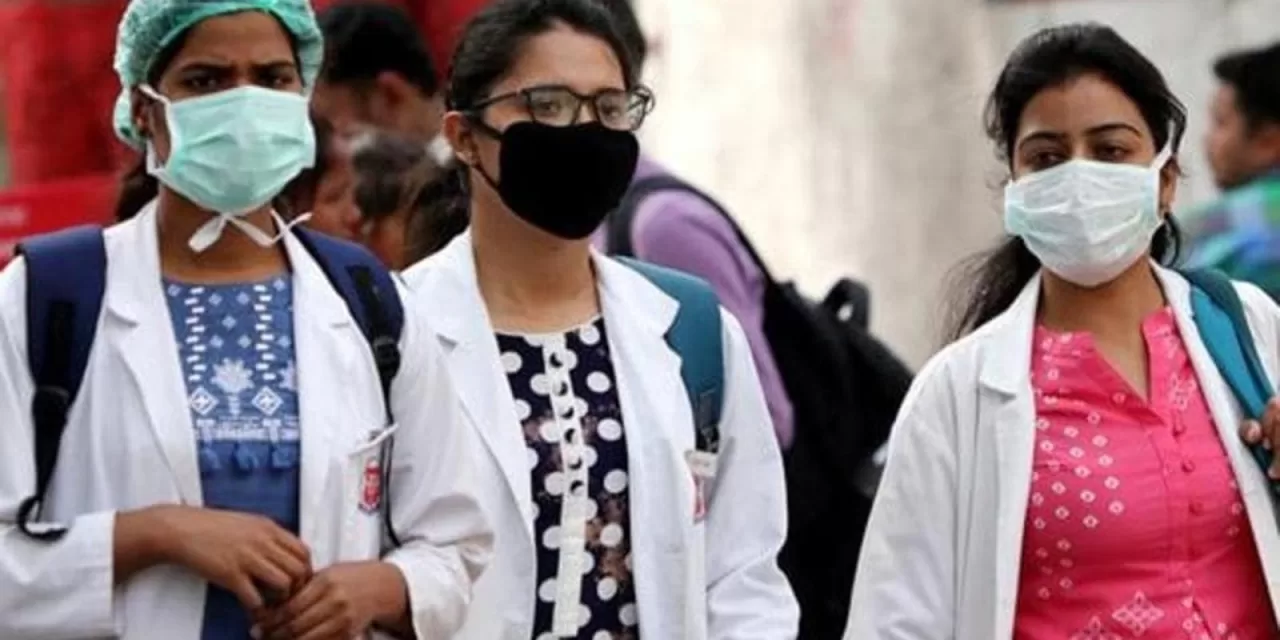
The financial strain is not merely an academic concern. For interns like those in private colleges in North India, the year of mandatory clinical work is often the most grueling. They rotate through emergency rooms, labor rooms, and rural health centers, providing supervised care that keeps hospitals functioning. When this labor is uncompensated, students—many already burdened by high tuition fees and educational loans—face severe mental and financial distress.
Public Health Implications
The stipend issue is more than a labor dispute; it is a public health concern. Medical internships are designed to be a formative year where theoretical knowledge is transformed into clinical skill. When interns are preoccupied with financial survival or feel exploited by their institutions, the quality of training and patient care can suffer.
Experts argue that predictable, fair stipends are essential for:
-
Workforce Retention: Ensuring that students from lower-income families can afford to complete their training.
-
Morale and Safety: Reducing burnout in a high-stakes environment where exhaustion can lead to clinical errors.
-
Institutional Accountability: Creating a transparent environment where colleges are held to national standards of labor and education.
“A student who is worried about how to pay for their next meal or their commute to a rural posting cannot focus entirely on patient safety,” notes a senior medical education administrator, speaking on the condition of anonymity. “By allowing these pay gaps to persist, we are essentially saying that the labor of a trainee in a private college is worth less than one in a government college, despite them performing the identical service.”
The Regulatory Road Ahead
The Health Ministry’s latest stance—leaving the matter to the NMC—puts the regulator in the spotlight. In late 2025, the Ministry had requested the NMC to examine whether the CRMI 2021 rules should be amended to ensure that undergraduate interns receive the same stipend as government college interns within the same State or Union Territory.
While the NMC has moved toward better disclosure by publishing stipend lists and issuing notices to non-compliant colleges, it has yet to close the “appropriate authority” loophole in the CRMI regulations.
Challenges to Uniformity
The primary hurdle remains the federal structure of Indian healthcare. Because health is a state subject, stipend amounts vary significantly across borders. For example, an intern in Karnataka may earn significantly more or less than one in Bihar. Critics of a national “flat rate” argue that the cost of living and state budgets vary too much for a single figure. However, advocates for parity argue that the principle of parity—matching the state government’s rate—is easily replicable across all states.
Advice for Students and Families
As the regulatory battle continues, prospective medical students and their families are advised to exercise due diligence.
-
Verify Before Admission: Check the NMC’s latest stipend disclosure lists before finalizing admission to a private medical college.
-
Review Recent Litigation: Be aware of the stipend history of an institution; colleges currently under Supreme Court scrutiny for non-payment are often flagged in medical news portals.
-
Understand Local Rules: Research the specific “appropriate authority” guidelines in the state where the college is located.
The resolution of this crisis will likely determine how India values its medical workforce in the coming decade. As the NMC weighs its next move, the eyes of thousands of future doctors remain fixed on the regulator, waiting to see if “no further action” from the Ministry will finally trigger “decisive action” from the Commission.
Medical Disclaimer: This article is for informational purposes only and should not be considered medical advice. Always consult with qualified healthcare professionals before making any health-related decisions or changes to your treatment plan. The information presented here is based on current research and expert opinions, which may evolve as new evidence emerges.
References
- https://medicaldialogues.in/news/education/mbbs-intern-stipend-disparity-row-govt-says-issue-falls-under-nmc-no-further-action-168600